
About the Author and Medical Reviewer
Learn more about the professionals responsible for writing and medically reviewing this article.

Alma Polyclinic Editorial Team
Medical Content Team at Alma Polyclinic
The Alma Polyclinic Editorial Team creates clear, patient-focused health content based on trusted medical sources and clinical guidance from our doctors.
View author profile
Dr. Tamara AK
General Dentist | Cosmetic & Aesthetic Dentistry at Alma Polyclinic
This article was reviewed for clinical accuracy, relevance and patient safety by Dr. Tamara AK.
View doctor profileTeeth whitening is one of the most widely used cosmetic dental treatments for improving the appearance of discoloured teeth. Whether your teeth have become yellow over time or developed stains from coffee, tea, or tobacco, there are several ways to achieve a brighter-looking smile. However, not every whitening method produces the same results, and the most suitable option depends on your oral health, expectations, and sensitivity.
In this ultimate guide to teeth whitening, we compare professional bleaching, dentist-supervised home treatments, whitening strips, toothpaste, and popular natural remedies. You will learn how the different methods work, which benefits are realistic, what risks to consider, and how to maintain your results.
What is the best teeth whitening method? Professional in-office bleaching may suit patients who prefer treatment at a dental clinic, while dentist-supervised home whitening offers a gradual alternative. Whitening toothpaste can help remove surface stains, and some over-the-counter strips may lighten natural teeth. The best option is the one that addresses your particular type of discolouration while taking your dental health into account.
At Alma Polyclinic in Jumeirah, Dubai, patients can explore professional teeth whitening in Dubai with a dental assessment and personalised treatment guidance.
What Is Teeth Whitening and How Does It Work?
Teeth whitening is a cosmetic dental treatment intended to lighten the appearance of natural teeth.
Certain whitening products use hydrogen peroxide or carbamide peroxide to break down coloured compounds within dental tissues. This bleaching process can make suitable natural teeth appear lighter.
Other products, including many whitening toothpastes, mainly remove stains from the external surface of teeth through cleaning and polishing ingredients.
These approaches are different because not all discolouration occurs in the same place.
Extrinsic vs Intrinsic Tooth Stains
Dental discolouration is often described as extrinsic or intrinsic.
| Type of Discolouration | Common Causes | Possible Treatment |
|---|---|---|
| Extrinsic stains | Coffee, tea, tobacco, pigmented foods, and surface deposits | Professional cleaning, appropriate whitening toothpaste, or bleaching when indicated |
| Intrinsic discolouration | Developmental changes, certain medications, trauma, or changes within the tooth | Professional assessment; bleaching or another restorative treatment may be considered |
| Age-related colour changes | Changes involving enamel and the underlying dentin | Whitening may improve appearance, depending on the starting shade |
| Discolouration of one non-vital tooth | Previous trauma or root canal treatment | Assessment for internal bleaching or another suitable treatment |
Identifying the cause of discolouration is essential because some stains respond well to bleaching while others may respond only partially or require a different procedure.
For example, a single tooth that has darkened following root canal treatment may need internal bleaching in Dubai rather than ordinary full-mouth whitening.
What Are the Main Teeth Whitening Methods?
The main whitening options include professional in-office treatment, dentist-supervised home whitening, over-the-counter products, and surface-stain removal.
Each method has different advantages, limitations, treatment requirements, and possible side effects.
1. Professional In-Office Teeth Whitening
In-office teeth whitening is performed in a dental clinic under professional supervision.
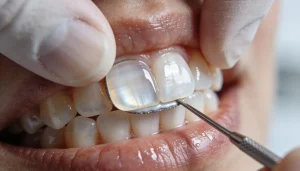
The dentist examines your teeth and gums, evaluates existing restorations, and selects a suitable whitening protocol.
Depending on the system, treatment may involve a peroxide-based gel applied to the teeth while the gums and other soft tissues are protected.
Some patients notice a visible colour improvement after a clinic appointment, although the degree of whitening varies and additional sessions may be appropriate in selected cases.
Potential advantages:
- Dental assessment before bleaching begins
- Professional handling of whitening materials
- Protection of the gums during treatment
- Monitoring for irritation or discomfort
- Guidance on realistic colour expectations and maintenance
Limitations: Temporary sensitivity and gum irritation may still occur. In-office whitening also generally has a higher initial cost than many over-the-counter products.
2. Laser and Light-Assisted Teeth Whitening
Some professional whitening systems use a light or laser in combination with bleaching gel.
These procedures are often promoted as laser teeth whitening or LED teeth whitening.
It is important to understand that the bleaching agent is responsible for much of the chemical whitening effect.
Research has not consistently demonstrated that adding light produces a superior final whitening result compared with suitable gel-based treatment without additional light.
The use of light may also influence treatment-related sensitivity depending on the protocol.
Therefore, laser whitening should not automatically be considered safer, longer-lasting, or more effective than other professional options.
Patients interested in light-assisted whitening should ask which system is being used, what benefits are supported by evidence, and whether it is appropriate for their teeth.
3. Dentist-Supervised At-Home Whitening Trays
Custom take-home whitening trays offer another method of whitening natural teeth.
Following a dental examination, the dentist may provide trays designed to fit your teeth and prescribe a suitable bleaching gel.
The treatment is completed at home according to a specific application schedule.
Whitening generally develops gradually over several days or weeks, depending on the product and treatment plan.
Advantages may include:
- A gradual whitening process
- Customised trays
- Professional instructions about gel quantity and wearing time
- Opportunities to discuss sensitivity and adjust the treatment plan
- Flexibility to complete the prescribed applications at home
Home whitening supervised by a dentist is not necessarily less effective than clinic whitening. Research comparing these approaches has found that results can be broadly comparable, although findings vary between studies and protocols.
Correct use is essential. Excess whitening gel or prolonged application may cause irritation.
4. Over-the-Counter Whitening Strips and Gels
Whitening strips and gels are available for home use and may contain peroxide-based ingredients.
Some products can produce a noticeable improvement in the shade of natural teeth when used according to their instructions.
However, their effectiveness and tolerability depend on the exact formulation, application method, and starting tooth colour.
Potential concerns include:
- Temporary tooth sensitivity
- Gum irritation
- Uneven product contact
- Using products too frequently
- Applying whitening agents when untreated dental problems are present
Patients with persistent sensitivity, gum recession, cavities, or visible dental restorations should seek professional advice before selecting an over-the-counter bleaching product.
Do not combine multiple whitening systems or exceed the manufacturer’s instructions in an attempt to achieve faster results.
5. Whitening Toothpaste
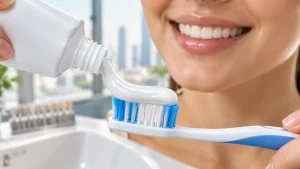
Whitening toothpaste is primarily intended for daily cleaning and the removal of certain surface stains.
Many whitening formulas use gentle abrasives or polishing ingredients, while some contain additional chemical whitening agents.
These products generally cannot reproduce the full colour change achievable through peroxide-based bleaching.
For daily oral hygiene, fluoride protection should remain a priority.
If you are comparing products available locally, read our guide to the best teeth whitening toothpaste in Dubai.
Teeth Whitening Methods Compared: Which Should You Choose?
The following table provides an overview of the main treatment options.
| Whitening Method | Primary Purpose | Typical Treatment Approach | Important Consideration |
|---|---|---|---|
| Professional in-office bleaching | Lighten suitable natural teeth | Clinic-based treatment | Professional supervision, but sensitivity is possible |
| Laser or light-assisted whitening | Bleaching with an additional light-based system | Usually performed in a dental clinic | Light does not guarantee superior results |
| Dentist-supervised home trays | Gradual chemical bleaching | Repeated applications at home | Requires correct tray use and adherence to instructions |
| Whitening strips and gels | At-home bleaching of natural teeth | Product-specific applications | Possible irritation and variable outcomes |
| Whitening toothpaste | Reduce external surface stains | Routine brushing | Limited effect on intrinsic discolouration |
| Professional dental cleaning | Remove plaque, tartar, and surface deposits | Dental cleaning appointment | Does not chemically bleach natural tooth colour |
There is no single method that is ideal for every patient. A dental examination can help determine whether the concern is surface staining, deeper discolouration, or another dental condition.
Natural Teeth Whitening Methods: Do They Really Work?
Natural whitening remedies are widely discussed online, but the term “natural” does not mean that a method is safe or clinically effective.
Some household ingredients have limited surface-cleaning properties, while others can irritate the gums or damage tooth structure.
Baking Soda
Baking soda, also known as sodium bicarbonate, is used in some commercially formulated toothpastes.
Appropriately formulated baking-soda toothpaste may help remove external surface stains.
However, using homemade abrasive mixtures or repeatedly scrubbing teeth with household powders is not the same as using a tested fluoride toothpaste.
Choose an oral care product designed for dental use rather than assuming a DIY paste will be safe or effective.
Hydrogen Peroxide
Hydrogen peroxide is an established bleaching ingredient used in dental whitening products.
However, this does not mean household hydrogen peroxide should be diluted and used as a homemade whitening mouthwash.
Concentration, formulation, pH, contact time, and intended use all influence the safety of whitening products.
Do not use household peroxide as a DIY bleaching treatment. Choose an appropriate dental product or discuss professional whitening with a dentist.
Fruits and Vegetables
Eating fruits and vegetables can support a balanced diet, but there is no reliable evidence that chewing apples, carrots, or celery produces the same whitening effect as professional bleaching.
These foods should not be promoted as substitutes for brushing, flossing, professional cleaning, or an appropriate whitening treatment.
Charcoal, Lemon Juice, and Other DIY Remedies
Charcoal powders, lemon juice, vinegar, and aggressive salt-based scrubs are sometimes marketed as inexpensive whitening alternatives.
However, acidic products can contribute to enamel erosion, while unsuitable abrasive mixtures may damage tooth surfaces.
There is insufficient reliable evidence that charcoal-based oral care products deliver superior whitening results with established long-term safety.
Our article on teeth whitening at home explains why fast DIY whitening claims should be approached cautiously.
What Are the Benefits of Teeth Whitening?
When performed appropriately, whitening can offer cosmetic benefits for patients with suitable natural teeth.
1. A Brighter-Looking Smile
The primary benefit of whitening is an improvement in tooth colour.
Certain yellow or brown discolourations may respond to bleaching, although the final result depends on the cause and severity of staining.
2. A Conservative Cosmetic Treatment
Unlike treatments such as traditional porcelain veneers or crowns, standard external bleaching does not involve intentionally reshaping teeth or removing enamel as part of the procedure.
This can make whitening a relatively conservative option when the main concern is tooth colour rather than tooth shape or structural damage.
3. Personalised Treatment Options
Patients may choose between appropriate clinic-based treatment and dentist-supervised home whitening depending on their needs and preferences.
The desired shade should be discussed before treatment rather than assuming everyone wants extremely white teeth.
4. Possible Improvement in Smile Confidence
Some people feel more comfortable smiling after addressing a cosmetic concern that has bothered them.
However, improved confidence is a personal experience rather than a guaranteed clinical outcome.
5. A Possible Step Before Other Cosmetic Dentistry
In selected cases, whitening may be considered before replacing visible crowns or fillings so that new restorations can be matched to the resulting natural tooth shade.
Because restorative materials do not bleach like natural teeth, any whitening and restoration plans should be coordinated with the dentist.
If your concerns also involve tooth shape, spacing, or smile symmetry, you may wish to explore cosmetic dentistry options in Dubai.
Potential Risks and Side Effects of Teeth Whitening
Teeth whitening has an established clinical evidence base, but no whitening method is completely free from possible side effects.
The two most commonly reported adverse effects of peroxide-based bleaching are temporary tooth sensitivity and gum irritation.
Temporary Tooth Sensitivity
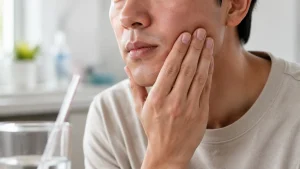
Some patients experience brief discomfort when drinking cold liquids, eating sweet foods, or breathing cold air during or after treatment.
Sensitivity can be influenced by the bleaching agent, concentration, exposure time, existing dental conditions, and individual response.
Mild sensitivity often improves after treatment ends, but severe or persistent symptoms should be assessed professionally.
For patients who already experience discomfort, our guide to teeth whitening for sensitive teeth explains the considerations involved in selecting a method.
Gum Irritation
Whitening gel can irritate the gums when it contacts soft tissues.
Incorrect placement of whitening strips, poorly fitting trays, or excessive gel may increase this risk.
Possible symptoms include redness, soreness, and temporary white patches.
In-office treatment may involve gum barriers, while custom trays are designed to help manage the placement of whitening gel.
Enamel and Tooth Surface Concerns
Appropriately performed peroxide-based whitening is generally considered suitable for many patients, but product strength, application time, and dental condition matter.
Using unsuitable formulations or whitening products more often than directed can increase unwanted effects.
Acidic and abrasive DIY remedies may also damage enamel and exposed tooth surfaces.
Patients with existing enamel erosion, untreated cavities, cracks, or exposed roots need individual assessment before bleaching.
Uneven Results and Restoration Colour Mismatch
Whitening products work on natural teeth, not on porcelain crowns, dental veneers, or tooth-coloured fillings in the same way.
If your natural teeth become lighter, existing restorations may appear darker by comparison.
Some types of intrinsic stains may also respond unevenly or require additional treatment.
Unrealistic Expectations
No whitening system can guarantee a specific number of shades of improvement for every patient.
The final result depends on the starting tooth shade, the type of discolouration, and the chosen treatment.
Discussing expected outcomes with a dental professional can help prevent disappointment and unnecessary repeated bleaching.
Who Should Avoid or Postpone Teeth Whitening?
Whitening is an elective cosmetic procedure, and some patients should postpone treatment until their oral health has been assessed or managed.
Additional precautions may be appropriate for people with:
- Untreated cavities or active gum disease
- Severe or unexplained tooth sensitivity
- Cracked teeth or significantly exposed root surfaces
- Extensive dental restorations that may affect colour matching
- Recent trauma or unexplained darkening of one tooth
- Pregnancy or breastfeeding, when elective whitening is generally deferred because safety evidence is limited
- Primary or developing permanent teeth, where routine cosmetic bleaching is generally discouraged
These circumstances do not all mean that whitening will never be possible.
A dental professional can determine whether treatment should be delayed, modified, or replaced with another approach.
What Happens During a Professional Teeth Whitening Appointment?
Professional whitening generally involves several stages, although the exact process depends on the system and treatment plan.
Step 1: Dental Examination
The dentist checks your teeth and gums for cavities, inflammation, cracks, exposed roots, and other concerns.
Existing restorations and previous sensitivity are also considered.
Step 2: Identifying the Cause of Discolouration
The dentist reviews whether the colour change is caused mainly by external stains, ageing, intrinsic discolouration, or another condition.
In some cases, professional cleaning may be recommended before bleaching.
Step 3: Shade Assessment and Treatment Planning
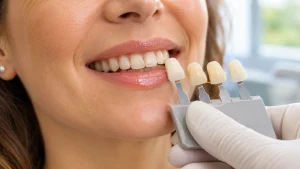
Your starting tooth shade and desired improvement may be discussed using a shade guide or other suitable assessment method.
The whitening method and expected limitations are explained before treatment begins.
Step 4: Applying the Whitening Treatment
For in-office bleaching, the dentist applies the selected whitening material according to the clinical protocol and takes steps to protect surrounding soft tissues.
For take-home whitening, custom trays and application instructions may be provided instead.
Step 5: Reviewing the Result and Aftercare
After treatment, the dentist may assess the change in tooth shade and discuss sensitivity, oral hygiene, and future maintenance.
Patients should receive clear instructions on when to seek advice if discomfort develops.
How Much Does Teeth Whitening Cost in Dubai?
Teeth whitening cost in Dubai varies depending on the method, number of treatment sessions, whitening materials, and individual dental needs.
At-home whitening products often involve a lower initial purchase cost than professional in-clinic procedures, but a lower price does not automatically mean better value or greater suitability.
When comparing options, consider:
- The specific whitening system being used
- Whether a dental examination is included
- The number of applications or appointments required
- Whether customised home trays are provided
- Any professional cleaning required beforehand
- How sensitivity and follow-up concerns are managed
- Whether future touch-ups are included or charged separately
For an accurate comparison, request a written estimate explaining the recommended treatment and all relevant charges.
At Alma Polyclinic, the dental team can discuss the proposed whitening method and corresponding cost following an assessment.
How Long Do Teeth Whitening Results Last?
Teeth whitening is not permanent. The result may remain noticeable for months or longer, but the duration depends on several factors.
Coffee, tea, tobacco, oral hygiene, natural ageing, and the original cause of discolouration can all influence how quickly staining returns.
Some patients may eventually choose a touch-up, but there is no universal schedule requiring everyone to repeat bleaching at fixed intervals.
A dentist can assess whether surface-stain removal, professional cleaning, or another whitening treatment is appropriate.
For detailed long-term advice, see our guide to maintaining teeth whitening results.
How to Maintain a Brighter Smile After Whitening
Good oral hygiene and sensible stain-management habits can help preserve the appearance of your teeth.
- Brush twice daily: Use an appropriate fluoride toothpaste and gentle brushing technique.
- Clean between teeth: Floss or use suitable interdental cleaning tools each day.
- Manage staining drinks: Reduce prolonged exposure to coffee, tea, and other pigmented beverages.
- Drink water regularly: Water can help clear food and drink residues.
- Avoid tobacco: Smoking contributes to external staining and oral health problems.
- Attend recommended dental visits: Professional cleaning can remove plaque, tartar, and certain external stains.
- Ask before repeating whitening: Do not increase bleaching frequency without professional guidance.
A strict white-food diet is not routinely necessary for everyone after whitening. Follow any individual instructions provided by your dentist, particularly if you experience sensitivity or receive additional treatment.
For advice immediately after your appointment, read our teeth whitening aftercare guide.
Teeth Whitening vs Professional Teeth Cleaning: What Is the Difference?
Whitening and cleaning are sometimes confused, but they have different purposes.
| Feature | Teeth Whitening | Professional Teeth Cleaning |
|---|---|---|
| Main purpose | Lighten the appearance of suitable natural teeth | Remove plaque, tartar, and selected surface stains |
| Primary method | Chemical bleaching, depending on the treatment | Professional dental hygiene procedures |
| Internal tooth colour | May improve certain deeper stains | Does not chemically lighten internal tooth colour |
| Oral health role | Mainly cosmetic | Supports preventive dental care |
| Best suited for | Suitable patients seeking a lighter natural tooth shade | Patients needing plaque, tartar, or surface-deposit removal |
Whitening is not a substitute for dental cleaning or treatment of cavities and gum disease.
If surface deposits are the main concern, professional teeth cleaning in Dubai may be the appropriate starting point.
Frequently Asked Questions About Teeth Whitening
What is the most effective teeth whitening method?
Peroxide-based bleaching can effectively lighten suitable natural teeth. Professional in-office whitening and dentist-supervised home whitening are both established options. The best choice depends on your starting tooth shade, dental health, sensitivity, and treatment preferences.
Is professional teeth whitening better than home whitening?
Not necessarily in every respect. Professional in-office treatment offers direct clinical supervision, while dentist-supervised home whitening provides a gradual approach. Research suggests both can achieve effective colour changes, depending on the protocol used.
Does laser teeth whitening work better?
Not automatically. Some systems use light or laser activation, but studies have not consistently demonstrated better final whitening results than appropriate bleaching gel treatment without additional light.
Can teeth whitening damage enamel?
Appropriately performed peroxide-based whitening has an established clinical evidence base. However, product misuse, unsuitable formulations, excessive application, and untreated dental problems can increase risks. A dental examination is recommended before professional bleaching.
Does teeth whitening cause pain?
Some patients experience temporary sensitivity or gum irritation during or after whitening. Discomfort varies between individuals and treatment methods. Severe, persistent, or worsening pain should be assessed by a dentist.
How many shades whiter can teeth become?
The amount of colour change depends on the original tooth shade, type of discolouration, and whitening method. No particular number of shades can be guaranteed for every patient.
Are at-home whitening kits safe?
Some appropriately formulated products can be used safely when instructions are followed, but they are not suitable for everyone. Incorrect application or overuse may cause sensitivity and gum irritation.
Is baking soda good for teeth whitening?
Baking soda is used in some formulated toothpastes to help remove surface stains. However, homemade abrasive mixtures are not equivalent to tested dental products and should not replace fluoride toothpaste or professional advice.
Can I use hydrogen peroxide to whiten my teeth at home?
Use only whitening products specifically formulated and intended for dental use, following their instructions. Do not use household hydrogen peroxide as a DIY mouthwash or bleaching agent.
Does whitening work on crowns and veneers?
No. Whitening changes the colour of natural teeth but does not lighten porcelain veneers, crowns, or tooth-coloured fillings in the same way. A dentist can discuss possible colour mismatches before treatment.
How long do teeth whitening results last?
Results vary and are not permanent. Daily oral hygiene, tobacco exposure, staining habits, and the whitening method influence how long your teeth remain lighter.
How much does teeth whitening cost in Dubai?
The total fee depends on the selected treatment, number of appointments, materials, and any dental care required beforehand. A clinic can provide a personalised quotation after evaluating your teeth.
Can I whiten my teeth if they are sensitive?
Some patients with mild, managed sensitivity may be candidates for whitening, but persistent or unexplained sensitivity should be assessed first. The dentist may suggest a modified protocol or recommend delaying treatment.
Is teeth whitening suitable during pregnancy?
Elective cosmetic whitening is generally postponed during pregnancy and breastfeeding because of limited safety evidence. Discuss individual dental concerns with a healthcare professional.
Explore Teeth Whitening Options at Alma Polyclinic Dubai
Achieving a brighter smile begins with understanding what is causing your tooth discolouration and choosing an appropriate treatment.
Professional bleaching, dentist-supervised home whitening, whitening toothpaste, and over-the-counter products each have different uses and limitations. The right choice should balance your cosmetic goals with oral health, comfort, cost, and realistic expectations.
At Alma Polyclinic in Dubai, patients can discuss professional teeth whitening options with the dental team. Dr. Homa Shahakbari, Founder of Alma Polyclinic, provides general and cosmetic dental consultations.
Ready to transform your smile? Alma Polyclinic in Dubai offers expert teeth whitening services to help you explore a brighter, natural-looking smile with personalised dental guidance.
Book your dental consultation to discuss which whitening treatment is appropriate for your teeth.
Call / WhatsApp: +97142666227
Website: https://almapolyclinic.com
Clinic Address: Villa 1033, Al Wasl Road, opposite Union Coop, Umm Suqeim, Dubai, United Arab Emirates.
Medical disclaimer: This article provides general educational information and does not replace a professional dental examination, diagnosis, or individual treatment plan. Teeth whitening suitability, results, side effects, and maintenance requirements vary between patients.