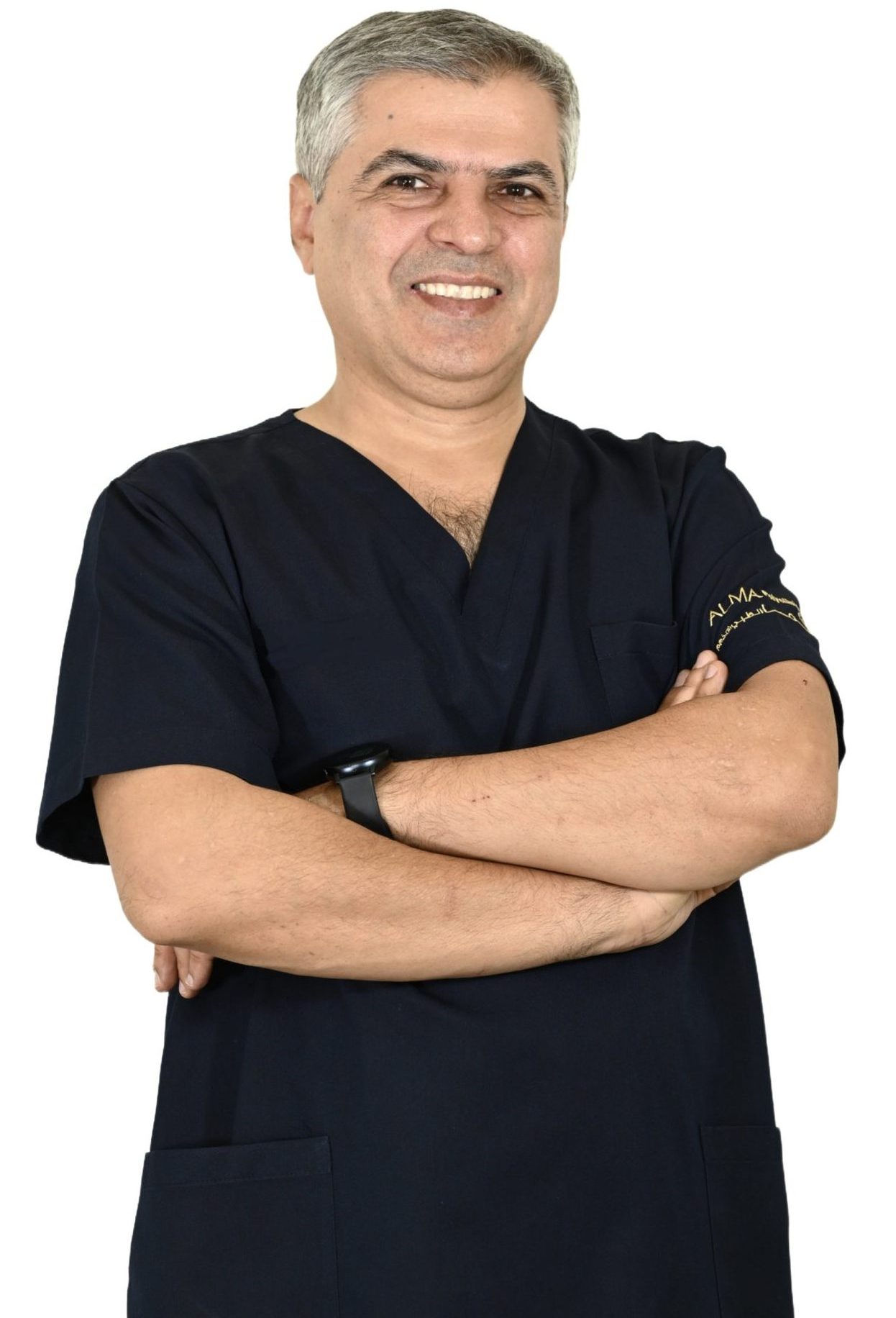
Maxillofacial surgery in Dubai covers specialist assessment and surgical treatment of conditions affecting the mouth, jaws and face. You may need an oral and maxillofacial surgeon for an impacted tooth, a jaw cyst, an injury or a problem that requires more than routine dentistry. At Alma Polyclinic in Umm Suqeim, Dr. Reza Shahakbari is a Specialist in Oral and Maxillofacial Surgery. Your consultation starts with an examination and a discussion of the care that is appropriate for you.
If your concern is a tooth that may need removal, explore our tooth extraction service in Dubai and our guide to aftercare following extraction. Not every jaw or dental problem needs surgery. Your surgeon will explain non-surgical options, investigations and any specialist referral required.
What Is Oral and Maxillofacial Surgery?
Oral and maxillofacial surgery is a surgical specialty focused on conditions of the mouth, teeth, jaws, facial bones and related soft tissues. The scope includes problems such as impacted teeth, certain jaw lesions, facial injuries and selected jaw alignment disorders. It also includes surgical planning for dental implants and bone-related procedures.
Different conditions require different care settings. Some consultations and procedures may be suitable for an outpatient dental clinic. Complex facial fractures, corrective jaw operations and cases requiring hospital-level anaesthesia or monitoring need a facility equipped for that treatment. The surgeon will advise on the appropriate setting rather than assuming every procedure can be performed at the clinic.
When Should You See a Maxillofacial Surgeon in Dubai?
Your dentist or doctor may recommend specialist assessment if you have a difficult impacted wisdom tooth, persistent jaw swelling, a suspicious lump, a lesion found on an X-ray or an injury affecting the teeth or jaw. You may also need a consultation when dental implant planning reveals insufficient jawbone or complex anatomy.
Jaw clicking or discomfort does not automatically mean surgery. Many temporomandibular joint (TMJ) problems are managed with a non-surgical approach first. Likewise, an unerupted wisdom tooth without disease may only require monitoring.
Urgent warning signs: Seek emergency medical care for significant facial trauma, uncontrolled bleeding or swelling that affects breathing or swallowing. Do not delay hospital assessment for these symptoms.
Maxillofacial Surgery Services and Assessment
Impacted Wisdom Teeth and Complex Extractions
A wisdom tooth may be trapped under gum or bone or lie close to a nerve. Your surgeon considers symptoms, the condition of neighbouring teeth and radiographic findings before advising removal. Surgical extraction may involve gum access or dividing the tooth into sections. Healthy wisdom teeth do not always need extraction.
Jaw Cysts, Oral Lesions and Biopsy Assessment
A cyst or lesion may be discovered during an examination or imaging. The surgeon evaluates its size, location and possible effects on surrounding structures. Depending on the findings, a biopsy, removal, imaging or referral for further care may be recommended. An online description cannot determine whether a lesion is harmless or serious.
Dental Implant Surgery and Bone Grafting
Implant treatment may require an assessment of jawbone volume, gum health and the position of nearby anatomical structures. Some patients need bone grafting or another preparatory procedure. Others may not. For implant-specific planning, see our dental implants service in Dubai and the guide to bone graft healing after tooth extraction.
Corrective Jaw Surgery and Facial Trauma
Some major jaw alignment problems involve the facial skeleton and may need coordinated orthodontic and surgical planning. Dr. Reza Shahakbari’s published specialty profile includes corrective jaw surgery and facial fracture care. However, whether an operation is suitable, and where it can be performed, must be determined during assessment. Serious facial trauma requires prompt hospital care.
How Does a Maxillofacial Surgery Consultation Work?
1. Medical History and Examination
The surgeon reviews your symptoms, medical conditions, allergies and medicines. They examine the affected area and ask about previous dental or surgical treatment. Tell the team if you use blood-thinning medicines or have a condition that could affect healing.
2. Imaging and Diagnosis
A dental X-ray or other scan may be recommended when the findings could change treatment planning. More detailed imaging is considered selectively, for example when an impacted tooth is near a nerve or jawbone anatomy requires closer study.
3. Treatment Options and Consent
The surgeon explains the likely diagnosis, whether surgery is needed, the available alternatives, expected benefits and possible complications. You can also ask about the treatment setting, anaesthesia arrangements, follow-up visits and the total estimated cost.
4. Procedure and Follow-Up
If a procedure is appropriate, the team gives instructions specific to your operation. These may cover eating, oral hygiene, medication and physical activity. Complex cases may need more than one visit or care at a hospital or other specialist facility.
Does Maxillofacial Surgery Hurt? Anaesthesia and Safety
The type of anaesthesia depends on the procedure, your medical history and the setting. Local anaesthetic is used for many dental surgical procedures. Sedation or general anaesthesia may be considered for selected operations, but they require appropriate assessment, qualified staff, facilities and monitoring. Confirm the arrangements for your proposed treatment with the clinical team.
Risks depend on the surgery. They can include pain, swelling, bruising, bleeding, infection, altered sensation, injury to adjacent structures or the need for further treatment. Imaging and careful planning help identify some risks but cannot eliminate them. Antibiotics are not routinely necessary for every procedure; the clinician decides based on individual indications.
Maxillofacial Surgery Cost in Dubai
Maxillofacial surgery cost in Dubai varies widely because the term includes different procedures. A consultation or minor oral procedure is not comparable to complex jaw surgery. Fees may depend on imaging, surgical difficulty, the care setting, anaesthesia, laboratory or graft materials and follow-up.
Alma Polyclinic can discuss an individual treatment estimate following assessment. Ask whether the quotation includes diagnostic records, the procedure, anaesthesia where applicable, medicines and review visits. If you have insurance, confirm procedure-specific cover and any preauthorisation directly with your insurer.
Recovery and Aftercare Following Oral Surgery
Recovery depends on the procedure and your general health. After some oral operations, temporary swelling, soreness and limited jaw opening are expected. Your surgeon will provide specific instructions for wound care, food choices and pain management. Do not assume advice for a simple extraction applies to every maxillofacial operation.
Contact the clinical team if symptoms worsen or you develop persistent bleeding, fever, increasing swelling or an unexpected change in sensation. If breathing or swallowing becomes difficult, seek emergency medical treatment.
Maxillofacial Surgeon at Alma Polyclinic, Umm Suqeim
Alma Polyclinic is located at Villa 1033, Al Wasl Road, opposite Union Coop in Umm Suqeim, Dubai. Dr. Reza Shahakbari is a Specialist in Oral and Maxillofacial Surgery whose professional profile includes impacted teeth, implant surgery, jaw conditions and oral pathology.
Book a surgical consultation to discuss your symptoms, examination findings, suitable treatment options and any hospital or multidisciplinary care that may be necessary.