Perineoplasty in Dubai

Perineoplasty in Dubai is a surgical procedure designed to repair and reconstruct the perineum — the area between the vaginal opening and the anus. Changes to this area may occur after childbirth, perineal tearing, episiotomy, previous trauma or other factors that affect the strength and structure of the perineal tissues.

At Alma Polyclinic, patients considering perineoplasty can receive an individual assessment with Dr. Maryam Raoufi, with treatment recommendations based on their symptoms, medical history, physical examination and personal concerns.

Perineoplasty may involve repairing weakened or scarred tissue, removing excess tissue when appropriate, and reconstructing the muscles of the perineal area. The exact approach varies from patient to patient and should be determined after a detailed consultation.

What Is Perineoplasty?

Perineoplasty, also known as perineal repair or perineorrhaphy, is a surgical procedure involving the tissues and muscles of the perineum. Its purpose is to restore or improve the structure of the area when tissue has been damaged, weakened or scarred.

During the procedure, the surgeon may repair damaged tissue, remove scarred or excess tissue, reposition or reinforce underlying muscles, and close the area with sutures. The surgical plan depends on the patient’s anatomy, symptoms and reason for treatment.

Perineoplasty primarily focuses on the perineum and the area around the vaginal opening. It is different from vaginoplasty, which involves the vaginal canal, although the procedures may sometimes be discussed together when clinically appropriate.

Perineoplasty Consultation with Dr. Maryam Raoufi in Dubai

Patients considering perineoplasty at Alma Polyclinic can book a private consultation with Dr. Maryam Raoufi, an experienced gynaecologist providing assessment for patients looking for a perineoplasty doctor in Dubai.

The consultation is an important part of determining whether perineoplasty is appropriate. Rather than recommending surgery based only on appearance or symptoms, the doctor will assess the underlying condition of the perineal tissues and discuss the most suitable treatment options.

During your consultation, you may discuss:

  • Previous pregnancies and vaginal deliveries
  • Perineal tears or episiotomy
  • Previous gynaecological procedures
  • Scar tissue or discomfort
  • Changes in the perineal area
  • Functional concerns
  • Your expectations from treatment
  • Possible alternatives to surgery
  • Recovery and aftercare
  • Potential risks and complications

Every patient is different, so the final treatment plan should be based on an individual medical assessment.

Perineoplasty in Dubai Gallery in Dubai

Clinic Working Hours

Monday to Friday

8:30 am - 7:30 pm

Saturday

9:30 am - 2:30 pm

Sunday

Closed

Book Your Appointment Today

Your health is our priority.

Easily schedule your visit with our expert doctors across multiple specialties. Whether it’s a routine check-up or a specific concern, we’re here to provide the care you need — when you need it.

Benefits of Perineoplasty in Dubai

Perineoplasty may be considered to repair and strengthen weakened or damaged perineal tissues, particularly after childbirth, perineal tearing, episiotomy or previous trauma. The potential benefits depend on the patient’s individual anatomy, symptoms and reason for treatment.

  • Repair of damaged perineal tissue: The procedure can help reconstruct tissues that have been weakened, torn or scarred.
  • Improved structural support: Repairing and repositioning the underlying muscles may help restore the structure of the perineal area.
  • Reduction of scar-related concerns: Problematic or excess scar tissue may be removed when clinically appropriate.
  • Improved comfort: In selected patients, correcting damaged or poorly healed tissue may help address discomfort associated with the perineal area.
  • Improved appearance: Perineal reconstruction may also address aesthetic concerns caused by childbirth, tearing, scarring or previous injury.

Results vary from patient to patient, and perineoplasty should not be expected to provide a guaranteed functional or cosmetic outcome. A consultation is required to determine whether the procedure is appropriate for your individual concerns.

Techniques Used in Perineoplasty

The surgical technique used during perineoplasty depends on the condition of the tissues and the extent of repair required. Your doctor will determine the appropriate approach after a physical examination and consultation.

Perineal Tissue Repair

Torn, weakened or damaged tissues in the perineum may be carefully repaired to restore the structure of the area.

Scar or Excess Tissue Removal

When necessary, excess skin or problematic scar tissue may be removed before the area is reconstructed.

Perineal Muscle Reconstruction

The underlying perineal muscles may be repositioned, repaired or strengthened to improve structural support around the vaginal opening and perineal area.

Surgical Closure

After the required tissue and muscle repair is completed, the surgical area is carefully closed with sutures to support healing and reconstruction.

Perineoplasty and female pelvic health illustration

When Should Perineoplasty Be Considered?

Perineoplasty may be considered when changes to the perineal tissues continue to cause discomfort, functional concerns or structural changes after childbirth, perineal tearing, episiotomy, previous trauma or surgery.

Some patients may seek assessment because of persistent scar tissue, weakness of the perineal area, discomfort around the vaginal opening or changes that have not improved adequately after healing.

Symptoms such as pain during intercourse, urinary leakage, bowel-control concerns or pelvic-floor weakness can have different underlying causes. For this reason, perineoplasty should not be considered an automatic treatment for these symptoms. A gynaecological examination is important to identify the cause and determine whether surgery or another treatment option is more appropriate.

Cosmetic Perineoplasty

Some women may also consider perineoplasty because of aesthetic changes to the perineal area following childbirth, tearing, scarring or previous injury.

In these cases, the consultation should focus on the patient’s individual concerns, expectations and the condition of the tissues. The doctor can then explain whether surgical treatment is appropriate, what changes may realistically be achieved and what recovery and potential risks should be considered before making a decision.

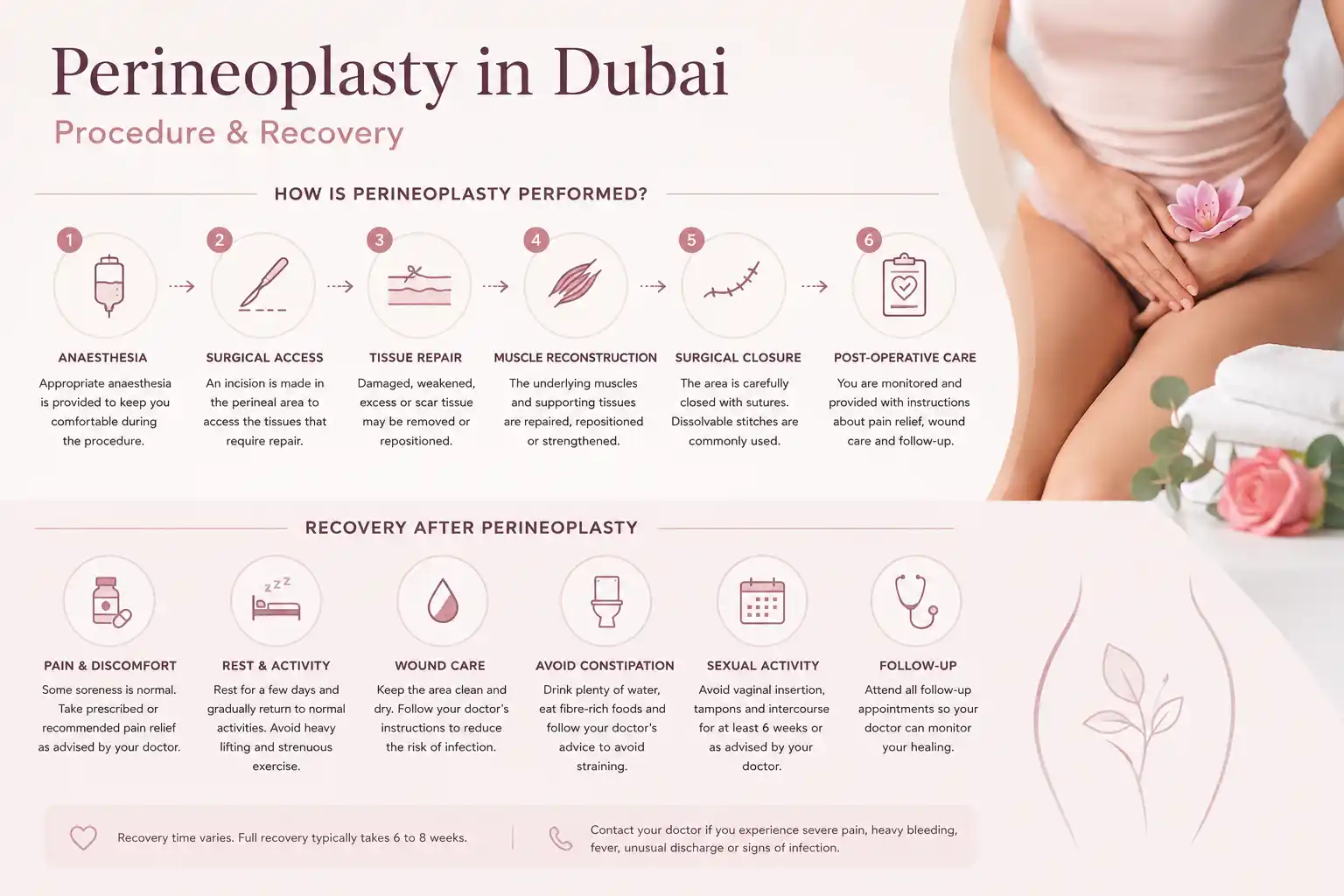
Perineoplasty procedure and recovery at Alma Polyclinic Dubai
The Process of Perineoplasty Involves Several Steps, Including:

How Is Perineoplasty Performed?

The exact steps of a perineoplasty procedure depend on the condition of the perineal tissues, the extent of repair required and the individual treatment plan. Your doctor will explain the planned surgical approach before the procedure.

  1. Anaesthesia:
    Appropriate anaesthesia is provided to keep the patient comfortable during the procedure. The type of anaesthesia used depends on the planned surgery and individual medical circumstances.
  2. Surgical access:
    The surgeon makes an incision in the perineal area to access the tissues that require repair. The location and extent of the incision depend on the patient’s anatomy and the type of reconstruction required.
  3. Tissue repair:
    Damaged, weakened, excess or problematic scar tissue may be removed or repositioned when clinically appropriate.
  4. Muscle reconstruction:
    The underlying perineal muscles and supporting tissues may be repaired, repositioned or strengthened to restore the structure of the perineal area.
  5. Surgical closure:
    Once the required repair has been completed, the surgical area is carefully closed with sutures. Dissolvable stitches are commonly used for this type of procedure.
  6. Immediate post-operative care:
    After surgery, the medical team monitors the patient and provides instructions about pain management, wound care, activity restrictions and follow-up appointments.

Because every patient has different anatomical and medical needs, the exact surgical technique and extent of repair can only be determined after consultation and examination.

Recovery After Perineoplasty

Recovery after perineoplasty varies according to the extent of surgery and individual healing. Some soreness, swelling, bruising or discomfort around the perineal area can be expected during the early recovery period.

Following your surgeon’s aftercare instructions is important for supporting healing and reducing the risk of complications.

Pain and Discomfort

Some discomfort is expected during the first days after surgery. Your doctor will advise you on appropriate pain relief based on your individual medical needs.

Rest and Physical Activity

Patients should allow time for recovery and gradually return to normal daily activities. Gentle movement may be encouraged as recovery progresses, while heavy lifting, strenuous exercise and activities that place pressure on the surgical area should be avoided until your doctor confirms that they are safe.

Wound Care

The surgical area should be kept clean and dry according to the instructions provided by your medical team. Good wound care is important for reducing the risk of infection and supporting proper healing.

Avoiding Constipation

Drinking enough water, eating fibre-rich foods and following any additional advice from your doctor can help reduce constipation and unnecessary straining during the recovery period.

Sexual Activity

Sexual intercourse, tampons and other vaginal insertion should be avoided while the tissues heal. Patients are generally advised to avoid vaginal insertion for at least six weeks, but the appropriate timeframe should be confirmed by your doctor based on your individual recovery.

Follow-Up Appointments

Follow-up appointments allow your doctor to assess healing, review symptoms and determine when it is appropriate to resume exercise, sexual activity and other normal activities.

How Long Does Perineoplasty Recovery Take?

Full recovery from perineoplasty commonly takes several weeks. A recovery period of approximately six to eight weeks may be expected in many cases, although healing time varies depending on the extent of surgery and the individual patient.

When Should You Contact Your Doctor?

Contact your medical team if you experience symptoms that may indicate a complication, such as increasing or severe pain, heavy bleeding, fever, worsening redness or swelling, unusual discharge, an unpleasant odour from the surgical area or concerns about the wound opening.

Your doctor will provide personalised post-operative instructions and should determine when it is safe for you to return to normal activities.

Clinic Working Hours

Monday to Friday

8:30 am - 7:30 pm

Saturday

9:30 am - 2:30 pm

Sunday

Closed

Frequently Asked Questions

What are the benefits of perineoplasty?
Perineoplasty can improve sexual function by tightening the vaginal opening, reduce urinary incontinence, and enhance the appearance of the perineal area.
How perineoplasty performed?
Perineoplasty is performed under anesthesia, and the specific techniques used will depend on the individual needs of the patient and the surgeon’s experience and preferences. The surgeon will make an incision in the perineum, reposition or remove tissue as needed, and carefully close the incision
What is the recovery time for perinoplasty?
Recovery time for perineoplasty will vary depending on the extent of the surgery and the individual patient’s healing process. Patients should plan to rest for several days after surgery, avoid strenuous exercise and sexual activity for several weeks, and follow their surgeon’s instructions for wound care and follow-up appointments.

Related Service

Scroll to Top
Book An Appointment