Teeth whitening can dramatically enhance your smile in a single session—but what happens after the treatment is just as important as the procedure itself. Whether you’ve undergone an in-office professional whitening, completed a dentist-prescribed at-home tray system, or used an over-the-counter kit, the hours and days following treatment directly influence your final shade, comfort level, and long-term results.
Immediately after whitening, enamel is temporarily more porous and susceptible to staining. At the same time, mild sensitivity or gum irritation may occur as a normal response to bleaching agents. Without proper aftercare, patients risk rapid color relapse, uneven results, prolonged discomfort, or unnecessary enamel stress. With the right protocol, however, you can stabilize shade, minimize sensitivity, and significantly extend the longevity of your whitening investment.
This comprehensive guide outlines evidence-based Teeth Whitening in Dubai after care—organized by timeline (first 24 hours, first week, and long-term maintenance). You’ll also find practical troubleshooting steps, product selection guidance, safety considerations for special populations, and clear indicators for when professional follow-up is necessary.
Think of whitening aftercare as the protective phase of cosmetic dentistry: it preserves brightness, safeguards enamel integrity, and ensures your smile remains both healthy and confidently radiant.
Immediate teeth whitening after care (first 0–24 hours)
First-hour actions and chairside recommendations
Immediately after a professional whitening session or completion of an at-home tray, follow the clinician’s chairside instructions closely. Rinse gently with lukewarm water to remove excess gel, avoid vigorous swishing, and remain seated for a few minutes while the clinician checks sensitivity and gum health. If a fluoride varnish, desensitizing agent, or protective gel was applied chairside, avoid eating or drinking for the time recommended by your provider—usually 30–60 minutes. Keep communication open with the clinician: report any sharp pain, visible gum irritation, or an unusual taste right away.
When to resume brushing and flossing
Wait at least 30–60 minutes before brushing after an in-office treatment to allow enamel to rehydrate and any topical products to set. For take-home treatments, follow your dentist’s instructions—many recommend waiting 30 minutes after removing trays. Begin with a soft-bristled brush and non-abrasive toothpaste to avoid mechanical irritation. Flossing can resume the same day unless the gums were irritated during whitening; in that case, wait until soreness subsides but maintain gentle care to prevent plaque buildup that can discolor teeth.
Immediate pain and sensitivity relief options
Mild to moderate sensitivity is common and often temporary. Immediate at-home relief options include:
- Using a desensitizing toothpaste containing potassium nitrate or stannous fluoride as soon as you resume brushing.
- Rinsing with cool water and avoiding very hot or cold foods temporarily.
- Applying over-the-counter topical fluoride gel or a dentist-prescribed desensitizing gel to affected teeth.
- Taking an over-the-counter analgesic such as ibuprofen or acetaminophen if needed, following label directions or your clinician’s advice.
If sensitivity is severe or does not improve within 48–72 hours, contact your dentist for assessment and potential prescription-strength desensitizing treatments.
Foods and drinks to avoid in the first 24 hours
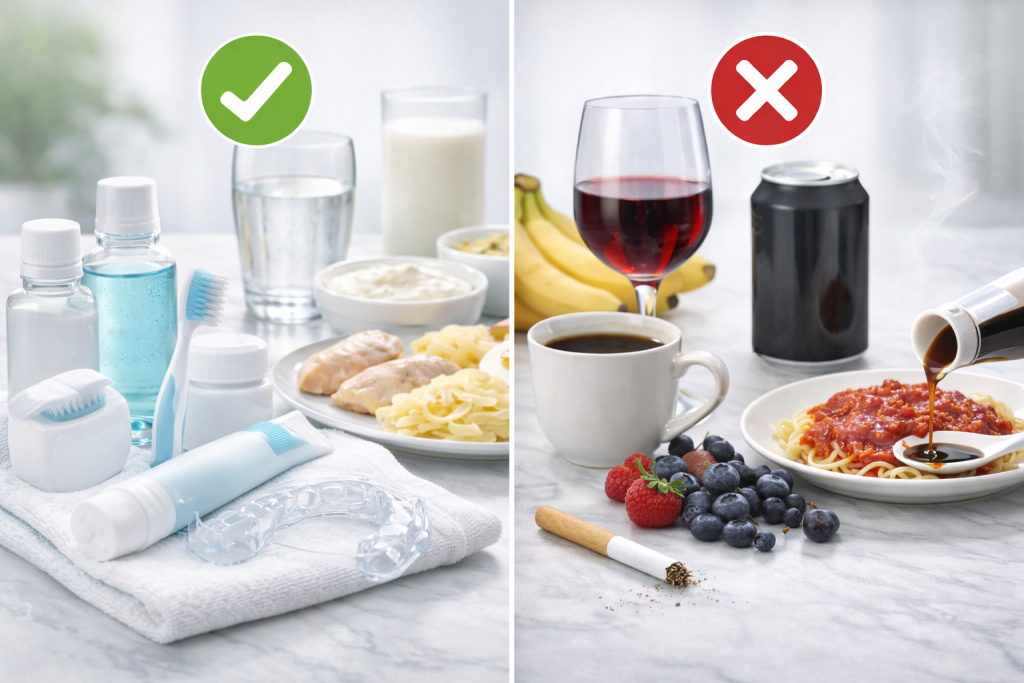
To protect newly porous enamel and prevent immediate staining, follow a “white diet” for at least the first 24 hours. Avoid:
- Coffee, tea, and dark herbal teas
- Red wine and colored cocktails
- Colas and dark sodas
- Tomato-based sauces, soy sauce, curry, and balsamic vinegar
- Dark berries, beets, and colored confectionery
- Colored mouth rinses and alcohol-based mouthwashes
- Tobacco in all forms
Stick to pale, non-acidic foods and water to minimize post-treatment staining and sensitivity.

Short-term teeth whitening after care (first week)
Daily oral hygiene adjustments
During the first week after whitening, prioritize gentle, effective cleaning. Use a soft-bristled brush and a low-abrasivity toothpaste—preferably one formulated for sensitivity or enamel protection. Brush twice daily and floss once daily to remove plaque, which can attract stain. Continue to avoid aggressive whitening products and abrasive polishing powders that can increase sensitivity. If your dentist provided a fluoride rinse or gel, use it as directed to strengthen enamel during this vulnerable period.
Diet restrictions and safe food list for the first 7 days
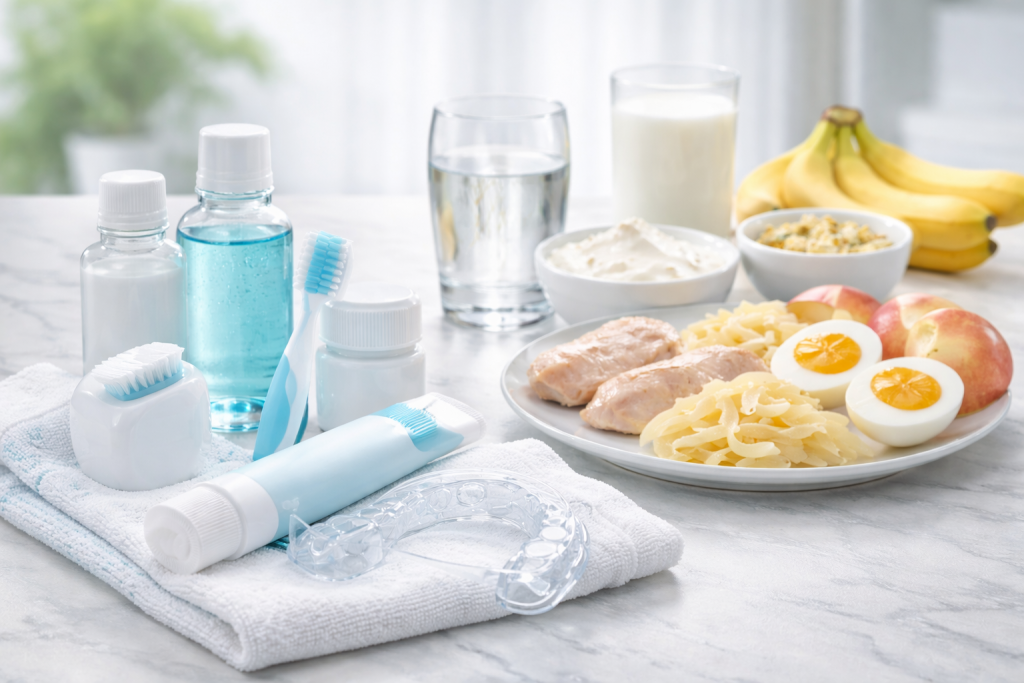
Extend the “white diet” precautions for up to 7 days if you experience heightened sensitivity or if your provider advises it. Safe foods include:
- Plain rice, pasta, and potatoes
- Chicken, turkey, white fish
- Eggs and cottage cheese
- Milk, plain yogurt, and cheese
- Bananas, peeled apples, and pears
- Clear broths and light sauces (avoid soy or tomato bases)
- Water and clear or pale beverages
Avoid acidic, highly pigmented, or tannin-rich foods and drinks until enamel sensitivity subsides and color stabilizes.
Managing temporary discoloration or relapse
It’s common to notice minor evening-out or temporary relapse within the first week as enamel rehydrates. To manage this:
- Maintain consistent, gentle oral hygiene to prevent external staining from food and plaque.
- Use a whitening-safe toothpaste once the initial sensitivity decreases to help maintain results.
- If small areas appear less white, consult your dentist before repeating any whitening—additional treatments may be needed or a touch-up protocol recommended.
Do not attempt repeated or more frequent whitening within this week to “speed up” results; this increases sensitivity and risks enamel damage.
Use of desensitizing agents and topical gels
Desensitizing products can accelerate comfort and support recovery. Options include:
- Desensitizing toothpaste (potassium nitrate or stannous fluoride)
- Topical fluoride gels or varnishes applied by the dentist
- Dentist-prescribed neutral sodium fluoride trays for short-term use
- Potassium-based at-home gels applied per instructions
Apply these products exactly as directed. If your dentist prescribes an at-home desensitizing regimen, follow the timing and duration to avoid overuse.
Long-term teeth whitening after care and maintenance
Establishing a whitening-safe oral care routine
Create a long-term routine that balances stain prevention and enamel protection. Recommendations:
- Brush twice daily with a soft-bristled brush and a low-abrasivity toothpaste; choose one labeled safe for enamel and whitening maintenance.
- Floss daily to prevent discoloration at the gumline.
- Rinse with a fluoride-containing, alcohol-free mouthwash to strengthen enamel without drying tissues.
- Limit abrasive powders and avoid excessive polishing at home—leave professional polishing to your dental team.
- Consider using a straw for staining beverages to reduce contact with front teeth.
Recommended touch-up schedules (at-home vs professional)
Touch-up frequency depends on the whitening method and individual habits:
- In-office whitening: professional touch-ups typically every 6–24 months depending on staining risk and lifestyle.
- Dentist-prescribed at-home trays: short booster periods (a few days to two weeks) every 6–12 months may be recommended.
- Over-the-counter kits: less predictable longevity—use sparingly and follow product guidance; many users opt for touch-ups every 3–6 months but consult a dentist first.
Personal sensitivity and restoration presence will influence the safest schedule—discuss a plan with your dentist.
Lifestyle habits to prolong results (diet, smoking, beverages)
To maximize whitening longevity:
- Avoid or reduce smoking and tobacco, which are potent, fast-staining agents.
- Limit coffee, tea, red wine, dark juices, and strongly colored sauces; when consuming, rinse with water afterward or use a straw where practical.
- Practice good hydration and salivary flow by drinking water; saliva helps neutralize acids and wash away pigments.
- Maintain regular dental cleanings to remove surface stain and plaque that can dull results.
Professional recall and monitoring
Schedule regular dental visits for monitoring and maintenance—typically every 6 months, or more often if you have high staining risk or restorations. Professional cleanings remove surface deposits that can reduce brightness. During recalls, your dentist can assess tooth vitality, restoration margins, and gum health to recommend safe touch-ups or alternative cosmetic solutions if needed.

Do’s and Don’ts of teeth whitening after care
Do: immediate and ongoing best practices
- Do follow your provider’s post-treatment instructions precisely.
- Do use sensitivity-formulated toothpaste and fluoride products as recommended.
- Do maintain gentle but thorough oral hygiene—soft brush, proper flossing.
- Do adopt a temporary “white diet” to avoid immediate staining.
- Do contact your dentist for prolonged sensitivity or visible gum injury.
- Do keep records or photos to track results over time.
Don’t: common mistakes that reduce results
- Don’t brush immediately with abrasive toothpaste or a hard-bristled brush after treatment.
- Don’t smoke or consume staining drinks for at least 48–72 hours, ideally longer.
- Don’t apply extra whitening products without professional advice.
- Don’t ignore prolonged pain, swelling, or chemical burns—seek dental care.
- Don’t expect restorations to whiten—coordinate color-matching with your dentist.
Troubleshooting common issues after whitening
Tooth sensitivity — symptoms, temporary relief, when to seek help
Symptoms: brief sharp pain with hot, cold, sweet, or acidic stimuli; generalized achiness in multiple teeth.
Temporary relief:
- Use desensitizing toothpaste twice daily; apply topical gels if recommended.
- Avoid extreme temperatures in food and drinks.
- Use recommended fluoride rinses or trays.
- Take OTC pain relievers if necessary and appropriate.
Seek dental care if sensitivity is severe, affects daily function, or persists beyond one week despite conservative measures—this may indicate pulpitis, cracked teeth, or improper whitening application.
Gum irritation or chemical burns — recognition and response
Recognition: red, sore, or blistered gum tissue; localized pain; white sloughing of soft tissue in severe cases.
Immediate response:
- Rinse mouth with cool water and stop whitening product use.
- Apply a cold compress externally to reduce swelling if present.
- Use a bland, alcohol-free rinse and avoid irritants.
- Contact your dentist for evaluation and possible prescription rinses or topical corticosteroids for severe chemical burns.
Prompt dental assessment prevents infection and promotes healing; prolonged irritation should not be ignored.
Uneven whitening or white spots — causes and corrective steps
Causes: pre-existing enamel hypocalcification, uneven bleaching due to tray fit or application variability, or dehydration-induced white spots that may resolve as enamel rehydrates.
Corrective steps:
- Wait 7–14 days for enamel to rehydrate before judging results—some patchiness resolves naturally.
- If persistent, consult your dentist for targeted touch-ups, microabrasion, or conservative restorations where needed.
- Ensure future whitening is applied evenly—well-fitting trays or professional in-office application reduce risk of uneven results.
Post-treatment staining — prevention and removal
Prevention rests on diet control, immediate rinsing after consuming staining foods, and consistent plaque control. If staining appears:
- Schedule a professional cleaning to remove surface stains.
- Use dentist-recommended maintenance whitening or at-home touch-ups as appropriate.
- Avoid scrubbing with abrasive toothpastes that can erode enamel and paradoxically increase staining susceptibility.
Comparison: aftercare for professional vs at-home whitening
In-office whitening after care — typical instructions and timelines
Typical guidance includes waiting 30–60 minutes to brush, following a 24–72 hour “white diet,” using desensitizing toothpaste immediately, and avoiding hot/cold extremes if sensitivity occurs. Clinicians often provide fluoride varnish or desensitizing solutions chairside, and recommend follow-up if sensitivity doesn’t subside in a few days.
Dentist-prescribed at-home trays after care — specific protocols
After using dentist-prescribed trays, remove excess gel carefully, rinse trays and teeth, and follow specific wear-time and post-use instructions. Many dentists advise waiting 30 minutes before brushing, using desensitizing toothpaste if needed, and performing shorter booster sessions for touch-ups rather than continuous daily whitening. Trays should be cleaned and stored per instructions to avoid contamination.
Over-the-counter kit and strip after care — practical differences
OTC kits and strips often contain lower-concentration bleaching agents and fewer professional safeguards. Aftercare focuses on conservative symptom management: avoid immediate staining foods, use sensitivity toothpaste, and monitor for gum irritation from poorly fitting strips. Because potency and fit vary, results and side effects can be less predictable than professional methods.
Key differences summary: monitoring, potency, follow-up
Professional treatments offer higher potency agents, clinician oversight, and immediate desensitizing options—leading to clearer post-care instructions and scheduled follow-up. Dentist-prescribed at-home systems balance potency with safety and include personalized guidance. OTC products require more cautious self-monitoring; seek dental advice for unexpected reactions. Overall, closer monitoring and tailored aftercare improve safety and outcomes.
Decision-making guidance for choosing an aftercare routine
Factors to consider: sensitivity history, restorations, lifestyle
When selecting an aftercare plan, consider:
- History of dentin hypersensitivity or recent root exposure—lean toward desensitizing-focused protocols.
- Presence of restorations (crowns, veneers) that will not whiten—coordinate maintenance to preserve color match.
- Dietary habits and tobacco use—high-risk lifestyles benefit from more frequent monitoring and conservative touch-ups.
- Oral health status—active decay or periodontal disease requires treatment before elective whitening and tailored aftercare.
Step-by-step checklist to personalize aftercare
- Assess your sensitivity history and existing restorations.
- Choose desensitizing products if sensitivity is known or anticipated.
- Plan a “white diet” window—24–72 hours or up to 7 days if advised.
- Keep a soft-bristled brush and sensitivity toothpaste on hand for immediate use.
- Schedule follow-up with your dentist within 1–4 weeks depending on treatment type.
- Document results with photos to guide future touch-ups.
When to follow dentist instructions vs OTC guidance
Follow dentist instructions whenever available—these are tailored to your oral health, restorations, and sensitivity profile. Use OTC guidance only when professional advice isn’t accessible, and err on the side of caution: reduce wear time, monitor for adverse effects, and consult a dentist if anything unusual occurs. For persistent symptoms or complex cosmetic concerns, prioritize dental direction over OTC product instructions.
Escalation plan: when to contact your dental professional
- Contact your dentist immediately for severe or worsening sensitivity that impairs daily life.
- Seek care for any persistent gum burns, blisters, or signs of infection.
- Report uneven whitening after 2 weeks if it does not improve as enamel rehydrates.
- Schedule an appointment if restorations show margin staining or color mismatch post-whitening.
Buying and choosing aftercare products
How to choose desensitizing toothpaste and gels
Look for active ingredients with clinical evidence: potassium nitrate and stannous fluoride reduce nerve excitability; sodium fluoride strengthens enamel. Choose products with the ADA Seal when possible and follow product-specific instructions. For gels, consult your dentist to ensure appropriate concentration and application method for your sensitivity level.
Selecting mouthwash (alcohol-free, fluoride-containing options)
Prefer alcohol-free mouthwashes to avoid mucosal dryness and increased sensitivity. Fluoride-containing rinses help remineralize enamel—especially beneficial after whitening. Avoid colored rinses that could deposit pigments on vulnerable enamel. If antiseptic control is needed, select formulations that balance antibacterial action with low irritation potential.
Evaluating whitening-safe toothpastes and polishing products
Choose toothpastes labeled “whitening-safe” or “low-abrasivity” with an RDA (Relative Dentin Abrasivity) under 250; lower RDA values are gentler. Avoid aggressive homemade polishing powders or baking soda indiscriminately, as excessive abrasivity harms enamel and can accelerate staining over time. When in doubt, ask your dentist for product recommendations aligned with your whitening history.
Ingredient checklist and product safety tips
- Look for: potassium nitrate, stannous fluoride, sodium fluoride, desensitizing gels (dentist-prescribed).
- Avoid: high-abrasivity agents, harsh alcohol-based mouthwashes immediately post-treatment, and unknown concentrated bleaching agents without professional supervision.
- Store products per label instructions and replace desensitizing trays or gels according to expiry to maintain efficacy and safety.
Costs, risks, and insurance considerations for aftercare
Typical costs: products, touch-ups, follow-up appointments
Costs vary by region and treatment type:
- Desensitizing toothpaste and OTC products: $5–$30
- Dentist-prescribed desensitizing gels or custom trays: $50–$200
- Professional touch-ups or follow-up appointments: $50–$300 per visit depending on services
- In-office whitening touch-ups: may be higher, ranging $200–$600 depending on the practice
Obtain a cost estimate from your dental practice before treatment to plan for maintenance expenses.
Common risks and side effects of inadequate aftercare
Poor aftercare increases the risk of:
- Prolonged sensitivity and discomfort
- Gum irritation or chemical burns from residual gel
- Accelerated or recurrent staining
- Uneven results and compromised restoration margins
Avoid these by following recommended protocols and seeking care when problems arise.
Dental insurance and coverage for post-whitening care
Cosmetic whitening is usually not covered by dental insurance. However, coverage may apply for diagnosis and treatment of complications (e.g., treatment of chemical burns, tooth sensitivity evaluations, or restorative work). Review your policy and discuss potential out-of-pocket costs with your provider and dental office ahead of treatment.
Special populations and situations
Pregnant or breastfeeding patients — aftercare precautions
Elective whitening is often deferred during pregnancy and breastfeeding due to limited safety data. If whitening occurs, avoid unnecessary exposure, consult your obstetric provider, and use the most conservative aftercare—minimal chemical exposure, strict oral hygiene, and immediate reporting of any adverse reaction. Prefer non-invasive management of sensitivity and consult dental and medical professionals jointly.
Teens and minors — age-appropriate aftercare guidance
Whitening in teens should be approached conservatively; follow dentist guidance on age-appropriate products and concentrations. Aftercare emphasizes gentle hygiene, avoidance of staining foods, and parental supervision of product use. Monitor for sensitivity and ensure any restorations are addressed before whitening.
Patients with restorations (veneers, crowns) — special instructions
Restorations do not whiten, so aftercare focuses on protecting margins and maintaining color harmony. Avoid aggressive whitening near restoration margins and consult your dentist about replacement or polishing if color mismatch occurs after whitening. Use fluoride and desensitizing products as directed to preserve tooth structure around restorations.
Patients with periodontal disease or active dental issues
Treat active decay or periodontal disease before elective whitening. Aftercare in these patients should emphasize infection control, gentle hygiene to avoid disturbing healing tissues, and close monitoring. Whitening can exacerbate sensitivity in compromised teeth—coordinate timing with periodontal therapy and follow clinician-directed aftercare strictly.
Monitoring results and scheduling touch-ups
How to document and track whitening longevity
Take standardized photos under consistent lighting immediately before treatment, 1 week after, and at regular intervals (3, 6, 12 months). Keep a simple log noting diet, smoking, and any touch-up treatments. These records help you and your dentist evaluate longevity and decide appropriate maintenance timing.
Signs that indicate a touch-up is needed
Consider touch-ups when you notice:
- Visible yellowing or return to pre-treatment shade
- Uneven discoloration compared with earlier photos
- Fading that affects smile confidence and occurs despite good hygiene
Consult your dentist to pick the safest, most effective touch-up approach based on prior treatment and oral health.
Recommended timing for maintenance treatments
Typical recommendations:
- Low-risk patients: touch-ups every 12–24 months
- Moderate-risk (coffee/tea drinkers, occasional smokers): every 6–12 months
- High-risk (daily smokers, heavy staining diets): every 3–6 months with professional guidance
Customize timing with your dentist to balance results and tooth health.
Emergency signs and when to contact a dental professional
Severe or prolonged sensitivity
Contact your dentist if sensitivity is intense, localized to a single tooth, or persists beyond 7–10 days despite desensitizing measures—these could indicate pulp involvement or a cracked tooth.
Persistent gum pain, swelling, or bleeding
Gum symptoms that worsen or do not improve within a few days require prompt evaluation. Persistent bleeding, pus, or spreading swelling may indicate infection or significant chemical injury.
Signs of allergic reaction or chemical injury
Seek immediate care for systemic allergic signs (hives, facial swelling, difficulty breathing) or severe chemical burns in the mouth. For localized chemical injury, contact your dentist for urgent assessment and appropriate topical or systemic treatment.
FAQ — teeth whitening after care
Q: How long does teeth whitening sensitivity typically last?
A: Most sensitivity resolves within 24–72 hours; use desensitizing toothpaste, topical fluoride, or prescribed gels and contact a dentist if it persists beyond a week or is severe.
Q: What can I eat and drink after teeth whitening?
A: Follow a “white diet” for 24–72 hours—avoid coffee, tea, red wine, dark sauces, berries, and tobacco; consume pale foods and water.
Q: When can I brush my teeth after whitening treatment?
A: Wait at least 30–60 minutes after an in-office procedure or per provider instructions; use a soft-bristled brush and non-abrasive toothpaste initially.
Q: Can I use whitening toothpaste immediately after treatment?
A: Use non-abrasive, sensitivity-formulated toothpaste initially; consult product labels and your dentist before resuming whitening toothpaste.
Q: How often can I whiten my teeth safely?
A: Frequency depends on method and sensitivity—follow dentist guidance; at-home touch-ups are typically months apart, not daily.
Q: Is gum irritation normal and how should I treat it?
A: Mild irritation can occur; rinse with cool water, avoid irritants, apply recommended gels, and contact a dentist if symptoms worsen or persist.
Q: Can I smoke after whitening?
A: Avoid smoking for at least 48–72 hours and ideally longer to prevent staining and reduce irritation risk.
Q: What should I do if I have dental restorations?
A: Consult your dentist—restorations do not whiten; follow tailored aftercare to protect margins and color match concerns.
Appendix: quick-reference checklists
24-hour aftercare checklist
- Rinse mouth gently with lukewarm water after treatment.
- Wait 30–60 minutes before brushing; use a soft-bristled brush and non-abrasive toothpaste.
- Follow a “white diet” (avoid staining foods and drinks).
- Use desensitizing toothpaste if recommended.
- Avoid smoking, alcohol-based mouthwash, and extreme temperatures.
- Keep contact information for your dental provider handy in case of adverse reactions.
7-day maintenance checklist
- Continue gentle brushing and daily flossing with low-abrasivity products.
- Maintain reduced intake of staining foods; use a straw for beverages when possible.
- Use fluoride rinses or gels as recommended.
- Monitor sensitivity and gum health; apply desensitizing agents if needed.
- Document results with photos to compare progress.
Emergency contact checklist
- Contact your dentist immediately for severe or prolonged sensitivity, persistent gum pain, swelling, or bleeding.
- Seek urgent care for signs of allergic reaction (hives, facial swelling, breathing difficulty).
- If chemical burns appear severe, call your dental office for same-day evaluation.
- Keep local emergency numbers and your dentist’s after-hours contact information accessible.