About the Author and Medical Reviewer
Learn more about the professionals responsible for writing and medically reviewing this article.

Alma Polyclinic Editorial Team
Medical Content Team at Alma Polyclinic
The Alma Polyclinic Editorial Team creates clear, patient-focused health content based on trusted medical sources and clinical guidance from our doctors.
View author profile
Dr. Homa Shahakbari
Founder & CEO | Cosmetic & General Dentist at Alma Polyclinic
This article was reviewed for clinical accuracy, relevance and patient safety by Dr. Homa Shahakbari.
View doctor profileA brighter smile can make you feel more confident before a meeting, dinner, photoshoot, wedding, or important event. That is why so many people search for teeth whitening at home in 2 minutes and hope for a quick method that works instantly.
The honest answer is simple: you can make your teeth look cleaner and slightly brighter in 2 minutes, but you cannot safely change the deep color of your teeth that fast.
A 2-minute whitening routine may help remove fresh surface stains from coffee, tea, food, or plaque. It can refresh your smile before leaving the house. However, deep yellowing, old stains, internal discoloration, and uneven tooth color need more time and often require professional teeth whitening.
This guide explains what actually works, what results you can expect, which home remedies you should avoid, and when it is better to visit a dentist for safe whitening.
Quick Answer: Can You Whiten Teeth at Home in 2 Minutes?
Yes and no.
You can improve the appearance of your smile in 2 minutes by cleaning away surface stains, but you cannot deeply bleach your teeth in only 2 minutes.
A safe 2-minute routine can help with:
- Fresh coffee or tea stains
- Light surface discoloration
- Plaque buildup that makes teeth look dull
- Food particles between teeth
- A quick smile refresh before an event
It will not fix:
- Deep yellow teeth
- Brown or grey internal stains
- Stains from medication or trauma
- Tartar buildup
- Uneven tooth color
- Discoloration on veneers, crowns, bonding, or fillings
Think of 2-minute whitening as a quick polish, not a full whitening treatment.
If you are looking for professional teeth whitening in Dubai, in-office whitening may be a better option than quick home methods. A dental whitening treatment in Dubai can be planned based on your tooth shade, sensitivity level, and the type of stains you have.
Why Do Teeth Look Yellow or Stained?
Before choosing any whitening method, you need to know why your teeth look darker. Not every type of discoloration responds to home whitening in the same way.
Surface Stains
Surface stains sit on the outer layer of the teeth. These are usually easier to improve with brushing, polishing, professional cleaning, or whitening toothpaste.
Common causes include:
- Coffee
- Black tea
- Green tea
- Red wine
- Cola
- Dark sauces
- Smoking
- Poor brushing habits
- Plaque buildup
- Some strongly colored foods
If your teeth look dull because of surface stains, a quick home routine may help them look brighter.
Deeper Tooth Discoloration
Some discoloration comes from inside the tooth structure. This type of staining does not disappear with a 2-minute brushing routine.
Common causes include:
- Natural aging
- Thin enamel
- Genetics
- Tooth trauma
- Certain medications
- Long-term staining
- Enamel defects
- Previous dental injury
Deep discoloration usually needs a dentist’s evaluation. In some cases, professional whitening works well. In other cases, cosmetic options such as veneers, bonding, or crowns may be more suitable.
Dental Work Does Not Whiten Like Natural Teeth
This is one of the most important things to understand before trying teeth whitening at home.
Whitening products do not change the color of:
- Veneers
- Crowns
- Bridges
- Composite bonding
- Tooth-colored fillings
- Dentures
If you whiten your natural teeth while you have visible front crowns or veneers, your natural teeth may become lighter while the restorations stay the same shade. This can create uneven color.
If you already have cosmetic dental work, speak to a dentist before starting whitening.
How Teeth Whitening Actually Works
There are two main ways to make teeth look whiter: surface stain removal and chemical whitening.
Surface Stain Removal
This is what most quick home methods do.
Whitening toothpaste, brushing, flossing, and professional cleaning can remove stains from the outer surface of the teeth. This may make teeth look cleaner, smoother, and slightly brighter.
Surface stain removal can help if your teeth look yellow because of:
- Coffee stains
- Tea stains
- Smoking stains
- Plaque
- Food residue
But it does not deeply change the natural tooth shade.
Chemical Whitening
True whitening usually involves ingredients such as hydrogen peroxide or carbamide peroxide. These ingredients break down stain molecules inside the tooth structure and make teeth look lighter.
This process needs contact time. That is why most whitening strips, gels, trays, and professional treatments take longer than 2 minutes.
The stronger the whitening product, the more important it becomes to protect the gums and use the treatment correctly.
Why “Instant Whitening” Claims Can Be Misleading
Many online videos promise dramatic teeth whitening at home in 2 minutes. Some before-and-after results look impressive, but they may not show the full truth.
These results can be affected by:
- Different lighting
- Camera filters
- Wet vs dry teeth
- Different angles
- Temporary polishing effects
- Aggressive ingredients
- Unsafe acidic mixtures
A tooth that looks cleaner after brushing is not the same as a tooth that has been safely whitened from within.
Safe 2-Minute Teeth Whitening Routine at Home
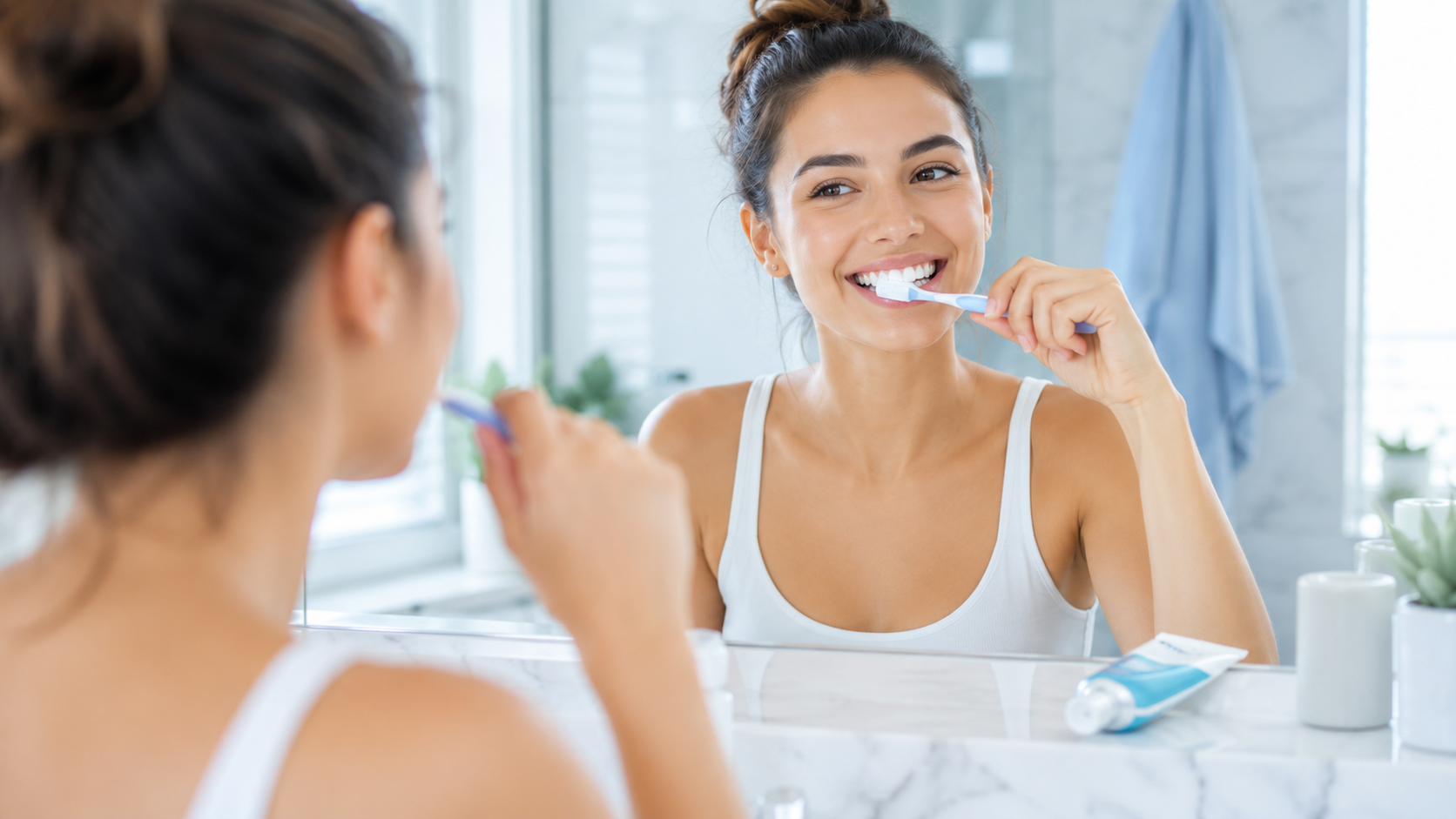
This routine is best described as a quick smile refresh. It can help your teeth look cleaner before an event, but it should not be treated as a deep whitening method.
Step 1: Rinse Your Mouth with Water
Start by rinsing your mouth well with water.
This helps remove:
- Food particles
- Loose plaque
- Fresh pigments from drinks
- Acids from recent meals
This step is especially useful if you recently had coffee, tea, cola, or a dark-colored meal.
Step 2: Brush Gently for 2 Minutes
Use a soft-bristled toothbrush and a fluoride whitening toothpaste.
Brush gently for the full 2 minutes. Focus on:
- Front surfaces of teeth
- Gumline
- Back teeth
- Areas where stains collect
- The tongue, if needed for freshness
Do not scrub aggressively. Hard brushing does not whiten teeth faster. It can wear down enamel, irritate gums, and cause sensitivity.
Step 3: Clean Between Your Teeth
If you have a little extra time, floss or use interdental brushes.
This improves the appearance of your smile because stains, food, and plaque often collect between teeth. Even if your tooth surfaces look clean, stained spaces between teeth can make the smile look darker.
Step 4: Rinse Again
Rinse thoroughly after brushing.
This helps remove toothpaste residue and loosened debris. After rinsing, check your smile in natural light. Your teeth may look cleaner, fresher, and slightly brighter.
Step 5: Avoid Staining Drinks Right Away
If you want your teeth to stay bright for an event, avoid these immediately after brushing:
- Coffee
- Tea
- Cola
- Red wine
- Dark juices
- Smoking
- Dark sauces
If you need to drink coffee or tea, rinse with water afterward.
Does Baking Soda Whiten Teeth in 2 Minutes?
Baking soda is one of the most popular home remedies for teeth whitening. It can help remove surface stains because it has mild abrasive properties.
However, baking soda does not deeply bleach teeth.
It may help with:
- Light surface stains
- Plaque removal
- A cleaner tooth surface
- Temporary brightness
But it will not dramatically whiten deep yellow teeth in 2 minutes.
Is Baking Soda Safe?
Baking soda can be safe when used carefully, but it can cause problems when overused or used aggressively.
Possible risks include:
- Enamel wear
- Gum irritation
- Tooth sensitivity
- Rough brushing habits
- Overuse as a replacement for fluoride toothpaste
The safer option is to use a dentist-approved whitening toothpaste that contains gentle polishing ingredients and fluoride.
Avoid mixing baking soda with acidic ingredients such as lemon juice or vinegar. Acid plus abrasion can be harsh on enamel.
Is Hydrogen Peroxide Safe for Teeth Whitening at Home?
Hydrogen peroxide is used in many whitening products because it can break down stains. However, that does not mean you should use random household peroxide on your teeth without guidance.
The safety of peroxide depends on:
- Concentration
- Contact time
- Product formula
- Gum protection
- Frequency of use
- Your oral health condition
Incorrect use may cause:
- Gum irritation
- Burning sensation
- Tooth sensitivity
- Uneven whitening
- Enamel damage from overuse
If you want to use peroxide-based whitening, choose a product made specifically for dental whitening and follow the instructions carefully. If you have sensitive teeth, gum disease, cavities, exposed roots, or dental restorations, speak to a dentist first.
Home Remedies You Should Avoid
Some natural whitening hacks are popular online, but popular does not always mean safe.
Avoid Lemon Juice
Lemon juice is acidic. It may make teeth appear brighter temporarily, but it can weaken enamel over time.
Once enamel wears down, the yellow dentin underneath can show through more clearly. This may make teeth look more yellow in the long term.
Avoid Apple Cider Vinegar
Apple cider vinegar is also acidic. It can irritate gums and soften enamel if used repeatedly.
It is not a safe whitening method.
Avoid Salt Scrubs
Salt can feel like it is polishing the teeth, but it may be too abrasive for regular use. It can also irritate the gums.
Salt does not bleach teeth.
Avoid Charcoal Powder
Charcoal whitening products are popular, but they can be abrasive. Some products may scratch enamel or make teeth feel rough over time.
A rougher enamel surface can collect stains more easily.
Avoid Strawberry Whitening Hacks
Strawberries contain natural acids. Some people mix strawberries with baking soda and brush with the paste.
This may remove some surface debris, but the acid and abrasion combination is not ideal for enamel. It is not a reliable deep whitening method.
Avoid Over-Brushing
Brushing longer, harder, or more often will not whiten your teeth faster.
Over-brushing can cause:
- Gum recession
- Enamel wear
- Tooth sensitivity
- Exposed roots
- Toothbrush abrasion
A gentle 2-minute brushing routine is better than aggressive scrubbing.
Best At-Home Teeth Whitening Options That Actually Make Sense
If you want more noticeable results than a quick 2-minute refresh, choose safer whitening options.
Whitening Toothpaste
Whitening toothpaste is best for surface stains and daily maintenance.
It can help:
- Remove mild stains
- Maintain results after whitening
- Reduce dullness
- Support daily oral hygiene
It is not the best choice for deep discoloration or dramatic shade changes.
Best for:
- Coffee drinkers
- Tea drinkers
- Mild yellowing
- Maintenance after professional whitening
Whitening Strips
Whitening strips can give more visible results than toothpaste because many contain peroxide-based whitening ingredients.
They are useful for:
- Mild to moderate staining
- Gradual whitening
- At-home convenience
- People who can follow instructions carefully
Possible downsides include:
- Tooth sensitivity
- Gum irritation
- Uneven application
- Poor fit around crowded teeth
Do not leave strips on longer than directed.
Whitening Pens
Whitening pens are easy to use and convenient for touch-ups.
They may help with:
- Quick maintenance
- Small areas of staining
- Travel
- Short-term brightness
However, results vary. Whitening pens usually work better as maintenance tools than full whitening treatments.
Dentist-Supervised Home Whitening Trays
Custom trays from a dentist can be a strong option for people who want at-home whitening with better control.
Benefits include:
- Better fit
- More even gel placement
- Less gel leakage onto gums
- Personalized instructions
- Safer use for sensitive teeth
- More predictable results
This option usually takes longer than 2 minutes, but it can provide more noticeable and controlled whitening.
Professional In-Office Teeth Whitening
Professional whitening is usually the better choice if you want faster, more visible results.
It may be suitable if:
- You have an upcoming event
- Your teeth are deeply stained
- You tried home whitening without success
- You have sensitive teeth
- You want even results
- You have old stains from coffee, tea, or smoking
- You want dentist supervision
A dentist can check your teeth first, protect your gums, and choose the right whitening method for your smile.
Teeth Whitening at Home in 2 Minutes vs Other Whitening Options
| Whitening Method | Time Needed | Best For | Main Limitation |
|---|---|---|---|
| 2-minute brushing routine | 2 minutes | Quick surface refresh | No deep whitening |
| Whitening toothpaste | Daily use | Mild surface stains | Gradual, subtle results |
| Whitening strips | Days or weeks | More visible at-home whitening | May cause sensitivity |
| Whitening pens | Quick touch-ups | Maintenance | Results vary |
| Dentist home trays | Days or weeks | Controlled home whitening | Requires dental visit |
| In-office whitening | Usually one appointment | Faster visible results | Higher cost than home products |
The best method depends on your tooth color, stain type, sensitivity level, dental work, and whitening goals.
Who Should Not Whiten Teeth at Home Without a Dentist?
Home whitening is not ideal for everyone.
Speak to a dentist first if you have:
- Tooth sensitivity
- Bleeding gums
- Gum disease
- Cavities
- Exposed roots
- Cracked teeth
- Worn enamel
- White spots on teeth
- Uneven tooth color
- Front crowns or veneers
- Composite bonding
- Recent dental treatment
- Pain when biting
- One tooth that is darker than the others
You should also be cautious if you are pregnant, breastfeeding, or considering whitening for a child or teenager.
If your teeth hurt, your gums bleed, or your smile includes cosmetic dental work, do not rely on online whitening hacks.
trusted dental clinic in Jumeirah
Teeth Whitening for Sensitive Teeth
Whitening can sometimes cause temporary sensitivity. This may happen when whitening ingredients pass through enamel and irritate the tooth.
You may feel:
- Sharp sensitivity to cold drinks
- Short “zaps” of pain
- Gum tenderness
- Sensitivity while brushing
- Discomfort after whitening
How to Reduce Whitening Sensitivity
Try these safer steps:
- Use a toothpaste for sensitive teeth before whitening.
- Choose a mild whitening product.
- Avoid overusing whitening strips or gels.
- Do not whiten every day unless the product instructions allow it.
- Take breaks if sensitivity starts.
- Avoid very hot or cold drinks after whitening.
- Ask a dentist about desensitizing products.
- Consider custom trays for better gel control.
Stop whitening and contact a dentist if sensitivity is severe, one tooth hurts more than others, or pain continues after stopping the product.
How to Keep Teeth White After Whitening
Whitening is not permanent. Your habits affect how long your results last.
Limit Staining Drinks
The biggest stain triggers include:
- Coffee
- Tea
- Red wine
- Cola
- Dark juices
- Energy drinks
You do not always need to avoid them completely, but you can reduce staining by rinsing with water afterward.
Improve Daily Oral Hygiene
Keep your smile brighter by following simple habits:
- Brush twice a day.
- Floss daily.
- Use fluoride toothpaste.
- Clean your tongue.
- Drink enough water.
- Visit your dentist for regular cleanings.
Avoid Smoking
Smoking can cause stubborn yellow or brown stains. It can also affect gum health and overall oral health.
If you smoke, whitening results may fade faster.
Schedule Professional Cleaning
Sometimes teeth look yellow because of plaque or tartar buildup. Whitening products cannot remove tartar.
A professional cleaning can make teeth look brighter by removing buildup that brushing cannot fully remove at home.
Common Myths About Teeth Whitening at Home
Myth 1: Lemon Juice Is a Safe Whitening Method
Lemon juice is acidic and can damage enamel. It is not a safe whitening method.
Myth 2: Charcoal Toothpaste Deeply Whitens Teeth
Charcoal may remove some surface stains, but it does not deeply bleach teeth. Some charcoal products may be abrasive.
Myth 3: If Whitening Burns, It Is Working
Burning is not a good sign. It may mean the gums are irritated or the product is too harsh.
Myth 4: More Whitening Gives Better Results
Overuse can cause sensitivity, gum irritation, and enamel problems. Follow product instructions.
Myth 5: Whitening Works on Veneers and Crowns
Whitening products do not change the color of veneers, crowns, bonding, or fillings.
Myth 6: Yellow Teeth Are Always Dirty
Not always. Some people naturally have warmer tooth shades. Thin enamel can also make teeth look more yellow.
When Professional Teeth Whitening Is the Better Choice
Home whitening can help with mild stains, but professional whitening is often better when you want safer, faster, and more even results.
Consider professional whitening if:
- You want visible results before an event.
- You have deep yellow stains.
- You have sensitive teeth.
- You have veneers, crowns, or bonding.
- Your tooth color is uneven.
- One tooth is darker than the others.
- You want a dentist to check your oral health first.
- You tried home whitening and did not see results.
At Alma Polyclinic, the dental team can examine your teeth, identify the cause of discoloration, and recommend a whitening option that suits your smile, sensitivity level, and cosmetic goals.
For patients searching for the best teeth whitening in Dubai or a trusted teeth whitening clinic in Dubai, the most important step is a proper dental check-up before treatment. At Alma Polyclinic in Jumeirah, the dental team can recommend a safe teeth whitening treatment based on your smile goals and oral health.
Final Thoughts: Can 2-Minute Teeth Whitening Really Work?
Teeth whitening at home in 2 minutes can help your smile look cleaner and fresher, especially if you have light surface stains. A gentle brushing routine with whitening toothpaste may give a quick brightness boost before an event.
But deep whitening takes more than 2 minutes.
If you want a noticeably whiter smile, avoid risky DIY hacks and choose safe, proven options. Whitening toothpaste, strips, pens, custom trays, and professional whitening all have different roles. The right choice depends on your teeth, your sensitivity level, and the type of stains you have.
For the safest result, especially if you have sensitive teeth or cosmetic dental work, speak to a dentist before starting whitening.
FAQ
Can I whiten my teeth at home in 2 minutes?
You can make your teeth look cleaner in 2 minutes by brushing with whitening toothpaste, but you cannot deeply whiten teeth that fast. True whitening takes more time.
What is the fastest safe way to whiten teeth at home?
The fastest safe home method is to use a dental whitening product as directed. Whitening toothpaste helps with surface stains, while strips or trays may give more noticeable results over time.
Does baking soda whiten teeth quickly?
Baking soda may remove surface stains, but it does not deeply bleach teeth. Use it carefully and avoid mixing it with lemon juice or vinegar.
Is hydrogen peroxide good for teeth whitening?
Hydrogen peroxide is used in many whitening products, but concentration and contact time matter. Use products made for teeth whitening and follow instructions.
Can yellow teeth become white again?
In many cases, yes. If yellowing comes from surface stains, whitening may help. If discoloration is deeper, you may need professional whitening or cosmetic dental treatment.
What should I avoid when whitening teeth at home?
Avoid lemon juice, vinegar, salt scrubs, aggressive charcoal powder, over-brushing, and any product that causes burning or severe sensitivity.
Do whitening products work on veneers or crowns?
No. Whitening products work on natural teeth, not veneers, crowns, bonding, or fillings.
Why do my teeth hurt after whitening?
Whitening can temporarily cause sensitivity. Stop using the product if pain becomes severe or continues, and speak to a dentist.
How long do teeth whitening results last?
Results vary. Coffee, tea, smoking, poor brushing habits, and diet can make stains return faster. Good oral hygiene and regular dental cleanings help maintain results.
Is professional whitening better than home whitening?
Professional whitening is usually more controlled and can provide faster, more even results. It is especially useful for deeper stains, sensitive teeth, or patients with dental restorations.