
About the Author and Medical Reviewer
Learn more about the professionals responsible for writing and medically reviewing this article.

Alma Polyclinic Editorial Team
Medical Content Team at Alma Polyclinic
The Alma Polyclinic Editorial Team creates clear, patient-focused health content based on trusted medical sources and clinical guidance from our doctors.
View author profile
Dr. Marc Habib
Specialist Endodontist | Microscopic Root Canal Expert at Alma Polyclinic
This article was reviewed for clinical accuracy, relevance and patient safety by Dr. Marc Habib.
View doctor profileIf you need root canal treatment during pregnancy, it is understandable to have questions about the safety of dental treatment, X-rays, local anaesthetic, medications and the best time to have the procedure.
The reassuring answer is that necessary dental treatment, including root canal treatment, can generally be performed during pregnancy when clinically indicated. Current guidance from the American Dental Association states that preventive, diagnostic, restorative and necessary surgical dental care can be provided throughout pregnancy. Delaying treatment for a painful or infected tooth may allow the problem to become more complicated.
The exact treatment plan still depends on your dental diagnosis, general health, pregnancy history and any medications you take. If you have a high-risk pregnancy or another significant medical condition, your dentist may coordinate with your obstetric or pregnancy-care team.
Can You Have a Root Canal While Pregnant?
Yes. A root canal treatment can be performed during pregnancy when it is necessary to treat an inflamed, infected or damaged dental pulp.
The American Dental Association and the American College of Obstetricians and Gynecologists advise that dental conditions requiring treatment, including root canals, should not automatically be postponed because of pregnancy.
A root canal may be recommended when a tooth has:
- Deep decay that has reached or severely affected the pulp
- An infected or necrotic dental pulp
- A dental abscess associated with the tooth
- A crack or fracture affecting the pulp
- Traumatic damage to the tooth
- Persistent pulp inflammation that cannot recover
The purpose of treatment is to remove inflamed or infected tissue from inside the tooth, clean and seal the root canal system and preserve the natural tooth whenever possible.
Read the American Dental Association guidance on dental care during pregnancy .
Why an Infected Tooth Should Not Be Ignored During Pregnancy
Pregnancy itself is not a reason to leave an active dental infection untreated.
A tooth infection may become increasingly painful, develop into an abscess or cause swelling around the gum, jaw or face. In more serious cases, dental infection can spread beyond the original tooth.
Pain can also interfere with eating, sleeping and normal daily activities. The goal of dental treatment during pregnancy is therefore to balance appropriate clinical care with pregnancy-related considerations rather than allowing a necessary procedure to be delayed without a medical reason.
Contact a dentist promptly if you develop:
- Persistent or severe toothache
- Facial or gum swelling
- A pimple-like swelling on the gum
- Pus or an unpleasant taste associated with the tooth
- Increasing pain when biting
- Fever or feeling generally unwell
Difficulty breathing or swallowing associated with facial or oral swelling requires urgent medical assessment.
You can also read our guide to dental emergencies and severe tooth pain.
What Is the Best Trimester for Root Canal Treatment?
There is no rule that necessary root canal treatment must be limited to one particular trimester.
If you have significant pain, infection, swelling or another condition that requires treatment, appropriate dental care can be provided during any stage of pregnancy. Delaying urgent or necessary treatment simply to reach another trimester may allow the dental problem to worsen.
First Trimester
Necessary dental treatment can be carried out during the first trimester. Make sure your dentist knows that you are pregnant, how many weeks pregnant you are and whether there are any medical or pregnancy-related concerns that may affect treatment.
Second Trimester
For treatment that is necessary but can be scheduled flexibly, some patients find the second trimester physically more comfortable because early-pregnancy nausea may have improved and lying in the dental chair may still be relatively comfortable.
This is a practical consideration rather than a requirement that root canal treatment only be performed during the second trimester.
Third Trimester
Necessary treatment can also be provided during the third trimester. However, longer dental appointments may become less comfortable as pregnancy progresses.
Your dental team may adjust the chair position, allow additional breaks or use shorter appointments when appropriate.
Are Dental X-Rays Safe During Pregnancy?
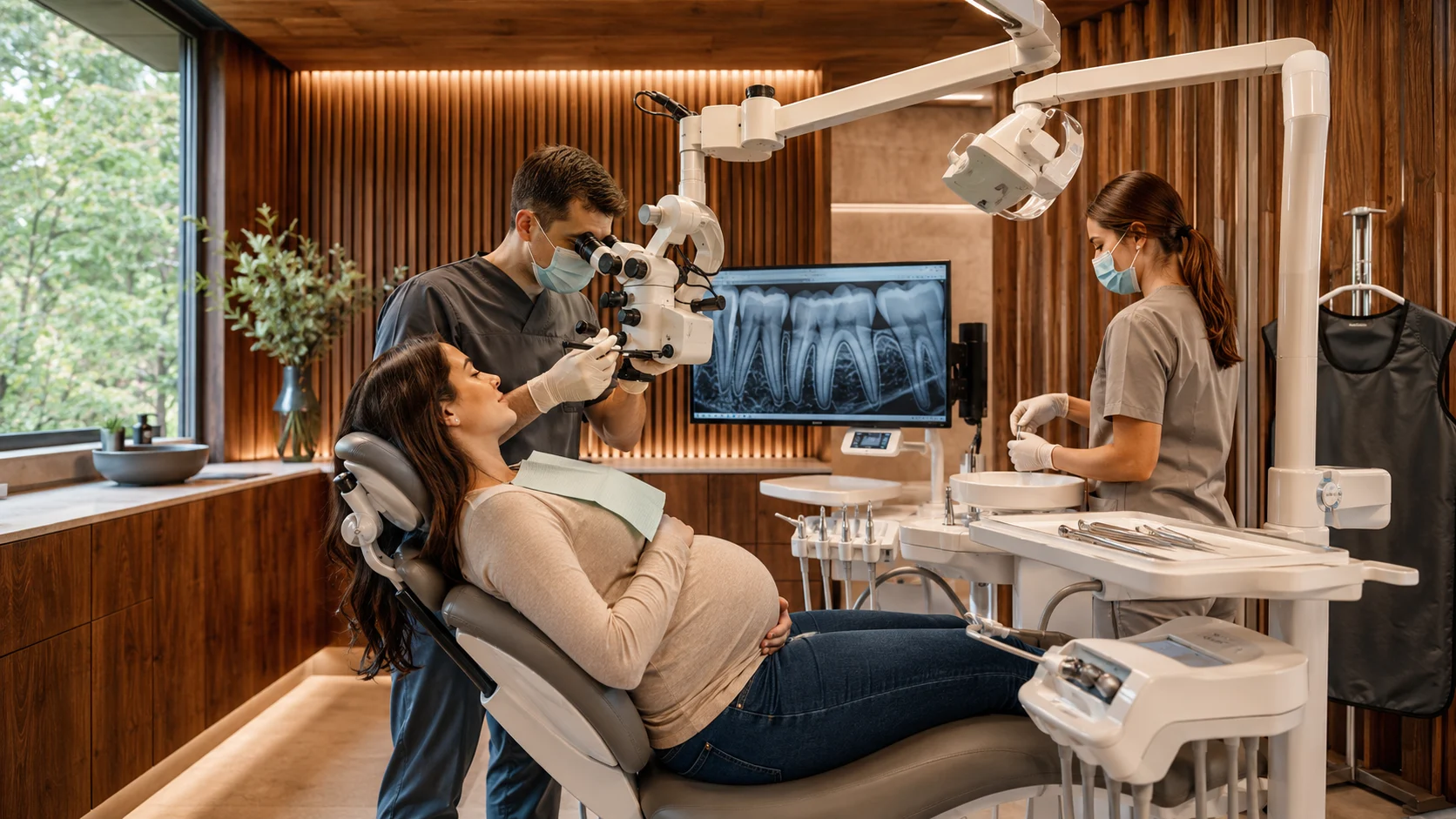
Dental X-rays may be required to diagnose the tooth accurately and plan root canal treatment. They can help the dentist assess the roots, surrounding bone, extent of decay and signs of infection that cannot be seen during a visual examination alone.
Current American Dental Association guidance considers dental radiographs safe during pregnancy when they are clinically indicated. Modern dental imaging uses a very low radiation dose, and the X-ray beam used for dental imaging is directed at the mouth rather than the developing baby.
The important principle is that X-rays should be taken because they are needed for diagnosis or treatment, not simply as an unnecessary routine investigation.
Always tell your dental team that you are pregnant before imaging is performed.
Learn more about dental radiography from the American Dental Association .
Is Local Anaesthetic Safe for a Root Canal During Pregnancy?
Root canal treatment is normally performed using local anaesthetic so that the tooth and surrounding area remain numb during the procedure.
The American Dental Association states that local anaesthetics, including commonly used agents such as lidocaine with or without epinephrine, may be used during pregnancy.
Before treatment, tell your dentist about:
- How many weeks pregnant you are
- Whether the pregnancy is considered high-risk
- Any allergies
- Previous reactions to dental anaesthetic
- Current prescription medications
- Over-the-counter medicines
- Vitamins and supplements
- Relevant medical conditions
Your dentist can then select the appropriate anaesthetic and dose for your individual treatment.
What About Sedation During Pregnancy?
Most root canal treatments can be completed with local anaesthetic and do not require general anaesthesia or deep sedation.
If you experience significant dental anxiety, discuss this before treatment. Non-medication approaches such as clear step-by-step communication, short breaks and agreed stop signals can make treatment easier.
Sedation requires additional consideration during pregnancy. In particular, current ADA guidance recommends avoiding nitrous oxide exposure in pregnant patients.
If sedation is being considered, the dental team should review the potential benefits and risks and coordinate with the appropriate medical professional when necessary.
Antibiotics and Root Canal Treatment During Pregnancy
Antibiotics are not automatically required after every root canal. Removing the source of infection through appropriate dental treatment is the main priority.
Antibiotics may be considered when there are signs of spreading infection, systemic illness or other clinical indications.
Several antibiotics commonly used in dentistry have options that may be used during pregnancy when clinically appropriate. The exact choice depends on the infection, allergies, pregnancy history and individual medical circumstances.
Do not take leftover antibiotics or start medication without professional advice. Make sure the prescribing dentist or physician knows you are pregnant.
Pain Relief After a Root Canal During Pregnancy
Medication choices during pregnancy require additional care.
Acetaminophen, also known as paracetamol, remains the preferred first-line pain reliever during pregnancy according to current guidance from the American College of Obstetricians and Gynecologists when used appropriately and in consultation with a healthcare professional.
NSAIDs such as ibuprofen and naproxen have pregnancy-stage restrictions and should not be taken simply because they are available over the counter. In particular, NSAID use from around 20 weeks of pregnancy onward requires specific medical consideration.
Do not self-medicate after dental treatment. Follow the medication plan recommended for your individual pregnancy and dental condition.
Read ACOG guidance on acetaminophen during pregnancy .
What Happens During Root Canal Treatment?
The root canal procedure itself is generally performed in the same way whether or not a patient is pregnant, although appointment planning and medication decisions may be adjusted when necessary.
- Examination and diagnosis: The dentist or endodontist examines the tooth and uses appropriate testing and imaging to confirm the diagnosis.
- Local anaesthetic: The tooth and surrounding tissues are numbed to keep the procedure comfortable.
- Dental dam isolation: A protective dental dam is placed around the tooth to keep the treatment area clean and isolated from saliva.
- Accessing the root canal system: A small opening is made in the tooth to reach the inflamed or infected pulp.
- Cleaning and shaping: The diseased pulp is removed and the root canals are cleaned, shaped and disinfected.
- Filling and sealing: The cleaned canals are filled with a biocompatible material and sealed.
- Restoring the tooth: A temporary or permanent restoration is placed according to the treatment plan.
Root canal treatment can often be completed in one or two appointments, depending on the tooth and complexity of the case.
See the American Association of Endodontists guide to root canal treatment .
Will You Need a Crown After Root Canal Treatment?
After root canal treatment, the tooth needs an appropriate permanent restoration to protect it and restore normal function.
Depending on the tooth and the amount of remaining healthy structure, this may involve a filling, buildup or dental crown.
Molars and premolars often require stronger protection because they experience greater chewing forces. Delaying the required final restoration for too long can increase the risk of leakage or fracture.
If a crown is recommended during pregnancy, ask your dentist whether it should be completed promptly or whether another temporary plan is clinically appropriate.
How to Make a Root Canal Appointment More Comfortable During Pregnancy
Pregnancy can make long dental appointments uncomfortable, particularly later in pregnancy.
Before treatment, tell the dental team about any nausea, back discomfort, dizziness, reflux, breathing discomfort or difficulty lying back.
Practical adjustments may include:
- Scheduling the appointment at a time when nausea or fatigue is usually lower
- Taking short breaks during longer treatment
- Adjusting the dental chair when possible
- Using appropriate support or positioning for comfort
- Splitting complex treatment into shorter visits when clinically appropriate
If you have a high-risk pregnancy or significant medical complications, tell the dental office before the appointment so appropriate planning can take place.
Recovery After Root Canal Treatment During Pregnancy
Mild tenderness around the treated tooth may occur after root canal treatment and usually improves as the surrounding tissues settle.
Follow your dentist’s individual aftercare instructions carefully.
- Take only medication that has been approved for your individual situation.
- Avoid hard chewing on the treated tooth if a temporary restoration is present.
- Continue brushing and flossing unless your dentist advises otherwise.
- Return for the final filling or crown at the recommended time.
- Attend any follow-up appointments requested by your dentist or endodontist.
If your symptoms are becoming worse rather than gradually improving, contact the dental team.
When Should You Contact a Dentist Urgently?
Do not postpone evaluation simply because you are pregnant if you have symptoms suggesting a significant dental infection.
Contact a dentist promptly if you have:
- Severe or rapidly increasing tooth pain
- Swelling in the gum, jaw, cheek or face
- Fever or feeling generally unwell
- Pus or drainage around the tooth
- A temporary restoration that becomes loose or falls out
- Persistent pain that does not improve as expected
If facial or oral swelling is associated with difficulty breathing or swallowing, seek urgent medical care.
Frequently Asked Questions
Is root canal treatment safe during pregnancy?
Necessary root canal treatment can generally be performed during pregnancy. Current ADA and ACOG guidance supports providing necessary dental treatment throughout pregnancy rather than delaying care solely because a patient is pregnant.
Can I have a root canal in the first trimester?
Yes, when treatment is clinically necessary. There is no requirement to postpone an infected or painful tooth until the second trimester solely because of pregnancy.
Is the second trimester the best time for a root canal?
The second trimester may be physically more comfortable for some planned dental appointments, but necessary treatment can be performed during any trimester. Urgency and clinical need are more important than following a fixed trimester rule.
Can I have dental X-rays while pregnant?
Yes, dental X-rays can be taken during pregnancy when they are clinically necessary for diagnosis or treatment. Modern dental radiographs use very low radiation doses and should be selected according to clinical need.
Can local anaesthetic be used during pregnancy?
Yes. Local anaesthetics commonly used in dentistry can be used during pregnancy. Your dentist should review your medical history and pregnancy information before selecting the appropriate anaesthetic.
Will I need antibiotics after a root canal while pregnant?
Not necessarily. Antibiotics are not routinely required after every root canal. They may be prescribed when there are specific signs of spreading infection or other clinical indications.
What pain medicine can I take after a root canal while pregnant?
Medication should be chosen according to your pregnancy stage, medical history and other medicines you take. Acetaminophen or paracetamol is generally the preferred first-line pain reliever during pregnancy, but you should follow advice from your healthcare professional rather than self-medicate.
Can I delay a root canal until after pregnancy?
A stable problem may sometimes allow flexible scheduling, but active infection, significant pain, swelling or a tooth at risk of worsening should not automatically be delayed until after delivery. Ask your dentist what the risks of postponing treatment are in your specific case.
Should I see a dentist or an endodontist?
A general dentist can diagnose many root canal problems and refer you when specialist treatment is appropriate. An endodontist may be particularly useful for complex anatomy, difficult diagnosis, previously treated teeth or more complicated root canal cases.
Book a Root Canal Assessment in Dubai
If you are pregnant and experiencing persistent tooth pain, swelling or symptoms that may indicate a dental infection, professional assessment can help determine whether root canal treatment is necessary and how it can be planned appropriately during pregnancy.
At Alma Polyclinic, Dr. Marc Habib provides specialist endodontic assessment and root canal treatment in Dubai.
You can also learn more about root canal treatment cost in Dubai or compare root canal treatment and tooth extraction.
Medical note: This article provides general educational information and does not replace personalised dental, obstetric or medical advice. Patients with a high-risk pregnancy or significant medical conditions should discuss treatment and medication decisions with their treating healthcare professionals.