About the Author and Medical Reviewer
Learn more about the professionals responsible for writing and medically reviewing this article.

Alma Polyclinic Editorial Team
Medical Content Team at Alma Polyclinic
The Alma Polyclinic Editorial Team creates clear, patient-focused health content based on trusted medical sources and clinical guidance from our doctors.
View author profile
Dr. Tamara AK
General Dentist | Cosmetic & Aesthetic Dentistry at Alma Polyclinic
This article was reviewed for clinical accuracy, relevance and patient safety by Dr. Tamara AK.
View doctor profileIn most cases, a root canal is the better option when the tooth can be restored and has a good long-term prognosis. Tooth extraction may be recommended when the tooth is severely cracked, too decayed to restore, loose from gum disease, or unlikely to survive after treatment. The right decision depends on the remaining tooth structure, root condition, bone support, infection level, and whether the tooth can support a crown.
When a dentist tells you that a painful or infected tooth needs treatment, the decision often comes down to one question: root canal vs tooth extraction—which is better?
The answer depends on whether the tooth can be restored predictably and remain healthy enough to function long term. In many cases, a root canal can remove infection and preserve the natural tooth. In other cases, such as a severely broken tooth, advanced gum disease, or a deep root fracture, extraction may be the safer and more reliable option.
A root canal and tooth extraction can both stop pain and control infection. However, they take very different approaches. Root canal treatment aims to clean and save the tooth. Extraction removes the tooth completely and may create a need for bone preservation, a dental implant, bridge, or another replacement option later.
This guide explains the difference between root canal vs tooth extraction, including pain, cost considerations, recovery, cracked teeth, molars, crowns, implants, and how dentists decide which treatment is right for you.
Important: This article is intended for adult human teeth. Root canal vs tooth extraction for dogs, cats, baby teeth, and wisdom teeth can involve different clinical decisions.
Root Canal vs Tooth Extraction: Quick Comparison
| Factor | Root Canal Treatment | Tooth Extraction |
|---|---|---|
| Main purpose | Remove infection and save the natural tooth | Remove a tooth that cannot be reliably saved |
| What happens | The infected pulp is cleaned, disinfected, filled, and sealed | The tooth and roots are removed from the socket |
| Does the tooth stay in place? | Yes | No |
| May need additional treatment? | Often a filling, build-up, or crown | Often bone preservation and a replacement plan |
| Recovery focus | Protect the treated tooth until it is fully restored | Protect the socket and avoid disturbing the blood clot |
| Common reason to choose it | The tooth is restorable and has a good prognosis | The tooth is too damaged, fractured, loose, or infected to save |
| Long-term consideration | Retains your natural tooth and bite structure | May require implant, bridge, or denture planning |
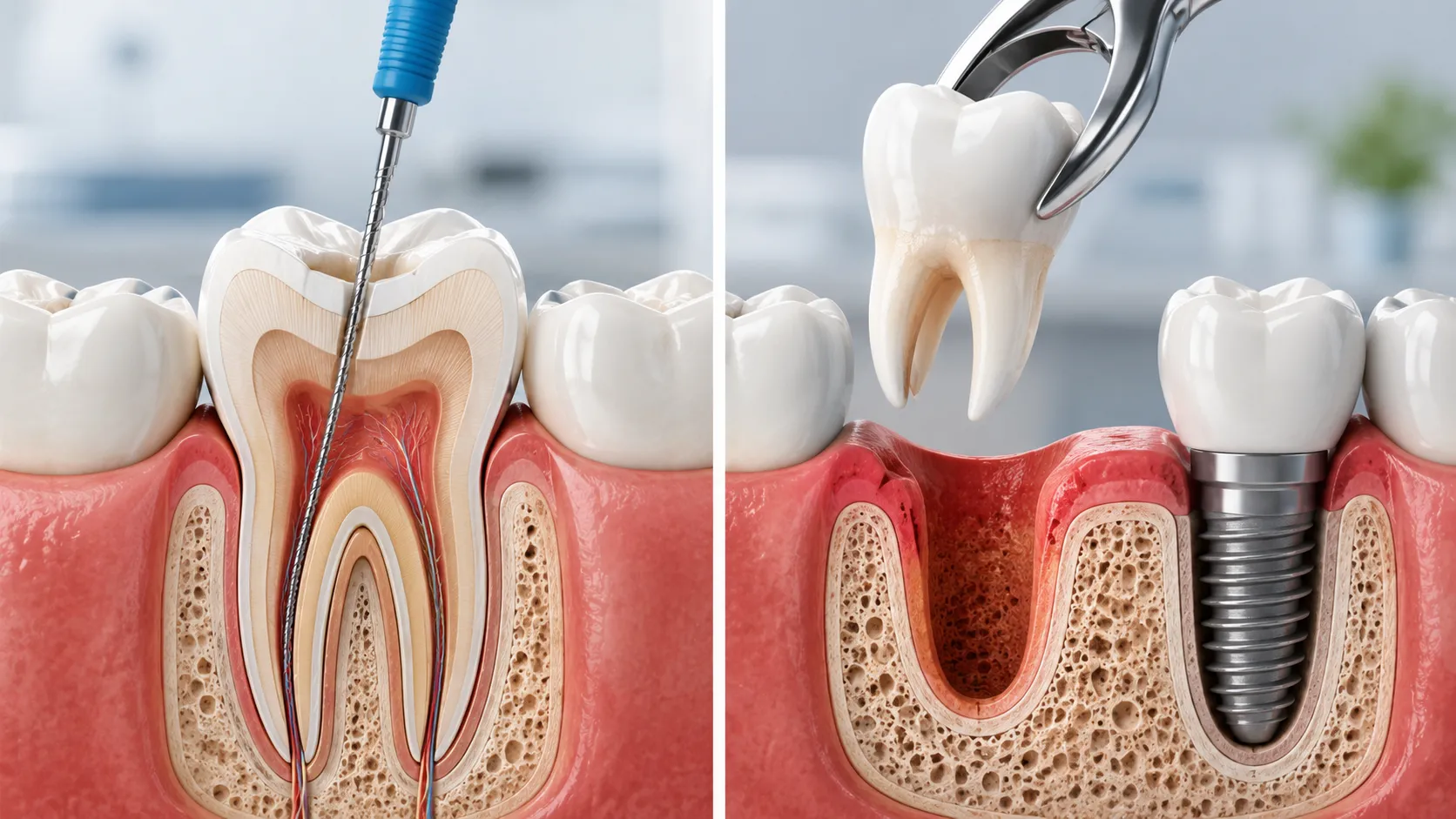
Root canal treatment removes infected or inflamed tissue from inside the tooth, then cleans and seals the root canals to reduce the chance of reinfection.
What Is a Root Canal Treatment?
A root canal is a dental procedure used when the pulp inside a tooth becomes inflamed, infected, or damaged. The pulp contains nerves and blood vessels. Deep decay, repeated dental work, trauma, cracks, or a faulty restoration can allow bacteria to reach this area.
During root canal treatment, the dentist or endodontist removes the infected pulp, cleans the inside of the tooth, shapes the canals, fills them, and seals the tooth. The final step is often a permanent filling or crown, depending on how much natural tooth structure remains.

Signs You May Need a Root Canal
A tooth may need a root canal when you have:
- Persistent toothache
- Pain while biting or chewing
- Lingering sensitivity to hot or cold
- Swelling near the tooth or gum
- A gum boil or abscess
- Darkening of one tooth
- Deep decay close to the nerve
- A cracked tooth with pulp involvement
- Pain after a dental injury
Not every infected tooth causes severe pain. Some infections develop slowly and may only become visible on an X-ray or through gum swelling.
What Is Tooth Extraction?
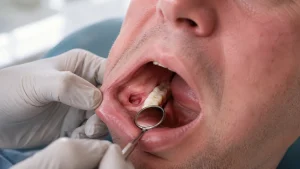
A tooth extraction means removing the tooth completely from its socket. Dentists recommend extraction when keeping the tooth would not provide a stable or predictable long-term result.

Extraction may be necessary when:
- Decay has destroyed too much tooth structure
- The tooth cannot support a filling or crown
- A crack extends deeply into the root
- There is a vertical root fracture
- Severe gum disease has caused major tooth mobility
- The tooth has poor bone support
- Root canal treatment has failed and retreatment is unlikely to succeed
- The tooth is causing repeated infection or pain
- A wisdom tooth is damaging nearby teeth or causing recurrent problems
After an extraction, a blood clot forms in the empty socket. That clot is important because it protects the area while the gum and bone heal.
Root Canal vs Tooth Extraction: Which Is Better?
For a tooth that can be restored and maintained properly, saving the natural tooth is often the preferred approach. A natural tooth supports normal chewing, bite stability, speech, and appearance.
However, root canal treatment is not automatically the right answer for every tooth. A tooth that is severely cracked, badly decayed below the gum line, loose from advanced gum disease, or structurally hopeless may need extraction.
The best choice is not “root canal at all costs” or “pull it because it is quicker.” The best choice is the treatment with the most predictable long-term result for your mouth.
Root Canal May Be Better When:
- The tooth has enough healthy structure left
- The roots are stable
- The crack does not make the tooth hopeless
- Gum and bone support are healthy
- A crown or durable restoration can protect the tooth
- The infection can be cleaned and sealed successfully
- The tooth is important for chewing or smile aesthetics
Extraction May Be Better When:
- The tooth is split or has a vertical root fracture
- Decay has extended too far below the gum line
- The tooth cannot hold a crown or restoration
- There is extensive bone loss around the tooth
- The tooth is extremely loose due to periodontal disease
- The root canal prognosis is poor
- Keeping the tooth may lead to repeated infection and short-term repairs
Vertical root fractures can be difficult to diagnose and may only become apparent when the surrounding gum and bone become infected. In some cases, extraction is needed, although treatment may be possible in selected situations.
Root Canal vs Tooth Extraction Pros and Cons
Root Canal Treatment: Pros
- Keeps your natural tooth in place
- Removes infected tissue without removing the tooth
- Helps preserve your bite and chewing function
- Avoids an empty space in the mouth
- May prevent nearby teeth from shifting
- Can often be completed with local anaesthetic
- May reduce the need for implant or bridge treatment
Root Canal Treatment: Cons
- May require more than one appointment
- Often needs a crown afterward, especially for molars
- Not every infected tooth is restorable
- A previously treated tooth may sometimes need retreatment
- The tooth may remain more fragile if it is not properly restored
Tooth Extraction: Pros
- Removes a tooth that has a poor prognosis
- Can eliminate an untreatable source of infection
- May be the most predictable option for a severely fractured tooth
- Can be followed by an implant, bridge, or denture if replacement is appropriate
- May be necessary when the tooth cannot support a crown
Tooth Extraction: Cons
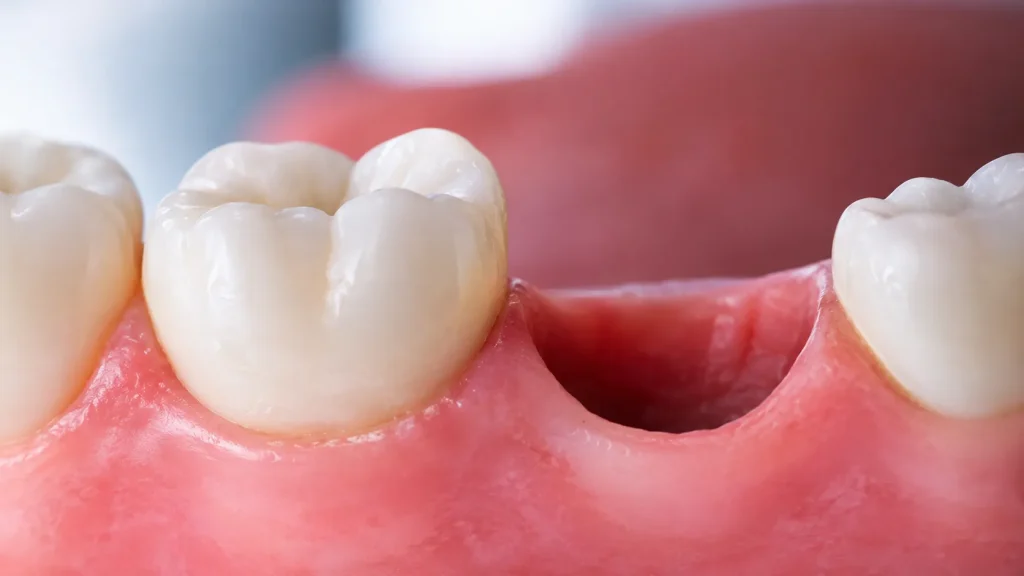
- Removes the natural tooth permanently
- Can affect chewing and bite balance
- May allow nearby teeth to drift over time
- May lead to bone changes in the extraction area
- Often requires a second treatment plan for tooth replacement
- May involve bone grafting before or during implant treatment
Root Canal vs Tooth Extraction Pain: Which Hurts More?
Many patients worry that root canal treatment will be more painful than pulling a tooth. In reality, both procedures are typically carried out under local anaesthetic.
A root canal is designed to remove the infected tissue that often causes toothache. During treatment, you should not feel sharp pain, although you may feel pressure or vibration.
Extraction also takes place under local anaesthetic. After the numbness wears off, soreness, swelling, and tenderness are common. The level of discomfort depends on the tooth, whether the extraction was simple or surgical, the presence of infection, and how carefully aftercare instructions are followed.
After an extraction, swelling can appear within the first 48 hours and may take several days to settle.
Dry Socket After Tooth Extraction
One extraction complication is dry socket. This can happen when the blood clot becomes dislodged or fails to form properly.
Common dry socket symptoms include:
- Worsening pain three to five days after extraction
- Throbbing pain that may spread to the jaw or ear
- Bad breath
- Bad taste
- An empty-looking socket
Smoking and failing to follow aftercare instructions can increase the risk.
Root Canal vs Tooth Extraction Cost in Dubai
When comparing root canal vs tooth extraction cost, it is important to compare the complete treatment path rather than only the first appointment.
A root canal treatment plan may include:
- Consultation and dental X-rays
- Root canal treatment
- Temporary filling
- Permanent filling or core build-up
- Dental crown, if needed
An extraction treatment plan may include:
- Consultation and dental X-rays
- Simple or surgical extraction
- Socket preservation or bone grafting
- Healing period
- Dental implant, bridge, or partial denture
- Crown over the implant, if an implant is selected
A simple extraction may appear less expensive at the beginning. However, if you later need a dental implant or bridge, the total long-term cost can be higher than saving the tooth.
The reverse can also be true. If a tooth has a poor prognosis and is likely to fail after root canal treatment and a crown, extraction may be the more practical investment.
The right question is not only, “How much is a tooth extraction vs root canal?” It is also:
- How likely is the tooth to survive long term?
- Will I need a crown?
- If I extract the tooth, should I replace it?
- Will I need a bone graft?
- Is the tooth located in a visible or important chewing area?
- What is the likely cost over the next several years?
Root Canal and Crown vs Tooth Extraction
For many back teeth, especially molars, a crown is recommended after root canal treatment because these teeth handle heavy chewing forces.
A root canal tooth without proper protection can be more likely to crack, particularly when a large amount of tooth structure has already been lost to decay or an old filling.
Root canal and crown treatment may be a strong option when:
- The roots are healthy
- The tooth can be rebuilt above the gum line
- There is enough structure to hold a crown
- The gum and bone support are stable
- The crack does not extend too deeply into the root
A dentist will assess whether the tooth can support a crown before recommending root canal treatment. There is little benefit in completing a root canal if the remaining tooth cannot be restored predictably.
Root Canal vs Extraction for a Cracked Tooth
A cracked tooth can be one of the most difficult situations because the location and depth of the crack determine whether the tooth can be saved.
A Root Canal May Be Possible When:
- The crack is limited to the chewing surface
- The crack does not extend deeply into the root
- The tooth can be protected with a crown
- The pulp is inflamed or infected, but the tooth remains structurally stable
Extraction May Be Needed When:
- The tooth is split into separate sections
- The crack runs vertically through the root
- The fracture extends too far below the gum line
- The tooth cannot be sealed or restored
- Infection has damaged the surrounding bone and gum support
A cracked tooth does not automatically mean extraction. Some deeply cracked teeth can still have a favourable prognosis with appropriate endodontic treatment and protection, depending on the crack pattern and remaining structure.
Root Canal vs Extraction for a Back Molar
The decision can feel more difficult for a back molar because molars are important for chewing and often have multiple roots.
A root canal vs extraction back molar decision usually depends on:
- Number and condition of the roots
- Amount of remaining tooth structure
- Presence of a root fracture
- Gum and bone support
- Whether the tooth can support a crown
- Position of the tooth in your bite
- Whether there are nearby teeth and an opposing tooth
Saving a molar can be valuable because molars do much of the heavy chewing work. However, a severely damaged molar with poor bone support or a deep root fracture may not be a good candidate for root canal and crown treatment.
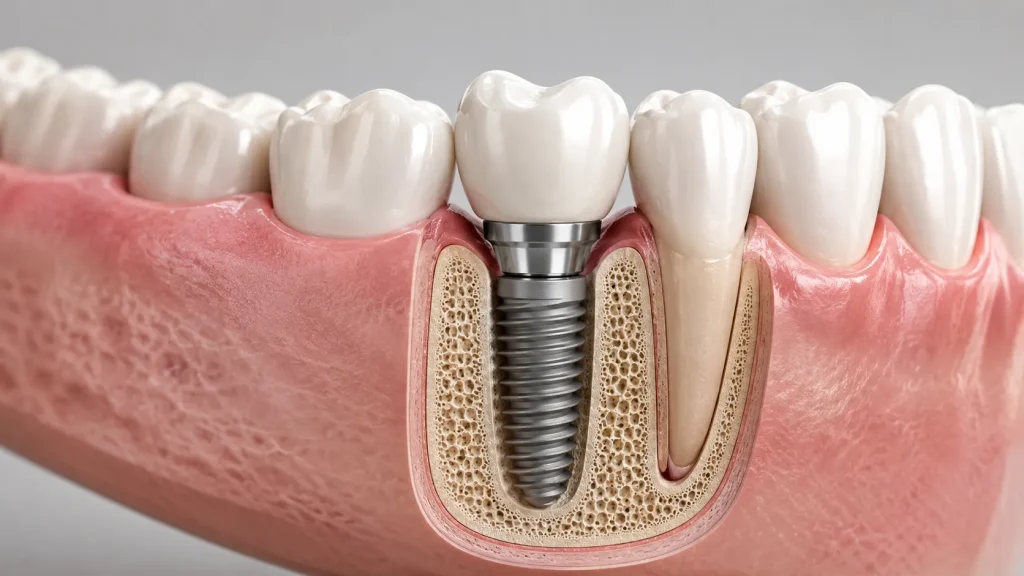
Root Canal vs Tooth Extraction and Implant
An implant can be an excellent replacement option when extraction is necessary. However, an implant should not be viewed as an automatic substitute for every natural tooth.
A dental implant usually involves:
- Tooth extraction
- Healing of the extraction site
- Bone grafting when needed
- Implant placement
- Healing and bone integration
- Final crown placement
In some cases, an implant can be placed soon after extraction. In other cases, healing time is needed first. The right timeline depends on infection, bone quality, gum health, bite forces, and the planned implant position.
Root canal treatment may be preferable when a natural tooth has a good prognosis. Extraction and implant treatment may be the better route when the tooth is truly non-restorable.
Replacing an extracted tooth can involve additional appointments and may require treatment of surrounding tissues or neighbouring teeth.
What Happens If You Pull a Tooth and Do Not Replace It?
Not every missing tooth requires replacement in exactly the same way. The decision depends on the tooth’s location, your bite, neighbouring teeth, gum health, and long-term goals.
However, leaving a space can sometimes lead to:
- Tilting or drifting of nearby teeth
- Changes in bite alignment
- Difficulty chewing on that side
- Over-eruption of the opposing tooth
- Food trapping
- Changes in the jawbone around the missing tooth area
Replacement options may include:
- Dental implant
- Fixed dental bridge
- Removable partial denture
- Orthodontic space management in selected cases
- Monitoring, in limited situations
Root Canal vs Tooth Extraction Recovery Time
Root canal recovery is usually focused on protecting the treated tooth. You may experience mild tenderness for a few days, especially if the tooth was infected before treatment. Avoid biting hard foods on the tooth until the dentist places the permanent restoration.
Extraction recovery is focused on allowing the socket to heal without disturbing the blood clot. Your dentist may advise avoiding smoking, vigorous rinsing, spitting forcefully, or using straws during the early healing period.
The gum generally closes over in the following weeks, while deeper bone healing continues longer.
Root Canal vs Extraction for Kids and Baby Teeth
Root canal vs extraction in kids is different from the decision for adult teeth.
A permanent tooth in a child or teenager may sometimes need root canal treatment to preserve it for as long as possible. The dentist will consider age, root development, infection, trauma, and the long-term role of the tooth.
For baby teeth, dentists may recommend different treatments depending on the tooth, the child’s age, the level of infection, and how close the adult tooth is to erupting. A baby tooth should not simply be ignored because it will eventually fall out; pain and infection can affect eating, sleep, comfort, and developing adult teeth.
When Root Canal or Extraction Cannot Wait
Seek urgent dental care if you have:
- Facial swelling
- Rapidly increasing swelling
- Fever or feeling unwell
- Severe tooth pain that is getting worse
- Difficulty opening your mouth
- Difficulty swallowing
- Difficulty breathing
- Swelling spreading to the jaw, cheek, or neck
Dental abscesses require professional treatment. Depending on the tooth and infection, treatment may involve drainage, root canal treatment, or extraction.
Frequently Asked Questions
Is a root canal better than extraction?
A root canal is often better when the tooth can be restored and has a predictable long-term prognosis. Extraction is better when the tooth is non-restorable, severely fractured, loose, or unable to support a crown.
Is root canal or tooth extraction more painful?
Both treatments are usually performed under local anaesthetic. Root canal treatment aims to remove the infection causing pain, while extraction may lead to more post-operative soreness because the tooth is removed and the socket must heal.
Is tooth extraction cheaper than a root canal?
A simple extraction may cost less initially. However, replacement options such as implants, bridges, or dentures can increase the total long-term cost. Compare the complete treatment plan, not only the first procedure.
Can a root canal tooth be extracted later?
Yes. A tooth that has had root canal treatment can still be extracted later if it becomes severely fractured, reinfected, or non-restorable. The extraction may vary in difficulty depending on root shape, previous treatment, and remaining tooth structure.
Is a root canal tooth harder to extract?
Not always. Some root canal teeth can be more fragile and may break during extraction, while others are removed routinely. The difficulty depends more on root anatomy, bone density, tooth position, restorations, and the condition of the tooth than on the root canal itself.
Should I get a root canal or extraction for a molar?
A molar should usually be saved when it can be predictably restored because it plays a major role in chewing. Extraction may be the better option if there is a deep root fracture, severe decay below the gum line, poor bone support, or no realistic way to restore the tooth.
Can I have root canal treatment and extraction on the same day?
In some cases, yes. The treatment plan depends on which teeth are involved, the level of infection, your medical history, and whether the procedures can be completed safely in one visit.
Root Canal vs Tooth Extraction: Making the Right Choice
The most important question is not simply, “Should I save or pull this tooth?” It is:
Can this tooth be saved predictably and remain healthy enough to function long term?
A root canal is usually worth considering when the tooth is restorable, stable, and likely to serve you well with proper treatment and a protective restoration. Extraction may be the better decision when the tooth is structurally hopeless, deeply fractured, severely loose, or likely to create repeated problems.
At Alma Polyclinic, treatment decisions should begin with a careful examination, X-rays, and a clear discussion of the likely outcome of each option. Alma Polyclinic is a boutique dental clinic in Jumeirah focused on compassionate, family-oriented care and modern treatment standards.
A proper assessment can help you understand whether your tooth should be preserved with root canal treatment or replaced after extraction with the most suitable long-term option.