
About the Author and Medical Reviewer
Learn more about the professionals responsible for writing and medically reviewing this article.

Alma Polyclinic Editorial Team
Medical Content Team at Alma Polyclinic
The Alma Polyclinic Editorial Team creates clear, patient-focused health content based on trusted medical sources and clinical guidance from our doctors.
View author profile
Dr. Homa Shahakbari
Founder & CEO | Cosmetic & General Dentist at Alma Polyclinic
This article was reviewed for clinical accuracy, relevance and patient safety by Dr. Homa Shahakbari.
View doctor profileWondering what foods to eat after teeth whitening? Whether you have just completed professional bleaching at a dental clinic or used a dentist-supervised home whitening treatment, choosing your next meal should be simple. The most important considerations are your dentist’s instructions, any temporary tooth sensitivity, and your usual dietary needs.
What can you eat after teeth whitening? Suitable options often include plain rice, pasta, potatoes, chicken, white fish, eggs, bananas, bread, oatmeal, and plain yogurt. These are convenient examples, particularly if your dentist has recommended temporarily choosing lighter-coloured foods. However, a strict white diet is not scientifically necessary for everyone, and no single meal can guarantee longer-lasting whitening results.
If your teeth feel sensitive after bleaching, foods that are soft, mild, and served at a comfortable temperature may be easier to enjoy. You should also follow any specific instructions about when to eat after your treatment.
At Alma Polyclinic in Jumeirah, Dubai, patients receive individual guidance about professional whitening and aftercare. This article focuses specifically on everyday foods, drinks, meal ideas, and practical dietary questions. For an overview of different whitening treatments, explore our complete guide to teeth whitening methods.
What Are the Best Foods to Eat After Teeth Whitening?
The best foods after teeth whitening are those that fit your treatment instructions, provide adequate nutrition, and feel comfortable to eat.
If you have been asked to follow a temporary light-coloured diet, ordinary foods such as rice, potatoes, eggs, and simple proteins can make meal planning easier.
However, recent clinical reviews have found that avoiding all coloured foods does not significantly improve bleaching outcomes. The following options are therefore suggestions, not a compulsory list.
| Food | How to Prepare It | Why It May Be Convenient |
|---|---|---|
| White rice | Plain or lightly seasoned | Simple meal base with a soft texture |
| Boiled potatoes | Soft, without strongly coloured sauces | Easy to prepare and chew |
| Mashed potatoes | Served warm rather than very hot | Comfortable option when teeth feel sensitive |
| Plain pasta | With olive oil or a mild sauce | Flexible, easy meal option |
| Chicken breast | Baked, boiled, or gently grilled | Provides protein and can be served with rice |
| White fish | Steamed or baked | Soft protein option |
| Eggs | Scrambled, boiled, or made into a simple omelette | Convenient source of protein |
| Plain yogurt | Without coloured syrups or toppings | Soft and easy to eat when tolerated |
| Milk | At a comfortable temperature | Simple beverage for people who tolerate dairy |
| Oatmeal | Soft and served lukewarm | Practical breakfast choice |
| Bananas | Ripe and sliced if preferred | Soft fruit that requires little chewing |
| Peeled pears | Fresh and ripe, or gently cooked | Can be a comfortable fruit option |
| White bread | Plain or with a suitable filling | Easy meal or snack base |
| Plain crackers | Without strongly coloured toppings | Convenient snack if crunchy foods feel comfortable |
| Tofu | Soft or gently cooked | Plant-based protein alternative |
| Cauliflower | Steamed until tender | Vegetable side dish with a mild flavour |
| Plain cottage cheese | Served on its own or with bread | Soft protein-rich option for those who eat dairy |
| Rice pudding | Lightly sweetened and served lukewarm | Soft dessert option, although added sugars should be limited |
These foods do not whiten teeth or prevent stains on their own. Their usefulness lies in making meals convenient, particularly when following individual dietary advice or managing short-term sensitivity.
Light-Coloured Foods to Choose After Whitening
Light-coloured foods are commonly recommended in traditional post-whitening advice. Although evidence does not support making a white diet mandatory, some patients prefer to choose simple, pale meals immediately after treatment.
Rice, Pasta, Bread, and Potatoes
Plain rice, pasta, potatoes, and bread are convenient staples because they can be combined with a wide variety of proteins and vegetables.
Examples include:
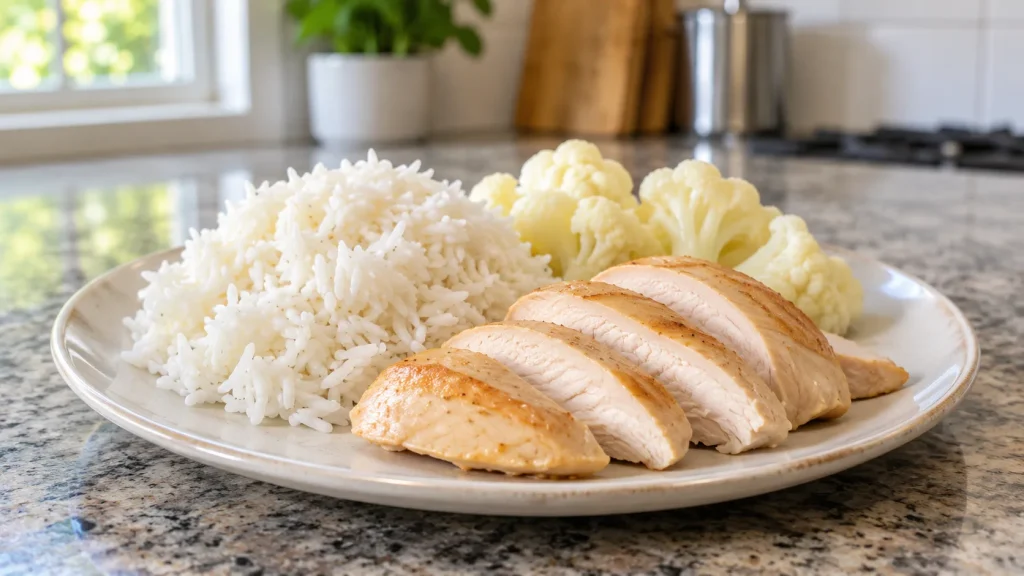
- Steamed rice with chicken
- Plain pasta with olive oil
- Mashed potatoes with baked fish
- Toast with scrambled eggs
- A soft baked potato with a mild filling
The preparation matters. A plate of plain pasta and the same pasta covered in tomato sauce differ in colour and acidity.
If your dentist has recommended temporarily limiting pigmented foods, choose sauces and seasonings that fit those instructions.
Remember that lighter colour does not automatically mean a food is healthier. Continue eating a varied, balanced diet rather than relying only on refined carbohydrates.
Chicken, Turkey, Fish, and Eggs
Protein-rich foods can be part of a comfortable post-whitening meal.
Chicken, turkey, white fish, and eggs are flexible options that can be cooked without strongly coloured sauces.
Try preparing them by steaming, baking, or gentle grilling. If your teeth feel sensitive, choose a softer texture and avoid serving food extremely hot.
These foods support normal nutrition; they do not directly strengthen the whitening effect.
Yogurt, Milk, and Other Dairy Products
Plain yogurt, milk, and suitable soft cheeses can be useful options for people who include dairy in their diet.
Yogurt is easy to eat, while milk can be served at room temperature if cold drinks trigger sensitivity.
Avoid assuming that dairy is required to maintain white teeth. Patients who are lactose intolerant, allergic to milk, or following a vegan diet can choose other foods that meet their nutritional needs.
Bananas, Pears, and Mild Vegetables
Ripe bananas and peeled pears are examples of fruits that are easy to include in simple meals and snacks.
Soft, cooked vegetables such as cauliflower can also be comfortable when chewing feels slightly unpleasant.
You do not need to stop eating all brightly coloured fruits and vegetables after bleaching unless your dentist has provided a specific reason.
Variety remains important for general health and nutrition.
What Can You Eat for Breakfast, Lunch, and Dinner After Teeth Whitening?
If you are planning meals after a dental whitening appointment, you do not need special recipes or expensive ingredients.
Here are some simple meal ideas that can be adjusted according to your dietary needs, preferences, and the instructions provided by your dentist.
Breakfast Ideas
- Scrambled eggs and toast: A simple meal that is easy to prepare.
- Oatmeal with banana: Serve lukewarm if your teeth are temperature-sensitive.
- Plain yogurt and ripe pear: Choose a comfortable serving temperature.
- Boiled eggs with bread: A convenient breakfast with protein.
Lunch Ideas
- Chicken with white rice: Add mild vegetables and an appropriate sauce.
- Plain pasta with baked fish: A straightforward meal without heavy seasoning.
- Potato and egg dish: Choose a soft preparation if chewing feels uncomfortable.
- Rice with tofu: A plant-based option that can be adapted easily.
Dinner Ideas
- Steamed white fish and mashed potatoes: Suitable when a softer meal is preferred.
- Chicken and rice soup: Allow it to cool to a comfortable temperature.
- Simple pasta with chicken: Use a mild sauce if following light-coloured food guidance.
- Baked potato with cottage cheese: A flexible alternative for those who consume dairy.
Snack Ideas
- Ripe banana
- Plain crackers
- Soft bread
- Plain yogurt
- A peeled pear
- A small serving of cottage cheese
Snacks should still fit your normal nutrition and oral health needs. Frequent sugary snacks can contribute to tooth decay even when they are light in colour.
A Simple One-Day Meal Plan After Teeth Whitening
The following example may help if your dentist has suggested choosing mild or light-coloured meals for a short period.
| Meal | Example | Practical Tip |
|---|---|---|
| Breakfast | Scrambled eggs, toast, and water | Avoid very hot food if sensitive |
| Morning snack | Banana | Choose a ripe, easy-to-chew fruit |
| Lunch | Chicken, plain rice, and steamed cauliflower | Check sauces and seasonings if restrictions apply |
| Afternoon snack | Plain yogurt or a dairy-free alternative | Serve at a comfortable temperature |
| Dinner | Baked white fish with mashed potatoes | Use mild seasoning |
| Drinks | Water throughout the day | Adjust temperature to your comfort |
Important: This is an example menu, not a prescribed medical diet. It can be modified for vegetarian, vegan, gluten-free, dairy-free, and other dietary requirements.
What Drinks Can You Have After Teeth Whitening?
Drink choices after whitening should take account of your dental instructions, staining habits, and temporary tooth sensitivity.
Water
Plain water is a straightforward drink choice after teeth whitening.
Water does not contain staining pigments or added sugar, and it helps wash away food and drink residues.
If your teeth are sensitive to cold, choose room-temperature water rather than iced water.
Drinking water does not bleach teeth or guarantee that whitening results will last longer.
Milk
Milk can be consumed after whitening when it fits your dietary needs and the instructions you were given.
However, milk should not be considered a treatment for post-whitening sensitivity.
If very cold drinks cause discomfort, allow the milk to reach a comfortable temperature.
Tea and Coffee
Coffee and tea are associated with external tooth staining over time, but that does not mean they automatically reverse professional bleaching.
Some dentists recommend limiting dark beverages for a short time after treatment.
However, systematic reviews of clinical studies have not found that a strict white diet significantly improves bleaching results compared with an unrestricted diet.
Follow any specific instructions from your dental professional rather than assuming coffee must be avoided for exactly 24 or 48 hours by everyone.
Soft Drinks and Fruit Juices
Some soft drinks and fruit juices contain acids that can contribute to dental erosion with frequent exposure.
They may also feel uncomfortable when teeth are temporarily sensitive.
Colour alone is not a reliable indicator of dental safety. A clear acidic drink is not automatically better for enamel than a darker, less acidic beverage.
When possible, choose water between meals and limit frequent consumption of acidic or sugary drinks.
What Foods Should You Avoid or Limit After Teeth Whitening?
The answer depends on the type of whitening treatment, any instructions you were given, and your sensitivity.
It is useful to separate foods that may cause new surface staining from foods that may cause temporary discomfort.
| Food or Drink | Main Consideration | Practical Guidance |
|---|---|---|
| Coffee and black tea | Potential for external staining over time | Follow individual restrictions and consider reducing frequent exposure |
| Dark sauces and soy sauce | Strong pigmentation | Use milder alternatives if your instructions call for them |
| Tomato-based sauces | Pigmentation and acidity | Consider comfort and any dietary guidance |
| Dark berries and beetroot | Strong natural pigments | Not universally prohibited; follow treatment-specific advice |
| Citrus fruits and juices | Acidity and possible sensitivity | Limit exposure if they trigger discomfort |
| Very hot soup or drinks | Temperature-related discomfort | Let them cool before eating or drinking |
| Ice cream or iced drinks | Cold sensitivity | Choose a less extreme temperature if needed |
| Hard or crunchy foods | Possible chewing discomfort | Choose softer alternatives if uncomfortable |
| Sticky sugary sweets | Cavity risk from frequent sugar exposure | Limit frequency as part of general oral care |
Key point: These categories are not a universal list of prohibited foods. Staining, acidity, temperature, and texture affect dental comfort and appearance in different ways.
Do You Really Need a White Diet After Teeth Whitening?
A white diet after teeth whitening usually refers to choosing light-coloured foods and avoiding strongly pigmented foods and drinks for a short period.
Traditional aftercare advice often suggests following this approach for 24 to 48 hours.
However, current clinical evidence does not show that strict colour-based dietary restrictions are necessary for achieving effective bleaching results.
In a systematic review and meta-analysis published in 2024, researchers found no statistically significant improvement in whitening outcomes from following a restricted white diet compared with less restrictive eating patterns.
A further systematic review and network meta-analysis published in 2025 similarly found that drinking coloured beverages or following an unrestricted diet did not significantly reduce bleaching effectiveness compared with a white diet.
These findings challenge the idea that every coloured food immediately stains newly whitened teeth or ruins the treatment.
Nevertheless, long-term exposure to staining substances can still contribute to external tooth discolouration. The available research does not mean oral hygiene or dietary habits are irrelevant over time.
If your dentist recommends avoiding specific foods because of your individual treatment or another dental concern, follow that advice and ask for clarification if necessary.
How Soon Can You Eat After Teeth Whitening?
There is no single waiting period that applies to every whitening treatment.
The appropriate timing depends on whether you received in-office bleaching, used prescribed take-home trays, or applied another whitening product.
In general, you should ensure the bleaching product has been removed according to its instructions and follow any directions about when eating or drinking may resume.
If your dentist has advised waiting before your next meal, use the specified interval rather than following a general online rule.
Can You Eat Immediately After Professional Whitening?
Ask the dental team who performed your treatment when you may eat and drink.
Some patients can resume ordinary eating relatively soon, while others may have product-specific instructions or temporary sensitivity that affects their preferred foods.
Do not assume that everyone must wait exactly 30 minutes, one hour, or two hours.
What About the First 24 to 48 Hours?
This period is commonly discussed in aftercare instructions, but a mandatory 24-to-48-hour white diet is not supported by current clinical evidence.
For many patients, the more practical concern is temporary discomfort from very cold, hot, or acidic foods.
If you were given specific restrictions, follow them for the stated period and contact your dentist if the instructions are unclear.
For other questions about the first days after bleaching, read our teeth whitening aftercare guide.
Best Foods to Eat if Your Teeth Feel Sensitive After Whitening
Some patients notice temporary tooth sensitivity after peroxide-based whitening.
This may cause brief discomfort when eating very cold food, drinking hot beverages, or consuming acidic products.
If you experience mild sensitivity, choosing soft foods at a comfortable temperature may make meals more enjoyable.
Soft, Warm, and Mild Foods
Possible options include:
- Lukewarm oatmeal
- Mashed potatoes
- Scrambled eggs
- Soft rice
- Chicken and rice soup that has cooled sufficiently
- Soft tofu
- Cooked vegetables
- Room-temperature yogurt, if tolerated
These foods are not treatments for sensitive teeth. They are simply options that may be more comfortable to eat.
Foods That May Trigger Discomfort
Depending on your symptoms, you may temporarily prefer to avoid:
- Ice-cold drinks
- Very hot beverages
- Highly acidic juices
- Foods that require uncomfortable chewing
- Items that repeatedly trigger sharp sensitivity
Not everyone will experience the same triggers. Choose foods according to your individual comfort and any instructions you received.
For a broader discussion of treatment options and sensitivity, see our guide to teeth whitening for sensitive teeth.
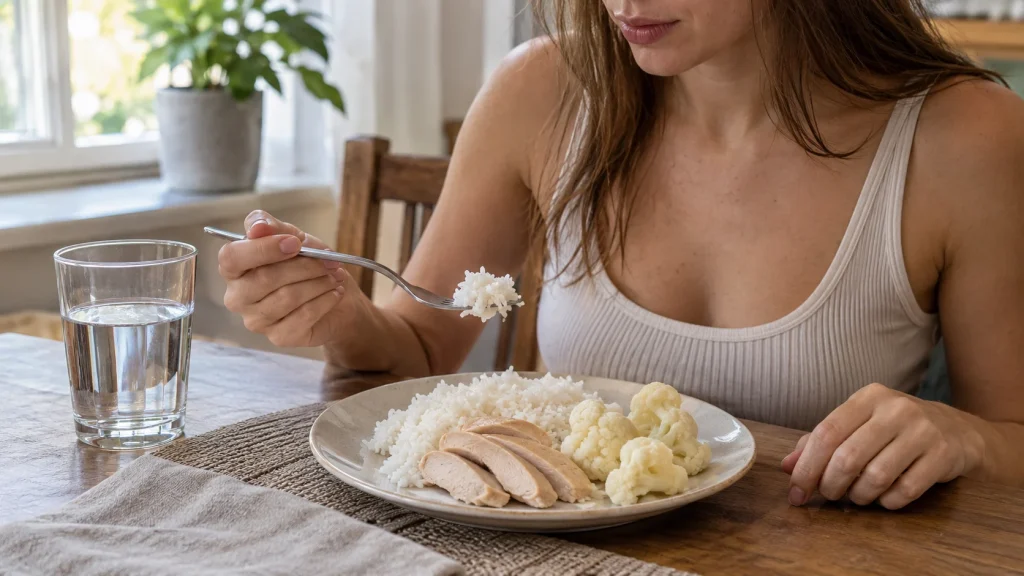
What If You Follow a Vegetarian, Vegan, or Dairy-Free Diet?
You do not need to consume chicken, fish, eggs, or milk to follow whitening aftercare guidance.
If you have been advised to choose lighter-coloured foods temporarily, plant-based options can include:
- Rice and soft tofu
- Plain pasta with a suitable plant-based sauce
- Oatmeal with banana
- Mashed potatoes with plant-based protein
- Steamed cauliflower and rice
- Suitable dairy-free yogurt
Likewise, people who avoid gluten can choose appropriate alternatives such as rice, potatoes, and gluten-free pasta.
Dietary restrictions should never prevent you from meeting essential nutritional needs. The purpose of post-whitening guidance is to support comfort and dental care, not to prescribe an unnecessarily restrictive diet.
How to Order Food in Dubai After Teeth Whitening
If you have recently completed whitening at a clinic in Dubai, you may prefer ordering a simple meal rather than cooking.
Common options worth considering include:
- Grilled chicken with rice: Request a mild preparation if your instructions recommend avoiding coloured sauces.
- Baked fish with potatoes: A simple meal with a soft texture.
- Plain pasta: Choose an appropriate sauce based on your comfort and preferences.
- Rice and vegetables: A flexible option for vegetarian diets.
- Chicken soup: Let it cool to a comfortable temperature before eating.
- Eggs and bread: A convenient choice for a light meal.
You do not need to search for a special restaurant menu labelled “post-whitening food.”
Instead, choose familiar meals that fit your dietary needs and any individual dental instructions.
How to Protect Your Teeth After Eating
Good oral hygiene supports dental health and helps reduce the accumulation of surface stains over time.
Brush Twice Daily With Fluoride Toothpaste
For most adults, brushing twice daily with fluoride toothpaste is recommended.
Use a soft-bristled brush and gentle technique, especially if your teeth are temporarily sensitive.
Do not increase brushing force in an attempt to keep teeth white.
Clean Between Your Teeth
Flossing or using a suitable interdental cleaning tool helps remove plaque and food debris from areas that a toothbrush cannot reach effectively.
Continue your regular cleaning routine unless your dentist has given different instructions.
Drink Water After Meals
Drinking water can help clear food residues and reduce prolonged exposure to certain substances.
Water is useful for normal oral care, but it does not prevent all future staining or replace brushing.
Reduce Frequent Acid and Sugar Exposure
Repeated consumption of sugary snacks and acidic beverages can contribute to tooth decay or erosion, regardless of whitening.
Choose water between meals when possible and avoid prolonged sipping of acidic or sugary drinks.
Do Not Repeat Whitening Without Guidance
If you notice new staining after treatment, another bleaching session may not be necessary.
Professional cleaning may remove external deposits, while whitening touch-ups should be discussed with your dentist.
For long-term recommendations, read our guide to how to maintain teeth whitening results.
When Should You Contact Your Dentist After Whitening?
Mild, temporary sensitivity can occur after dental bleaching. However, persistent or severe discomfort should not be ignored.
Contact your dentist if you experience:
- Severe or worsening tooth pain
- Persistent sensitivity that does not improve
- Pain focused on one specific tooth
- Significant gum irritation or burns
- Discomfort that makes eating or drinking difficult
- Unexpected symptoms after using a home whitening product
Tell your dentist which whitening product or treatment you received, when it was used, and which foods or drinks trigger your symptoms.
This information can help the dental team determine whether the problem is related to temporary bleaching sensitivity or another dental condition.
Frequently Asked Questions About Foods After Teeth Whitening
What are the best foods to eat after teeth whitening?
Convenient options include plain rice, potatoes, pasta, eggs, chicken, white fish, bananas, oatmeal, and plain yogurt. Choose foods that fit your dentist’s instructions, nutritional needs, and comfort. A strict white diet is not required for everyone.
Can I eat rice after teeth whitening?
Yes. Plain rice is a simple meal option after whitening, provided you have followed any treatment-specific instructions about when eating may resume.
Can I eat chicken after teeth whitening?
Yes. Chicken can be included in a normal meal. If your dentist has recommended limiting strongly coloured foods temporarily, choose a preparation without heavily pigmented sauces or marinades.
Can I eat eggs after teeth whitening?
Yes. Boiled eggs, scrambled eggs, and other appropriately prepared egg dishes are ordinary meal options after whitening.
Can I eat bananas after teeth whitening?
Yes. Bananas are soft and easy to eat, making them a convenient snack, especially if chewing feels uncomfortable.
Can I eat yogurt after teeth whitening?
Yes, if you tolerate dairy. Plain yogurt is a simple option, although very cold yogurt may trigger temporary sensitivity in some people.
Can I eat pizza after teeth whitening?
Pizza is not universally prohibited. However, tomato sauce can be acidic and strongly coloured, while very hot pizza may feel uncomfortable if your teeth are sensitive. Follow your dentist’s instructions and choose what you can comfortably eat.
Can I eat chocolate after teeth whitening?
Chocolate is not automatically prohibited by bleaching itself. If your dentist has advised temporary restrictions on pigmented foods, follow those instructions. From an oral health perspective, frequent sugary snacks should also be limited.
Can I drink coffee after teeth whitening?
Follow your dentist’s individual guidance. Although coffee can contribute to external staining over time, clinical evidence does not show that a mandatory short-term white diet significantly improves bleaching effectiveness.
Can I drink milk after teeth whitening?
Yes, if it suits your dietary needs and treatment instructions. Choose a comfortable temperature if your teeth are sensitive. Milk does not directly enhance the bleaching result.
Is a white diet necessary after teeth whitening?
Not generally. Systematic reviews of clinical studies have not found a significant improvement in whitening outcomes from strict dietary colour restrictions. Individual treatment instructions should still be followed.
How long should I avoid dark foods after whitening?
There is no universal requirement to avoid dark foods for a specific number of hours. Traditional instructions sometimes recommend 24 to 48 hours, but current evidence does not establish this as necessary for everyone. Ask your dentist about the advice specific to your treatment.
How soon can I eat after professional teeth whitening?
Follow the instructions provided by the dental team. Different products and treatment protocols may have different requirements. Make sure all whitening materials have been removed as directed before eating.
What should I eat if my teeth are sensitive after whitening?
Soft foods at a comfortable temperature may be easier to tolerate. Examples include mashed potatoes, oatmeal, scrambled eggs, soft rice, and lukewarm soup. Contact your dentist if discomfort is severe, persistent, or worsening.
Will eating coloured foods ruin my teeth whitening results?
No single coloured meal is proven to reverse whitening treatment. Clinical reviews have not shown a significant reduction in bleaching effectiveness from unrestricted diets. However, frequent exposure to staining substances can contribute to new external stains over time.
What is the best drink after teeth whitening?
Plain water is a practical choice because it contains no added sugar or staining pigments. If you have temporary sensitivity, drink it at a comfortable temperature.
Get Personalised Teeth Whitening Aftercare at Alma Polyclinic Dubai
Choosing foods to eat after teeth whitening should not require following a complicated or unnecessarily restrictive diet.
Ordinary meals such as rice, chicken, potatoes, eggs, fish, and vegetables can provide convenient options, while temporary tooth sensitivity may make softer foods and comfortable temperatures preferable.
Most importantly, follow the instructions for your specific whitening treatment and continue practising good oral hygiene.
At Alma Polyclinic in Jumeirah, Dubai, patients can discuss professional whitening, sensitivity, food choices, and long-term maintenance with the dental team.
Learn more about our professional teeth whitening services in Dubai or book a dental consultation at Alma Polyclinic.
Call / WhatsApp: +97142666227
Website: https://almapolyclinic.com
Clinic Address: Villa 1033, Al Wasl Road, opposite Union Coop, Umm Suqeim, Dubai, United Arab Emirates.
Medical disclaimer: This article provides general educational information and does not replace personalised dental advice. Food recommendations, temporary sensitivity, and post-treatment instructions may vary depending on the whitening method and individual oral health.