About the Author and Medical Reviewer
Learn more about the professionals responsible for writing and medically reviewing this article.

Alma Polyclinic Editorial Team
Medical Content Team at Alma Polyclinic
The Alma Polyclinic Editorial Team creates clear, patient-focused health content based on trusted medical sources and clinical guidance from our doctors.
View author profile
Dr. Tamara AK
General Dentist | Cosmetic & Aesthetic Dentistry at Alma Polyclinic
This article was reviewed for clinical accuracy, relevance and patient safety by Dr. Tamara AK.
View doctor profileIf you are wondering how long does root canal treatment take, the most honest answer is that it depends on the tooth and the treatment plan. Some root canal appointments are straightforward and can be completed in one visit. Others need two or more visits, especially when there is infection, swelling, complex canal anatomy, or previous dental work involved.
The time you spend in the dental chair is only one part of the full timeline. You may also need time for diagnosis, X-rays, numbing, aftercare instructions, and a final restoration such as a permanent filling or dental crown. Understanding these steps can make the appointment feel less uncertain and help you plan your day more realistically.
How Long Root Canal Treatment Usually Takes
Most root canal appointments take about 60 to 90 minutes, although some procedures may last one to two hours or longer. Treatment may be completed in one visit or require two or more appointments, depending on the tooth, the number and shape of the canals, the presence of infection, previous dental work, and the final restoration plan.
Time in the dental chair vs. total treatment timeline
When patients ask about root canal appointment length, they are often asking two different questions at once:
- How long will I be at the dentist for the procedure? This includes check-in, diagnosis confirmation, local anesthesia, the procedure itself, and post-treatment instructions.
- How long until the tooth is fully finished? This may include the root canal procedure plus a final restoration, such as a permanent filling or dental crown after root canal treatment in dubai.
The root canal portion focuses on removing infected or damaged tissue from inside the tooth, cleaning and shaping the canals, disinfecting them, and sealing the space. The final restoration protects and rebuilds the tooth so it can function properly. These steps may happen on the same day, but they do not always happen in the same appointment.
If a temporary filling is placed, you may need to return for the permanent filling or crown. That means the root canal itself may be finished, while the overall treatment timeline is still ongoing.
Why there is no single answer for every patient
There is no single root canal treatment duration that applies to everyone because teeth are not all built the same way. Some teeth have simpler internal anatomy. Others have multiple canals, curved canals, narrow canals, or canals that are difficult to locate.
The main timing variables include:
- The type of tooth being treated, such as a front tooth, premolar, or molar
- The number of canals inside the tooth
- Whether there is infection, swelling, or a dental abscess
- Whether the canal anatomy is curved, narrow, calcified, or hard to access
- Whether the tooth has had previous root canal treatment
- Whether a crown, post, or old filling must be managed
- Whether the dentist has enough appointment time to complete the procedure safely
Your dentist or endodontist can give the most accurate estimate after an exam and X-rays. In some cases, the plan may change during treatment if the tooth is more complex than expected.
What Happens During a Root Canal Appointment
A root canal appointment has several stages. Knowing what happens during a root canal helps explain why the visit can take time even when the goal sounds simple: treat the inside of the tooth and seal it.
Exam, X-rays, and treatment planning
Before treatment begins, the clinician evaluates the tooth, surrounding bone, symptoms, bite, and previous dental work. X-rays or other imaging may help show the root shape, canal position, bone changes, and signs of infection.
In an emergency dental visit in dubai, the first appointment may focus on diagnosis and pain control rather than completing the full root canal procedure immediately. For example, the dentist may need to confirm which tooth is causing symptoms, check whether swelling is present, and decide whether full treatment can begin that day.
This planning step matters because the dentist needs to understand the tooth before creating an access opening and working inside the canals. Careful diagnosis can prevent wasted time and help avoid treating the wrong tooth.
Numbing the tooth and preparing the area
Root canal treatment is usually performed with local anesthesia. After the anesthetic is given, the dental team waits for the area to become numb enough for treatment. Some teeth, especially very inflamed or painful teeth, may require extra attention to comfort before the procedure continues.
The tooth is then prepared for safe treatment. The dentist may isolate the tooth to keep it dry and protected during the procedure. This setup time is part of the total root canal appointment length, even though it happens before the main canal cleaning begins.
If you are anxious, have jaw fatigue, or have trouble staying open for long periods, tell the dental team before treatment starts. They may be able to build in breaks or discuss whether a staged approach is more comfortable.
Cleaning, shaping, and disinfecting the canals
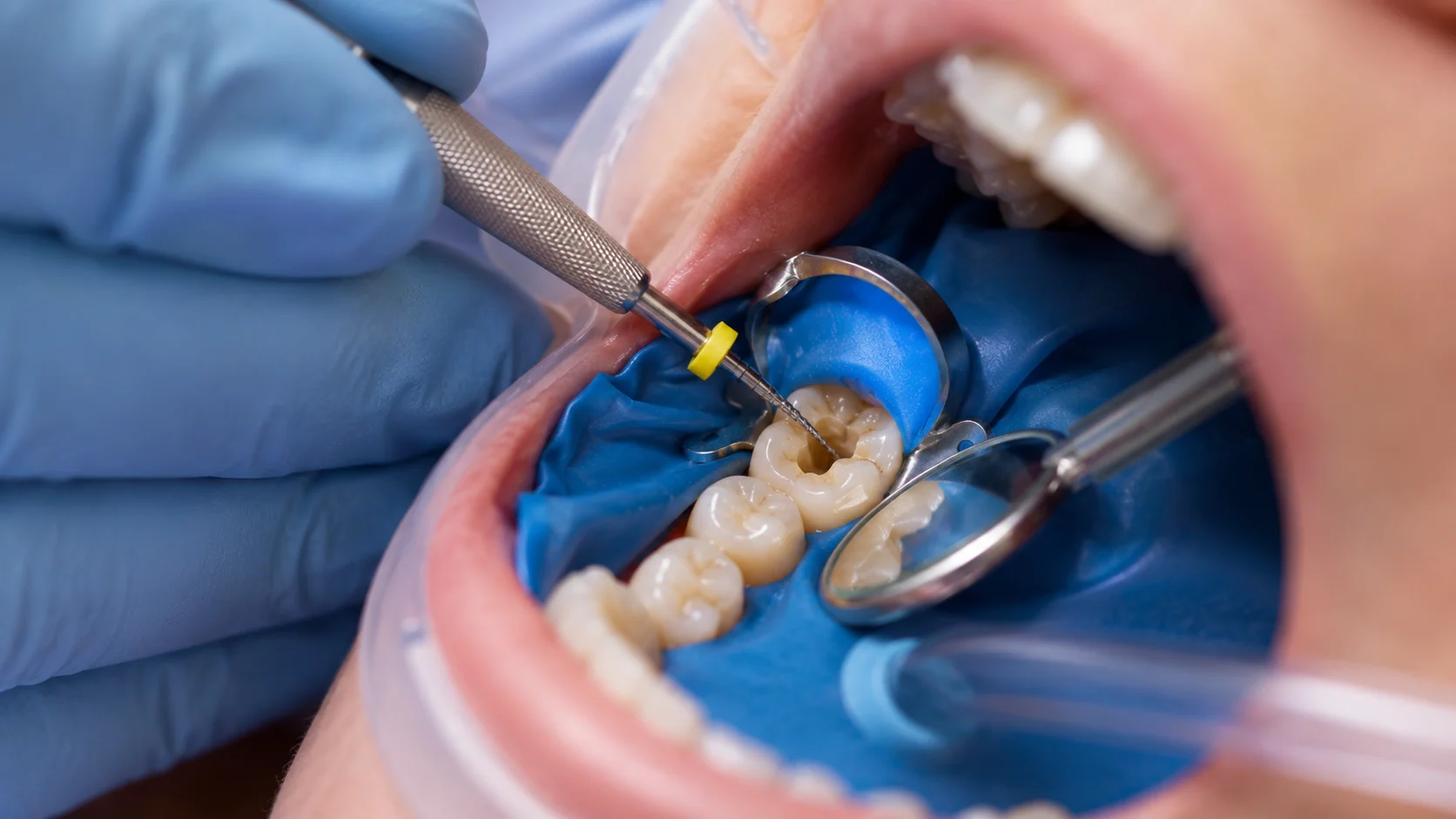
This is the core part of endodontic treatment. The dentist or endodontist creates access to the inside of the tooth, removes damaged or infected tissue, and works through the canals. The canals are cleaned, shaped, and disinfected so they can be sealed.
This stage can be quick in a straightforward tooth or more involved in a tooth with multiple canals. Molars, for example, often require more detailed work than simpler teeth because the canal system may be more complex. Narrow, curved, or difficult-to-locate canals can also add time.
Patients often notice pauses during this stage. The clinician may take measurements, check the canal path, rinse the canals, adjust instruments, or take additional images. These pauses are normal parts of careful treatment.
Filling the canals and sealing the tooth
Once the canals are cleaned and shaped, they are filled and sealed. This helps close the treated space inside the roots. After that, the top of the tooth needs to be closed with a temporary or permanent restoration.
A temporary filling may be used if the final restoration is planned for another day. This is common when a dental crown is needed, when the office schedules restorative care separately, or when the dentist wants to monitor symptoms before the final step.
It is important to understand that the root canal portion and the final restoration are related but separate parts of care. The root canal treats the inside of the tooth. The restoration rebuilds and protects the tooth structure used for chewing.
Why Some Root Canals Take One Visit and Others Take Two or More
One of the most common patient questions is how many visits for a root canal are needed. The answer depends on clinical findings, the tooth, and the dentist’s treatment plan. A single-visit root canal may be possible in some situations, while other cases are safer or more practical when staged over multiple appointments.
When a single-visit root canal may be possible
A single-visit root canal may be possible when the case is straightforward and the clinician has enough time to complete the procedure properly. This may be more likely when the canals are accessible, symptoms are manageable, and there are no major complications that require staging.
Single-visit treatment can be convenient because it reduces the number of appointments. It may also help patients who have limited scheduling flexibility. However, convenience is not the only factor. The dentist must decide whether the tooth can be cleaned, shaped, disinfected, filled, and sealed appropriately in one visit.
If you are hoping for same-day root canal treatment, ask before scheduling whether consultation and treatment can happen at the same appointment. Some offices reserve separate visits for diagnosis and treatment, especially for new patients or complex cases.
Why a dentist may recommend multiple visits
A two-visit root canal or multiple-visit root canal does not automatically mean something has gone wrong. Sometimes it is simply the best way to manage the tooth safely and thoroughly.
A dentist may recommend more than one visit when:
- There is swelling, drainage, or a dental abscess
- The infection needs additional management before the tooth is sealed
- The canals are narrow, curved, blocked, or difficult to locate
- The patient needs breaks because of jaw fatigue or comfort concerns
- The tooth is being retreated after a previous root canal
- There is not enough appointment time to complete all steps carefully
When treatment is staged, the dentist may place a temporary filling between visits. In some cases, medication may be placed inside the tooth when clinically appropriate. Always follow the dentist’s instructions for protecting the tooth between appointments.
How the final restoration can add another appointment
After the root canal, the tooth usually needs a durable final restoration plan. Depending on the tooth and the amount of remaining structure, the dentist may recommend a permanent filling, dental crown, or another restorative option.
This final restoration may add another appointment. Some dental practices can complete certain restorations the same day, while others schedule them separately. If a crown is planned, there may be additional steps such as shaping the tooth, taking impressions or scans, placing a temporary crown, and fitting the final crown.
Before you leave the root canal appointment, ask whether your tooth has a temporary filling and when the permanent restoration should be completed. This helps prevent confusion between “the root canal is done” and “the tooth is fully restored.”
Factors That Can Make Root Canal Treatment Shorter or Longer
Root canal time factors are mostly related to complexity. Two patients may both need root canal treatment, but their appointments can look very different. The following factors help explain why.
Tooth type and number of canals
Different teeth can have different canal systems. Front teeth are often less complex than back teeth, while premolars and molars may have more involved anatomy. Molars are chewing teeth at the back of the mouth and commonly require more detailed access and canal work than simpler teeth.
The number of canals matters because each canal must be located, cleaned, shaped, disinfected, and sealed. A tooth with more canals naturally gives the clinician more work to complete. However, tooth type alone does not determine timing. A front tooth can still be complex, and a molar can sometimes be more straightforward than expected.
X-rays and the dentist’s findings during treatment help determine the true complexity.
Infection, swelling, or an abscess
Active infection, swelling, or a dental abscess can affect both the appointment and the overall treatment timeline. The dentist may need to focus on pain relief, drainage, infection control, or staged treatment depending on what is happening around the tooth.
If swelling is present, the dental team may take additional steps before or during root canal treatment. They may also give specific instructions for monitoring symptoms after the visit. Follow those instructions closely and do not self-direct medication changes without professional guidance.
If you notice worsening swelling, fever, spreading pain, difficulty opening your mouth, or symptoms that feel unusual, contact the dental office promptly.
Canal shape, calcification, or hard-to-reach anatomy
Canals are not always straight and easy to find. Some are curved, narrow, calcified, blocked, or hidden by changes in the tooth over time. These issues can make treatment take longer because the dentist must work carefully to find and clean the canal system.
These complications may not be obvious to you before the appointment. Even with imaging, the full canal shape may become clearer only once treatment begins. If your dentist says the tooth is more complex than expected, it may mean they are taking the time needed to treat it properly.
Complex cases may be referred to an endodontist. An endodontist is a dentist with additional training focused on root canal treatment and other procedures involving the inside of the tooth.
Retreatment or previous dental work
Root canal retreatment can be more complex than first-time treatment. The clinician may need to work through or around crowns, posts, old filling material, or previous canal filling material. These added steps can affect both appointment length and the number of visits.
Previous dental work may also change how the tooth can be accessed and restored. If the tooth already has a crown, large filling, or post, the dentist will explain how that affects the plan.
If you know the tooth has been treated before, tell the dentist and provide any previous dental records or X-rays if available.
Patient comfort, jaw fatigue, and scheduling limits
Sometimes the timing decision is not only about the tooth. Patient comfort matters. A longer appointment may not be ideal for someone who has jaw fatigue, dental anxiety, difficulty staying open, or medical considerations that affect positioning.
Scheduling can also influence the timeline. A clinic may have limited time available for same-day treatment, or the final restoration may need to be scheduled with another provider in the practice.
Splitting care into more than one visit can be a practical decision. It allows the dentist to work carefully and the patient to stay comfortable.
How Long You May Be at the Dentist From Start to Finish
When planning your day, think beyond the procedure itself. The total time at the dental office may include paperwork, health history updates, imaging, numbing, treatment, aftercare instructions, and scheduling follow-up care.
Before the procedure begins
Before treatment starts, you may need to update your medical history, discuss medications, review symptoms, and confirm the diagnosis. New-patient visits and emergency dentist appointments may take longer before treatment begins because the dentist must first determine what is causing the problem.
Imaging may be taken or reviewed. The dentist may test the tooth, check your bite, examine the gums and surrounding tissues, and discuss whether root canal treatment is appropriate.
When scheduling, ask the office how much time to reserve. Also ask whether the appointment is for consultation only, treatment only, or consultation and treatment together.
During the procedure
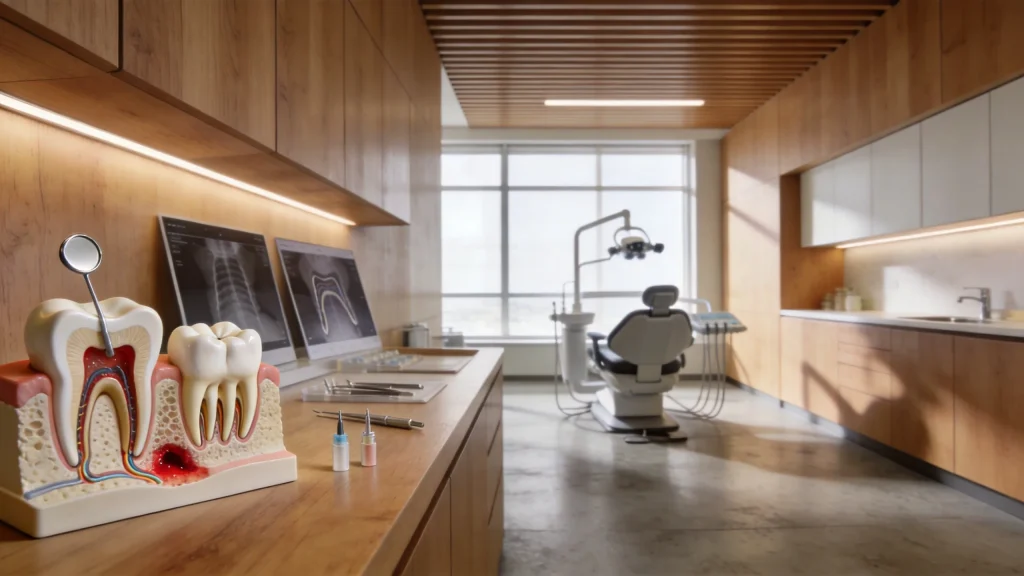
During the procedure, the dentist generally works in a sequence: access the inside of the tooth, clean the canals, shape the canals, disinfect the space, fill the canals, and seal the tooth. Additional images or measurements may be taken along the way.
Quiet periods or repeated checks do not mean nothing is happening. Root canal treatment requires precision. The clinician may be confirming canal length, checking cleanliness, adjusting instruments, or making sure the tooth is sealed properly.
If you need a break, signal the dental team in the way they instruct you before treatment begins. Most teams expect patients to need occasional pauses.
After the appointment
After the procedure, the dentist will check your bite, review aftercare instructions, and explain what was placed in the tooth. If you have a temporary filling, you will be told how to protect it and when to return for the final restoration.
Numbness may continue after you leave the office. Be cautious with eating and drinking until you can do so safely. Your dentist’s instructions should guide when and how to eat, especially if the tooth has not yet received its permanent restoration.
You may also need to schedule a follow-up appointment, crown visit, or permanent filling. Before leaving, make sure you understand whether any additional care is required.
How Long Recovery Takes After a Root Canal
Root canal recovery time is another common concern. Many patients want to know when they can eat, return to work, and expect soreness to improve. Recovery varies based on the tooth, symptoms before treatment, procedure complexity, and your individual response.
Numbness and eating after treatment
Follow your dentist’s instructions about eating after root canal treatment. A key concern is chewing while numb, because you may accidentally bite your cheek, lip, or tongue without realizing it.
If a temporary filling was placed, your dentist may advise you to avoid chewing heavily on that tooth until the permanent restoration is completed. This is especially important if the tooth is weakened or still waiting for a crown or final filling.
Plan meals accordingly. Soft foods that do not require heavy chewing may be easier after the appointment, but your specific instructions should come from the dental team treating you.
Soreness after the procedure
Some tenderness can occur after dental treatment. The tooth and surrounding tissues may feel sensitive when biting or chewing, especially if the tooth was painful before treatment. Follow the aftercare guidance provided by your dentist.
Contact the dental office if you experience symptoms such as:
- Pain that worsens instead of gradually improving
- Swelling that appears, increases, or spreads
- Fever or feeling generally unwell
- A bite that feels high or uncomfortable
- A temporary filling that feels loose, breaks, or comes out
- Symptoms that feel unusual or concerning to you
Do not try to diagnose the problem yourself. A quick call allows the dental team to decide whether you need advice, an adjustment, or a follow-up appointment.
Returning to work, school, or normal activities
Many patients plan normal activities around root canal treatment, but the best plan depends on your comfort, anesthesia, procedure complexity, and whether sedation is used. If your appointment is expected to be long or if you are being treated for swelling or significant pain, you may prefer a lighter schedule afterward.
Ask the dental office whether returning to work or school the same day is expected to be reasonable for your case. If your job involves speaking for long periods, physical work, or strenuous activity, mention that when asking for guidance.
If sedation is part of your treatment plan, follow the office’s instructions about transportation, supervision, and activity restrictions.
When a Root Canal May Take Longer Than Expected
Even with good planning, a root canal may take longer than expected. This can feel frustrating, but extra time often reflects careful treatment rather than a complication.
The dentist finds more complex canals than expected
Internal tooth anatomy can be more complicated than imaging initially suggests. A canal may be narrower, more curved, or harder to locate than expected. Sometimes an additional canal is found during treatment.
Locating and cleaning all relevant canals is important for treatment quality. If the dentist needs more time, additional imaging, or a second appointment, it may be because they are trying to avoid rushing a difficult step.
If you are unsure why the appointment is taking longer, ask for a brief explanation when there is a natural pause or at the end of the visit.
Symptoms or infection need additional management
Swelling, drainage, or persistent symptoms may require additional management. The dentist may decide to place a temporary restoration, monitor the tooth, or schedule a follow-up before completing the final steps.
This does not automatically mean the treatment is failing. It may mean the tooth and surrounding tissues need a staged approach.
Contact your dental office if symptoms change, worsen, or do not match the aftercare instructions you were given.
A temporary restoration needs to be replaced or protected
Temporary fillings are useful, but they are not always intended to be the long-term solution. If a temporary filling becomes loose, breaks, leaks, or comes out, the tooth may need attention before the planned final restoration.
Do not ignore a lost or damaged temporary filling. Call the dental office promptly and explain what happened. They can tell you whether you need to be seen and how to protect the tooth in the meantime.
Until the tooth is permanently restored, follow chewing restrictions and hygiene instructions carefully.
Questions to Ask Before Scheduling Root Canal Treatment
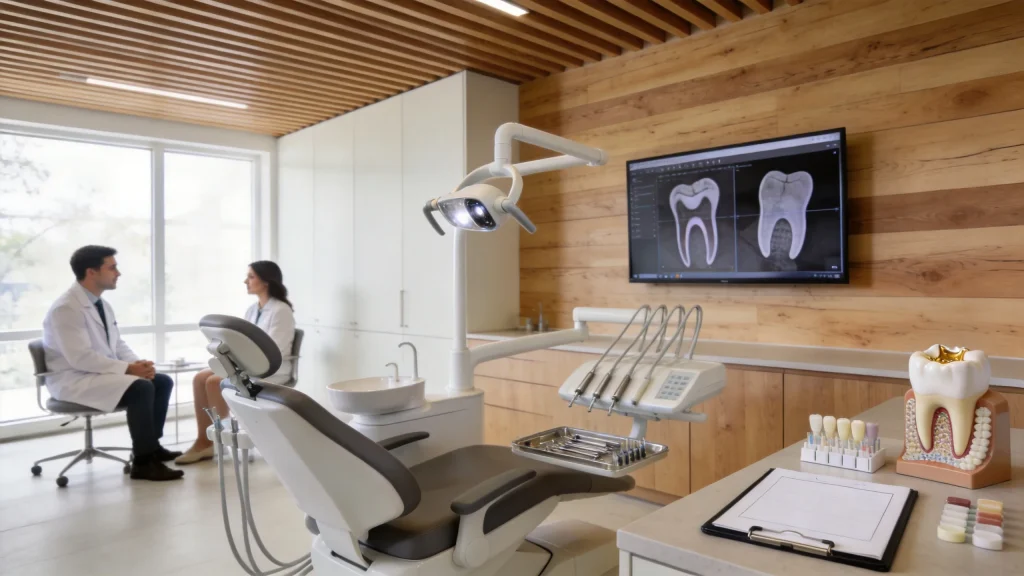
The best way to get a realistic root canal dentist estimate is to ask specific questions before the appointment. This helps you plan your schedule and understand whether the treatment is likely to be simple, staged, or connected to additional restorative care.
Questions about appointment length and number of visits
- How much time should I reserve for the first appointment?
- Is this visit for consultation, treatment, or both?
- Is my case likely to be a single-visit root canal or multiple-visit root canal?
- Could the plan change once treatment begins?
- Will I see a general dentist or an endodontist?
These questions are especially helpful if you have work, school, childcare, transportation, or medical scheduling concerns.
Questions about the final filling or crown
- Will I receive a temporary filling after the root canal?
- Will the permanent filling or crown be completed the same day or later?
- What should I avoid chewing until the final restoration is placed?
- How soon should I schedule the final restoration?
- What signs would mean the temporary filling needs attention?
These questions help clarify the difference between finishing the root canal procedure and fully restoring the tooth.
Questions about aftercare and schedule planning
- When is it safe for me to eat after the appointment?
- Should I avoid chewing on the treated tooth?
- Is returning to work or school the same day reasonable for my case?
- What soreness or tenderness should I expect?
- What symptoms should trigger a call to the office?
Write down the answers or ask for written root canal aftercare instructions so you do not have to rely on memory after the appointment.
Single-Visit vs. Multiple-Visit Root Canal Treatment
Single-visit and multiple-visit root canal treatment are both used in dentistry. The right approach depends on the tooth, the infection status, the patient’s comfort, the clinician’s judgment, and the restoration plan. One approach is not automatically better for every patient.
| Planning factor | Single-visit root canal | Multiple-visit root canal |
|---|---|---|
| Typical use | May be considered when the case is straightforward and enough time is available. | May be recommended for infection management, complex anatomy, retreatment, or comfort reasons. |
| Time at the dentist | May involve one longer treatment appointment. | May involve shorter or staged appointments spread over more than one visit. |
| Number of appointments | Root canal portion may be completed in one appointment. | Root canal portion may require two or more appointments. |
| Why the clinician may choose it | Can be convenient when the tooth can be fully treated and sealed safely in one sitting. | Allows additional management when symptoms, infection, anatomy, or time limits make staging appropriate. |
| Patient planning | Ask whether you should keep the rest of the day flexible after a longer visit. | Ask how to care for the temporary filling and when the next appointment should happen. |
| Final restoration timing | A crown or permanent filling may still require a separate visit. | The final restoration may be scheduled after the root canal portion is completed. |
The most practical question is not “Which option is faster?” but “Which option fits my tooth and gives the dentist enough time to do the procedure properly?” If you have a strong preference because of scheduling, travel, or anxiety, tell your dentist. They can explain whether that preference is realistic for your case.
How to Know What Timeline Applies to Your Tooth
Your personal timeline depends on clinical details that are hard to judge on your own. Tooth pain level alone does not tell you how many canals the tooth has, whether a dental abscess is present, or whether the final restoration will be simple or more involved.
To understand what timeline applies to your tooth, ask your dentist or endodontist to explain these decision factors:
- Which tooth needs treatment: Front teeth, premolars, and molars may involve different levels of complexity.
- How many canals are expected: More canals can mean more cleaning, shaping, disinfecting, and sealing.
- Whether infection or swelling is present: Active symptoms may affect whether care is completed in one visit or staged.
- Whether this is first-time treatment or retreatment: Root canal retreatment may involve removing or working around previous materials.
- What final restoration is planned: A permanent filling, dental crown, or another option may change the total timeline.
- Who is treating the tooth: Some cases are handled by a general dentist, while more complex cases may be referred to an endodontist.
- What the exam and X-rays show: Imaging and clinical findings help guide the most accurate estimate.
If your dentist explains that the timeline is uncertain until treatment begins, that is not unusual. Some details become clear only when the tooth is accessed and the canals are evaluated directly.
Time-Related Risks of Delaying or Not Finishing Treatment
Delaying evaluation for root canal symptoms can allow a dental problem to become more difficult to manage. Tooth pain, swelling, drainage, or a suspected tooth infection should be assessed by a dentist rather than watched indefinitely.
Not finishing the treatment plan can also create problems. For example, if the root canal portion is completed but the final restoration is delayed, the tooth may not yet have the long-term protection the dentist intended. A temporary filling should be treated as temporary unless your dentist tells you otherwise.
Call the dental office if you notice:
- Increasing pain or pressure
- Swelling in the gums, face, or jaw
- Fever or feeling unwell
- A bite that feels uneven or painful
- A temporary filling that is loose, cracked, or missing
- Difficulty chewing or protecting the treated tooth
Finishing the final restoration is part of protecting your time investment. If you are unsure whether another appointment is needed, call the office and ask directly: “Is my root canal treatment complete, or do I still need the permanent restoration?”
Can a root canal be done in one appointment?
Sometimes. A root canal can be completed in one appointment when the tooth is suitable for same-day treatment and the clinician has enough time to complete the procedure safely. Straightforward canals, manageable symptoms, and limited complications may make this more practical.
Complex infection, difficult canals, swelling, or retreatment may require more than one visit. Your dentist or endodontist should confirm what is realistic after an exam and imaging.
Why would a root canal take two visits?
A root canal may take two visits if the tooth has infection, swelling, drainage, complex anatomy, or symptoms that need staged care. The dentist may also choose two visits if the canals are difficult to clean thoroughly in one session.
In some cases, a temporary filling or medication may be placed between appointments when clinically appropriate. Two visits do not automatically mean something has gone wrong.
Do molar root canals take longer than front-tooth root canals?
They may. Molars often have more complex canal systems than front teeth, and more canals can mean more time spent locating, cleaning, shaping, disinfecting, and sealing them.
Exact timing still depends on the individual tooth, infection level, previous dental work, and what the dentist finds during treatment.
How long should I take off work for a root canal?
Ask the dental office how much time to reserve for your specific appointment. Consider check-in, health history updates, diagnosis confirmation, imaging, numbing, treatment, aftercare instructions, and travel.
Many patients plan around comfort, numbness, procedure complexity, and whether sedation is used. If your job is physically demanding or involves a lot of speaking, ask for case-specific guidance.
How long after a root canal can I eat?
Follow your dentist’s instructions. Be cautious while you are numb because you could bite your cheek, lip, or tongue without noticing.
If the tooth has only a temporary restoration, your dentist may advise you to avoid chewing heavily on that side until the permanent filling or crown is completed.
How long does soreness last after a root canal?
Some tenderness may occur after root canal treatment, especially if the tooth was painful before the appointment. Follow your dentist’s aftercare instructions and use only guidance that has been approved for you.
Contact the dental office if pain worsens, swelling develops, your bite feels wrong, or symptoms feel unusual.
Does the crown appointment count as part of root canal treatment time?
The root canal procedure and final restoration are related, but they may be separate appointments. The root canal treats the inside of the tooth, while the final filling or crown restores and protects the tooth.
Ask whether your restoration can be completed the same day or at a later visit. Also ask whether you have a temporary filling and what restrictions apply before the permanent restoration is finished.
What makes a root canal appointment take longer than planned?
A root canal appointment may take longer than planned if the dentist finds unexpected canal anatomy, active infection, swelling, previous dental work, or the need for additional imaging, disinfection, or temporary restoration.
Extra time often means the dentist is being careful, not that something is wrong. If the appointment must be extended or split into another visit, ask what changed and what the next step will be.
If you are scheduling root canal treatment, the most useful next step is to ask your dental office for a personalized time estimate. Confirm whether the visit is for consultation, treatment, or both; whether one visit or multiple visits are likely; and whether the final restoration will happen the same day or later. That information will help you plan your schedule with fewer surprises and understand the full timeline from diagnosis to a fully restored tooth.