
About the Author and Medical Reviewer
Learn more about the professionals responsible for writing and medically reviewing this article.

Alma Polyclinic Editorial Team
Medical Content Team at Alma Polyclinic
The Alma Polyclinic Editorial Team creates clear, patient-focused health content based on trusted medical sources and clinical guidance from our doctors.
View author profile
Dr. Marc Habib
Specialist Endodontist | Microscopic Root Canal Expert at Alma Polyclinic
This article was reviewed for clinical accuracy, relevance and patient safety by Dr. Marc Habib.
View doctor profileIf you are wondering, “Can I drink alcohol after a root canal?”, the answer depends mainly on whether you are still numb, whether sedation was used, what medications you are taking and how you feel after treatment.
After a routine root canal treatment performed with local anaesthetic, most patients can return to normal eating and drinking once the numbness has completely worn off. However, alcohol should be avoided if you had sedation, are taking medication that should not be combined with alcohol, or are experiencing concerning symptoms such as increasing pain, swelling or dizziness.
Your dentist’s individual aftercare instructions always take priority because they are based on the treatment you received, the condition of the tooth and any medication prescribed.
Can You Drink Alcohol After a Root Canal? The Short Answer
For a straightforward root canal performed using only local anaesthetic, the American Association of Endodontists states that patients can generally return to normal eating and drinking, including alcohol, once the numbness has worn off.
You should wait longer if any of the following apply:
- Your mouth, tongue, cheek or lip is still numb.
- You received oral, intravenous or general sedation.
- You are taking medication that should not be combined with alcohol.
- You feel dizzy, nauseated or unusually drowsy.
- You have increasing pain, swelling, fever or another concerning symptom.
- Your dentist specifically instructed you to avoid alcohol.
If none of these factors applies and you feel well after the numbness has disappeared, there is not usually a root-canal-specific reason that requires every patient to avoid alcohol for a fixed 24-, 48- or 72-hour period.
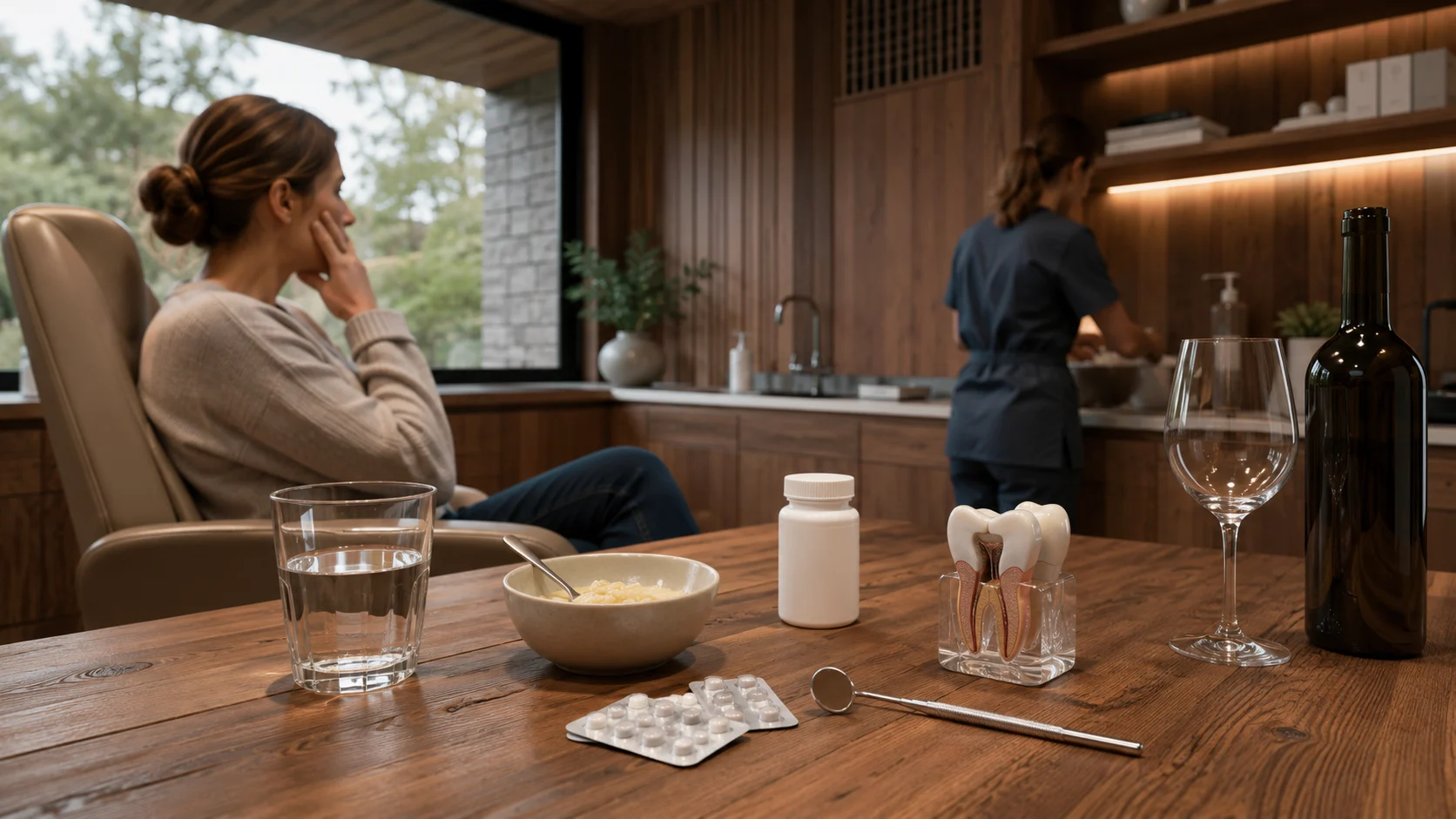
Why You May Need to Wait Before Drinking Alcohol
Wait Until the Numbness Has Completely Worn Off
Local anaesthetic is commonly used during root canal treatment and may leave your lip, cheek, tongue or surrounding tissues numb for several hours.
While you are numb, it is easier to accidentally bite your cheek, lip or tongue or misjudge the temperature of food and drinks. Waiting until normal sensation returns makes eating and drinking safer.
Avoid Alcohol After Sedation
Root canal treatment is usually performed under local anaesthesia, although sedation may be used in selected cases. Sedation can affect alertness, memory, coordination and judgement.
If you received oral sedation, IV sedation or general anaesthesia, do not drink alcohol until the restriction period provided by your dental team has passed. Alcohol can intensify sedative effects and should not be combined with medication or sedation unless your treating healthcare professional confirms that it is safe.
Medication May Change the Answer
Medication is one of the most important factors when deciding whether it is safe to drink alcohol after root canal treatment.
Do not assume that all antibiotics or all painkillers interact with alcohol in the same way. Check the medication label and follow the instructions provided by your dentist, doctor or pharmacist.
Alcohol and Antibiotics After Root Canal Treatment
Antibiotics are not required after every root canal, but they may be prescribed in certain situations involving infection or other clinical concerns.
According to the NHS guidance on antibiotics and alcohol, moderate alcohol consumption does not necessarily cause problems with many commonly used antibiotics. However, there are important exceptions.
Metronidazole
If you are taking metronidazole, alcohol should be completely avoided during treatment and for at least 48 hours after the final dose. Combining metronidazole with alcohol can cause unpleasant reactions including nausea, vomiting, stomach pain, flushing, headache, dizziness and palpitations.
Tinidazole
If you are taking tinidazole, NHS guidance recommends avoiding alcohol during treatment and for 72 hours after the final dose.
Other antibiotics may have different instructions. Always follow the information supplied with the exact medication you have been prescribed rather than applying one rule to every antibiotic.
Can You Drink Alcohol With Pain Medication After a Root Canal?
The answer depends on the pain medication.
For example, NHS guidance states that adults can generally eat and drink normally while taking paracetamol, including alcohol, although individual medical conditions such as liver disease can change what is safe.
With ibuprofen and other NSAIDs, drinking large amounts of alcohol may increase the risk of side effects, particularly stomach irritation or bleeding.
Alcohol should not be combined with sedating prescription pain medicines such as medicines containing codeine or similar opioids unless a healthcare professional has specifically confirmed that it is safe.
Because medication recommendations depend on your health and prescription, check the label or ask your dentist or pharmacist if you are unsure.
What If You Have a Temporary Filling or Temporary Crown?
Some root canal treatments are completed over more than one appointment. A temporary filling may be placed until the tooth receives its final restoration, and in many cases a dental crown may later be recommended to protect the treated tooth.
Alcohol itself does not normally damage a temporary filling or crown. The more important issue is protecting the tooth from excessive chewing forces.
Until the tooth has been permanently restored, follow your dentist’s instructions and avoid hard, sticky or very chewy foods that could loosen the temporary restoration or fracture the treated tooth.
The American Association of Endodontists also recommends being careful with chewing until the final restoration has been completed.
What Should You Drink After Root Canal Treatment?
Water is the simplest choice immediately after treatment. It helps you stay hydrated and does not place unnecessary stress on the treated tooth.
If your mouth is still numb, avoid very hot drinks because you may not accurately judge their temperature. Once normal sensation has returned, most patients can gradually return to their usual eating and drinking habits unless their dentist has given different instructions.
During the first hours after treatment, it is also sensible to choose foods that require minimal chewing and avoid biting heavily on the treated tooth, particularly when a temporary restoration is present.
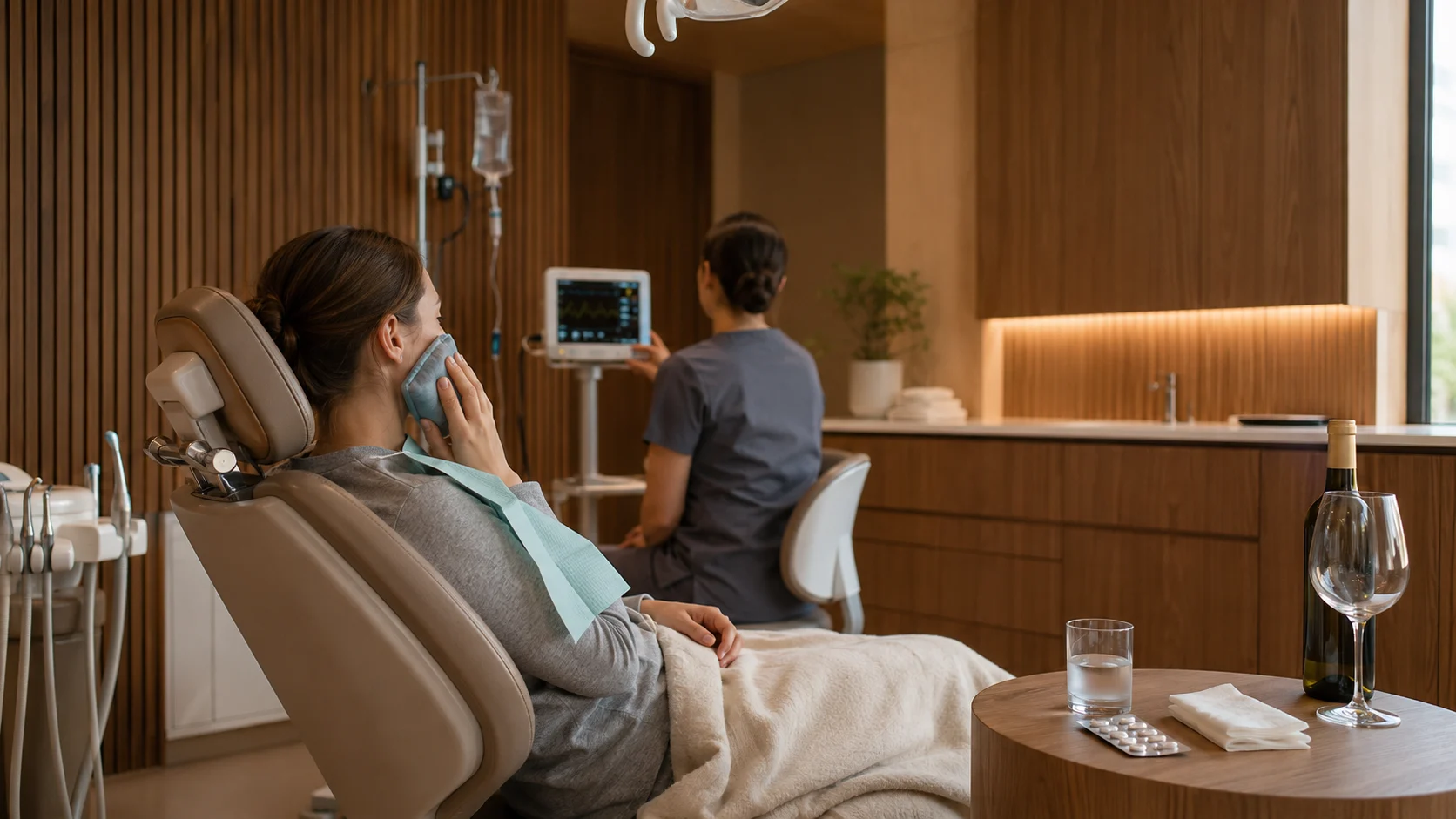
When Should You Contact Your Dentist After a Root Canal?
Mild tenderness after root canal treatment can occur and often improves over the following days. However, some symptoms deserve professional assessment.
Contact your dentist if you experience:
- Severe or increasing pain instead of gradual improvement.
- Visible swelling in the gum, jaw, cheek or face.
- Fever or feeling generally unwell.
- Persistent drainage or an unusual taste from the treated area.
- A temporary filling or crown that becomes loose, cracks or falls out.
- A bite that feels unusually high or causes significant pain when chewing.
If these symptoms are present, focus on getting appropriate dental advice rather than drinking alcohol or trying to manage the problem yourself.
For severe or unexpected dental symptoms, you can also read our guide to dental emergencies and urgent tooth pain.
Does Alcohol Affect the Success of a Root Canal?
There is no good reason to describe moderate alcohol consumption after an uncomplicated root canal as a direct cause of root canal failure.
The long-term success of root canal treatment depends much more on factors such as proper cleaning and sealing of the root canals, completing the required restoration, protecting the tooth from fracture and maintaining good oral hygiene.
According to the American Association of Endodontists, a temporary filling is often placed after root canal treatment and the patient should return for the final restoration or crown as recommended.
If you have been advised to complete a crown or other restoration, do not delay that follow-up simply because the tooth feels comfortable.
Root Canal Aftercare: Quick Decision Guide
| Situation | Alcohol Advice |
|---|---|
| Still numb after local anaesthetic | Wait until normal sensation has returned. |
| Local anaesthetic only, no conflicting medication and feeling well | Normal eating and drinking can generally resume once numbness has gone. |
| Received sedation | Avoid alcohol for the period specified in your sedation aftercare instructions. |
| Taking metronidazole | Avoid alcohol during treatment and for at least 48 hours after the last dose. |
| Taking tinidazole | Avoid alcohol during treatment and for at least 72 hours after the last dose. |
| Taking sedating prescription pain medication | Avoid alcohol unless your healthcare professional confirms otherwise. |
| Increasing pain, swelling, fever or another concerning symptom | Avoid alcohol and contact your dentist. |
Frequently Asked Questions
Can I drink alcohol the same day as a root canal?
If your root canal was completed using only local anaesthetic, you did not receive sedation, you are not taking medication that conflicts with alcohol and you feel well, you can generally return to normal eating and drinking once the numbness has completely worn off. Follow any different instructions given by your dentist.
How long after a root canal should I wait to drink alcohol?
There is no universal waiting period for every patient. For an uncomplicated root canal using local anaesthetic only, the main requirement is usually waiting until numbness has disappeared. Sedation, medication or complications may require a longer period of avoidance.
Can I drink alcohol while taking antibiotics after a root canal?
It depends on the antibiotic. Many commonly used antibiotics do not have the same alcohol restriction, but metronidazole and tinidazole are important exceptions. Check the medication leaflet and ask your pharmacist or dentist if you are unsure.
Can I drink alcohol with painkillers after a root canal?
It depends on the painkiller and your medical history. Alcohol should be avoided with sedating prescription pain medication. Heavy alcohol consumption may also increase side effects with NSAIDs such as ibuprofen. Check your medication instructions before drinking.
Can I drink alcohol if I have a temporary crown after a root canal?
Having a temporary crown does not automatically make alcohol unsafe. The main concern is protecting the temporary restoration from hard, sticky or excessive chewing until the permanent restoration is completed.
Does alcohol disinfect a root canal-treated tooth?
No. Drinking alcohol does not disinfect the tooth and does not replace professional root canal treatment, proper sealing of the tooth, oral hygiene or any medication prescribed by your dentist.
What is the safest drink after root canal treatment?
Water is the simplest choice immediately after treatment. Avoid very hot drinks while your mouth is numb, and follow any specific eating or drinking instructions given by your dental team.
Need Advice After Root Canal Treatment?
If you have questions about pain, swelling, medication or recovery after root canal treatment, personalised advice is more useful than applying a general rule to every patient.
At Alma Polyclinic, Dr. Marc Habib is a Specialist Endodontist with advanced experience in microscopic root canal treatment. If you are experiencing persistent tooth pain or need endodontic assessment, you can book a consultation with our dental team in Dubai.
You can also learn more about root canal cost in Dubai or read our guide comparing root canal treatment and tooth extraction.
Medical note: This article provides general educational information and does not replace personalised advice from your dentist, doctor or pharmacist. Medication and post-treatment instructions should always be followed according to your individual treatment plan.