About the Author and Medical Reviewer
Learn more about the professionals responsible for writing and medically reviewing this article.

Alma Polyclinic Editorial Team
Medical Content Team at Alma Polyclinic
The Alma Polyclinic Editorial Team creates clear, patient-focused health content based on trusted medical sources and clinical guidance from our doctors.
View author profile
Dr. Tamara AK
General Dentist | Cosmetic & Aesthetic Dentistry at Alma Polyclinic
This article was reviewed for clinical accuracy, relevance and patient safety by Dr. Tamara AK.
View doctor profileIf you are wondering how do teeth look under veneers, the answer depends on the stage of treatment. Before treatment, they are simply your natural teeth. After veneer preparation, they may look slightly smaller, flatter or less glossy because a small amount of tooth structure may be reshaped. Once the final veneers are bonded, the prepared tooth is mostly hidden beneath the restoration.
However, the natural tooth underneath still matters. Its colour, shape, position, enamel condition and previous dental work can influence how natural the final veneer looks.
How Do Teeth Look Under Veneers Before Placement?
Before veneers are placed, your dentist evaluates your natural teeth carefully. Their existing colour, shape, alignment, enamel condition and relationship with the gums all help determine how the veneers should be designed.
Natural Tooth Shape and Surface
Natural teeth vary in shape and texture. Some are rounded, flat, worn, chipped or slightly irregular. These differences influence the thickness and contour required for the veneer to create balanced proportions.
Existing Tooth Colour and Discolouration
Teeth may have yellow, grey or uneven colour patterns. The starting shade is important because some veneer materials are more translucent than others. Darker teeth may require a veneer with greater masking ability to achieve the desired final shade.
Spacing and Alignment
Gaps, rotated teeth or teeth that sit farther forward can affect veneer design. In some cases, additional contouring may be required to prevent the finished veneers from appearing bulky or disproportionate.
Fillings, Chips and Previous Dental Work
Existing fillings, chipped edges and previous restorations can influence bonding and shade matching. Your dentist will assess these areas before deciding how the tooth should be prepared and which veneer material is appropriate.
How Do Teeth Look After Veneer Preparation?
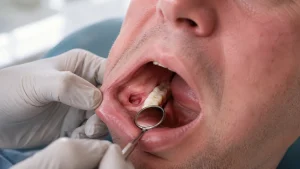
After preparation, teeth may look noticeably different from their original appearance. This is a temporary stage of treatment and should not be confused with the final cosmetic result.
Depending on the treatment plan, prepared teeth may look:
- Slightly smaller or thinner
- Flatter across the front surface
- More uniform in shape
- Shorter at the edges in some cases
- Less glossy or more matte than natural enamel
The amount of preparation varies considerably. Some patients need only minimal reshaping, while others may require more preparation to correct tooth position, create space for the veneer or mask significant discolouration.
Do Teeth Get Shaved Down for Veneers?
Teeth may be reshaped for veneers, but the amount is not the same for every patient. Modern veneer treatment is planned according to the existing tooth position, enamel thickness, desired final shape and the type of veneer being used.
Minimal-prep veneers may require only subtle surface modification. Traditional porcelain veneers may require more preparation to create enough space for the restoration without making the finished tooth appear bulky.
Teeth that protrude, are significantly rotated or have dark discolouration may require a different preparation approach than teeth that are already well aligned.
Can You See the Natural Teeth Under Veneers?
Once veneers are permanently bonded, the natural front surface of the tooth is generally not visible. The veneer becomes the visible external surface of the tooth.
However, the tooth underneath can still influence the final appearance. Its shade may affect very translucent veneers, while its shape can influence veneer thickness and contour.
The margins where the veneer meets the natural tooth are also important. Careful placement and finishing around the sides and gumline help create a smooth, natural-looking transition.
Can Dark Teeth Show Through Veneers?
Dark natural teeth can influence the appearance of thin or highly translucent veneers. This is why veneer material, thickness and opacity must be selected according to the starting tooth colour.
When greater masking is required, the dentist and dental laboratory can adjust the veneer design and material opacity. The shade of the bonding material may also contribute to the final appearance.
The goal is to balance enough opacity to conceal unwanted colour while maintaining the light reflection and translucency that help veneers resemble natural enamel.
What Do Teeth Look Like Under Temporary Veneers?
Temporary veneers may be used while permanent porcelain veneers are being created. They cover the prepared teeth, help protect them and give the patient an early idea of the planned tooth shape and length.
Temporary veneers are usually less refined than the final restorations. Their surface texture, translucency and shade may look simpler, but they allow patients to function normally while permanent veneers are being prepared.
If the temporary veneers are removed during an appointment, the underlying prepared teeth may look smaller, matte or differently shaped compared with the original teeth.
How Teeth Look Under Different Types of Veneers
Porcelain Veneers
Porcelain veneers commonly require some tooth preparation so the ceramic can be placed without adding excessive thickness. Prepared teeth may therefore look smaller or flatter before the final veneers are bonded.
If you are choosing between different veneer materials, read our guide to porcelain vs composite veneers.
Composite Veneers
Composite veneers may require less tooth reduction in suitable cases because composite resin can often be applied and shaped directly onto the tooth.
The amount of preparation depends on tooth position, existing shape and the cosmetic change required.
Minimal-Prep Veneers
Minimal-prep veneers are designed to preserve as much natural enamel as possible. Teeth underneath may therefore look only slightly different after preparation, with minor surface and edge adjustments.
No-Prep Veneers
In carefully selected cases, veneers may require little or no enamel reduction. The natural tooth underneath can remain close to its original shape.
No-prep veneers are not appropriate for every smile. If the natural teeth are already prominent or large, adding material without creating sufficient space may result in an overly bulky appearance.
Veneers vs Dental Crowns: What Happens to the Tooth Underneath?
Veneers and crowns both change the visible appearance of a tooth, but they cover different amounts of tooth structure.
A veneer primarily covers the visible front surface of the tooth, while a dental crown covers much more of the tooth above the gumline. Crowns therefore usually require greater tooth preparation.
Dental bonding generally involves less preparation and may sometimes be applied with little alteration to the natural tooth.
Learn more about the differences between veneers vs dental crowns before choosing a restorative or cosmetic treatment.
Can Teeth Under Veneers Become Visible?
Normally, the prepared tooth remains covered by the veneer. However, certain changes can make part of the underlying tooth or veneer margin more noticeable over time.
Gum Recession
If the gumline moves away from its original position, the transition between the veneer and natural tooth may become easier to see.
Veneer Chipping
If part of a veneer chips or fractures, the underlying tooth surface may become visible in that area.
Changes Around Veneer Margins
Staining, plaque accumulation or changes in surrounding gum tissue can make veneer margins more noticeable. Maintaining healthy gums and good oral hygiene is important for long-term aesthetics.
Are Teeth Under Veneers Weaker?
Veneers do not automatically make teeth weak. However, the amount of natural tooth structure removed during preparation matters.
When enamel is reduced, the tooth becomes more dependent on the bonded restoration for its external surface. Conservative treatment planning aims to preserve healthy enamel whenever clinically appropriate.
Patients who grind or clench their teeth may also place additional force on veneers. In these cases, a dentist may recommend a protective night guard.
What Determines How Natural Veneers Look?
The final appearance of veneers depends on more than the veneer itself. Important factors include:
- The natural colour of the underlying teeth
- The amount of enamel remaining
- Tooth position and alignment
- Veneer thickness and opacity
- Material selection
- Shape and proportions of the final veneers
- Margin position around the gums
- Quality of shade matching
- Condition of the surrounding gums
A carefully planned veneer should complement surrounding teeth and facial features rather than appearing excessively white, opaque or bulky.
How to Keep Veneers Looking Natural
Long-term veneer appearance depends on maintaining healthy teeth, gums and restoration margins.
- Brush twice daily using an appropriate toothpaste and toothbrush.
- Floss around veneer margins and between teeth.
- Attend regular dental examinations and professional cleaning appointments.
- Avoid using veneered teeth to bite very hard objects.
- Ask your dentist about a night guard if you grind or clench your teeth.
- Contact your dentist if a veneer feels loose, chipped or uncomfortable.
For more advice, read our guide on how to maintain your smile after cosmetic dental procedures.
Frequently Asked Questions
Do teeth look smaller under veneers?
They may look smaller immediately after preparation because some tooth structure may be reshaped to create space for the veneer. The final veneer restores the planned size and contour.
Can you see the real teeth under veneers?
Usually not. Once veneers are bonded, they cover the visible front surface of the natural teeth. However, the underlying tooth colour and shape may still influence the final appearance.
Do teeth get shaved down for veneers?
Some veneer treatments require tooth preparation, but the amount varies. Minimal-prep cases may involve very little reshaping, while other cases require more reduction to create sufficient space and achieve the desired result.
Can dark teeth show through veneers?
They can if veneers are very thin or translucent. Appropriate material opacity, veneer thickness and bonding shade can be used to help mask darker underlying teeth.
What do teeth look like under temporary veneers?
Prepared teeth underneath temporary veneers may look smaller, flatter or more matte than natural teeth. Temporary veneers cover and protect them until the permanent restorations are ready.
Are teeth under veneers weaker?
Not necessarily. The effect depends largely on the amount of tooth preparation and the health of the remaining tooth structure. Conservative preparation aims to preserve as much healthy enamel as possible.
Final Thoughts
So, how do teeth look under veneers? Before treatment they look like your natural teeth. After preparation they may appear smaller, flatter or less glossy, depending on how much reshaping is required. Once the final veneers are bonded, the natural tooth is largely hidden beneath the restoration.
The appearance of the final veneers still depends on the teeth underneath. Natural tooth colour, enamel condition, alignment, veneer material, preparation design and margin placement all influence how natural the finished smile looks.