
About the Author and Medical Reviewer
Learn more about the professionals responsible for writing and medically reviewing this article.

Alma Polyclinic Editorial Team
Medical Content Team at Alma Polyclinic
The Alma Polyclinic Editorial Team creates clear, patient-focused health content based on trusted medical sources and clinical guidance from our doctors.
View author profile
Dr. Corentin Buron
Specialist Oral Surgeon | Dental Implantologist at Alma Polyclinic
This article was reviewed for clinical accuracy, relevance and patient safety by Dr. Corentin Buron.
View doctor profileDental Implants Dubai – Restore Your Smile with Expert Care
Looking for dental implants in Dubai to replace missing teeth and restore your confidence? Dental implants offer a fixed, long-term tooth replacement option that can improve chewing, support speech, and create a natural-looking smile. Whether you have lost one tooth, several teeth, or an entire arch, implant treatment can be tailored to your oral health and restorative needs.
At Alma Polyclinic in Jumeirah, Dubai, dental implant treatment is planned around the condition of your jawbone, gums, bite, medical history, and personal goals. Our oral surgery and implantology services include individual assessments, digitally assisted treatment planning, and options for patients who may need additional bone or soft-tissue procedures.
What should you know before getting dental implants? An implant is a biocompatible fixture inserted into the jawbone to support an artificial tooth. Treatment often takes several months because the implant must integrate with the surrounding bone. The final timeline and cost depend on the number of missing teeth, bone condition, surgical complexity, and type of restoration.
This guide explains the available dental implant options in Dubai, who may be suitable for treatment, what happens during implant surgery, and how to protect your results for the long term.
What Are Dental Implants and How Do They Work?
A dental implant is an artificial tooth root, commonly made from titanium or another suitable biocompatible material, that is surgically placed into the jawbone.
Once the implant becomes sufficiently integrated with the bone, it can support a replacement tooth or prosthesis.
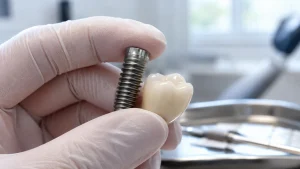
A typical implant-supported tooth consists of three components:
- Implant fixture: The component placed inside the jawbone to provide support.
- Abutment: A connector between the implant and the final restoration, although some systems use different designs.
- Dental crown: The visible replacement tooth, custom-made to match the patient’s bite and appearance.
For patients missing multiple teeth, implants may support a bridge or a full-arch prosthesis rather than individual crowns for every missing tooth.
The biological process that allows bone to form a stable connection with the implant surface is called osseointegration. This process is essential for many conventional implant treatment plans and normally takes several months.
Unlike a conventional tooth-supported bridge, a single implant can replace a missing tooth without routinely requiring the neighbouring healthy teeth to be prepared as bridge supports.
Explore dental implant treatment at Alma Polyclinic in Dubai to learn more about available implant and restorative services.
What Are the Benefits of Dental Implants?
Dental implants are frequently considered because they can replace missing teeth while providing stable support for a natural-looking restoration.
Restore Chewing Function
Implant-supported crowns and bridges can help patients chew more comfortably compared with having untreated gaps or unstable removable dentures.
Chewing ability depends on the number and position of implants, the restoration design, and the patient’s bite.
Improve Smile Appearance
A custom-designed implant crown can be shaped and coloured to complement the surrounding teeth.
For visible front teeth, the condition of the gums and underlying bone is particularly important when planning a natural-looking result.
Support the Jawbone
Tooth loss can lead to changes in the supporting jawbone over time.
Implants help transfer functional forces to the surrounding bone and can contribute to preserving bone in the treated area. However, implant placement does not completely prevent every form of jawbone change or guarantee that no future bone loss will occur.
Replace Missing Teeth Without a Conventional Bridge
A single implant-supported crown can often be placed without reshaping the two adjacent teeth, unlike many traditional dental bridge designs.
This may be particularly valuable when neighbouring teeth are healthy and do not need restorations.
Provide a Long-Term Replacement Option
Dental implants can function for many years with suitable treatment planning, effective plaque control, and regular professional maintenance.
They are not maintenance-free or guaranteed to last forever. The crown, bridge, or other prosthetic components may eventually require repair or replacement.
Types of Dental Implants Available in Dubai
Different implant-supported restorations are used for different patterns of tooth loss. The appropriate option depends on the number of missing teeth, the location of available bone, and the patient’s oral health.
| Implant Treatment | Common Use | Important Consideration |
|---|---|---|
| Single-Tooth Implant | Replacement of one missing tooth | Requires sufficient bone and suitable space between adjacent teeth. |
| Implant-Supported Bridge | Replacement of several neighbouring missing teeth | May avoid the need for an individual implant at every missing tooth position. |
| Full-Arch Fixed Implants | Replacement of most or all teeth in one jaw | Requires detailed assessment of bone, bite, hygiene access, and prosthetic design. |
| Implant-Retained Dentures | Improved retention of certain removable dentures | The denture usually remains removable for cleaning. |
| Immediate Implant Placement | Implant inserted at the time of tooth extraction in selected cases | Requires suitable bone, tissue conditions, and surgical planning. |
Single-Tooth Dental Implants
A single-tooth implant replaces one missing tooth with an implant-supported crown.
This treatment may be considered when the adjacent teeth are healthy and the patient has adequate bone and gum support.
The implant position must be carefully planned to achieve appropriate spacing, function, and appearance.
Implant-Supported Dental Bridges
When multiple teeth are missing next to one another, an implant-supported bridge may replace the missing section using a smaller number of implants than the number of artificial teeth.
The exact number of implants depends on the length of the gap, available bone, biting forces, and prosthetic design.
Patients considering this option can also explore our dental crown and restorative dentistry services, which include restorations used with dental implants.
Full-Mouth Dental Implants and All-on-4 Concepts
Full-arch implant treatment replaces an entire upper or lower arch of missing or non-restorable teeth with a prosthesis supported by strategically positioned implants.
Some treatment plans use four implants, commonly described as an All-on-4 concept, while others may require six or more implants depending on the patient’s anatomy and restorative requirements.
Not every patient is suitable for a four-implant design. The number of implants and whether a fixed or removable restoration is preferable must be determined through individual assessment.
Some patients may receive a temporary fixed restoration on the day of surgery, but same-day teeth do not necessarily mean the final restoration is completed that day.
Immediate Dental Implants After Extraction
In selected cases, an implant can be placed immediately after a tooth is extracted.
This approach may reduce the number of surgical stages, but it is not appropriate for every extraction site.
The dentist must evaluate:
- The condition of the socket walls
- Whether the infection or disease has been adequately managed
- The amount and quality of supporting bone
- The possibility of achieving adequate primary implant stability
- The position needed for the future crown
- The condition of the surrounding gum tissue
If the site requires healing before an implant can be safely placed, a delayed treatment plan may be preferable.
For patients whose tooth may still be restorable, our guide to root canal vs tooth extraction explains why preserving a natural tooth can sometimes be the better option.
Dental Implants in Dubai: Step-by-Step Treatment Process
The dental implant procedure in Dubai generally follows a series of planned stages. The sequence may be modified depending on whether extractions, bone grafting, or temporary teeth are required.
Step 1: Dental Implant Consultation
The first appointment involves discussing your missing teeth, overall oral health, medical history, and preferred treatment outcome.
Your implantologist examines the gums, remaining teeth, jaw relationship, and bite.
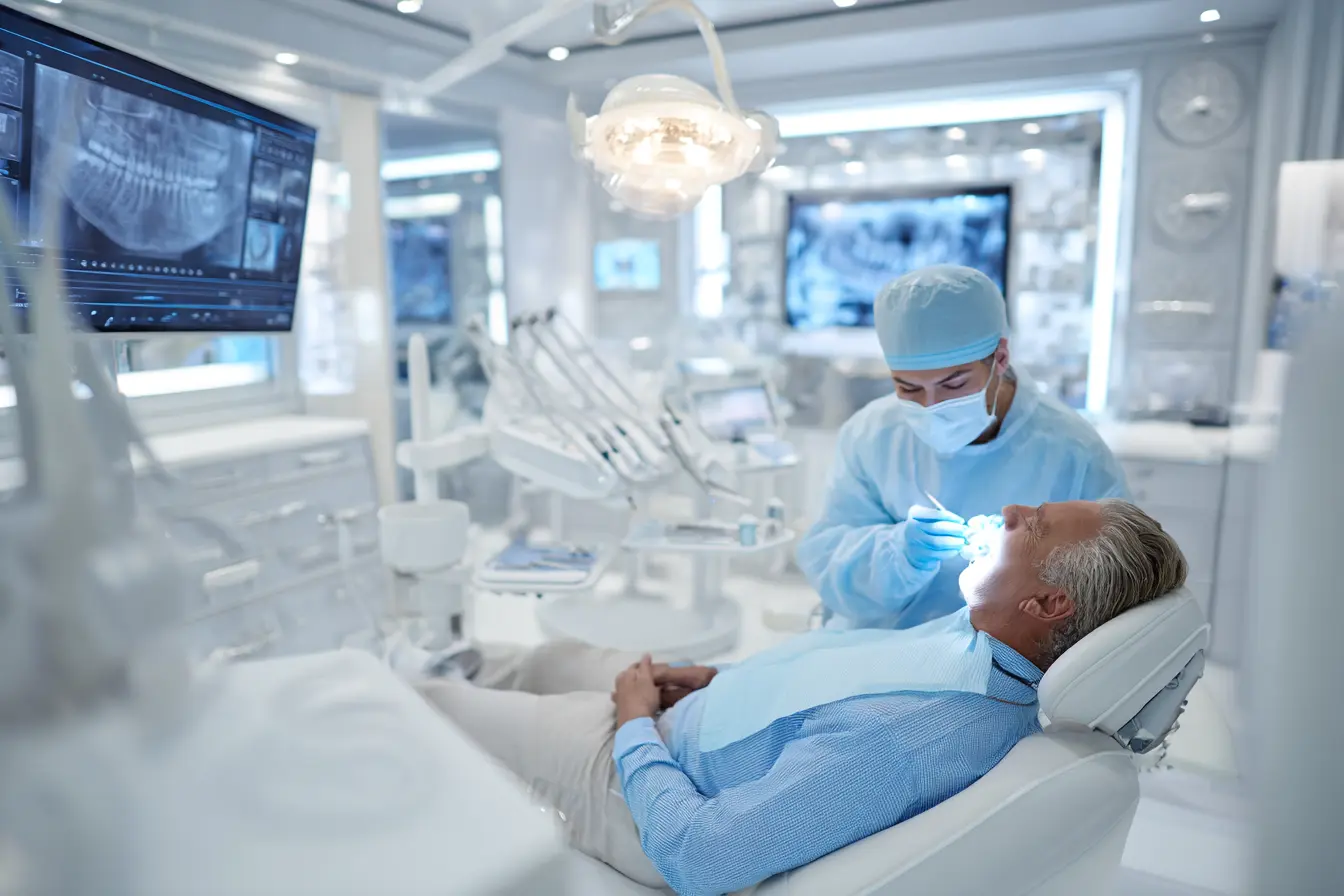
Dental X-rays and, when indicated, a cone beam CT (CBCT) scan may be used to assess the location and volume of bone and the position of important anatomical structures.
Tell your clinician about:
- Diabetes and other medical conditions
- Smoking or vaping
- Past or current gum disease
- Medicines that affect bone metabolism or healing
- Blood thinners and other prescribed medication
- Previous radiotherapy involving the jaws
- Previous implant treatment or complications
These factors do not automatically rule out dental implants, but they may affect suitability, treatment planning, and the risks that need to be discussed.
Step 2: Personalised Treatment Planning
Your dentist or oral surgeon determines the number and position of implants needed.
The plan considers both surgical factors and the appearance and function of the final artificial teeth.
Digital planning and surgical guides may be considered when appropriate to help translate the planned implant position into the surgical procedure.
Before proceeding, you should understand the proposed restoration, estimated treatment duration, alternatives, risks, maintenance requirements, and total cost.
Step 3: Tooth Extraction or Bone Grafting if Necessary
If a damaged tooth cannot be saved, extraction may be required before or during implant placement.
Some patients also need a dental bone graft to improve the volume or shape of the supporting ridge.
Other cases, particularly in the upper back jaw, may require sinus augmentation when bone height is insufficient.
Not everyone needs grafting. The decision depends on clinical examination and imaging.
Bone grafting may add several months to the overall treatment timeline. Our guide to the tooth extraction and bone graft healing process explains how gum and bone recovery progress after surgery.
Step 4: Dental Implant Surgery
Dental implant placement is commonly performed under local anaesthesia. Depending on the procedure and clinical circumstances, additional anaesthesia or sedation options may be discussed.
During surgery, the clinician prepares the implant site in the jawbone and places the implant fixture in the planned position.
A healing component or cover screw may be fitted, and stitches may be used where necessary.
The technique depends on implant design, bone conditions, surgical access, and whether the implant is placed immediately after an extraction.
Step 5: Healing and Osseointegration
After placement, the jawbone begins to heal around the implant.
This is called osseointegration and provides the biological stability needed for long-term implant function.
Many conventional treatment plans allow approximately three to six months for healing before the definitive restoration, although some patients may need less or more time.
Factors affecting healing include bone quality, implant stability, grafting requirements, medical conditions, and whether the restoration is loaded immediately or after a delay.
The implantologist determines when the implant is ready for the next stage.
Step 6: Abutment and Final Restoration
Once the implant is considered sufficiently stable, the final restoration can be prepared.
Digital scans or impressions are used to design the replacement crown, bridge, or full-arch prosthesis.
The restoration is fitted and adjusted to support appropriate contacts, comfortable biting, and a natural appearance.
Final attachment methods depend on the prosthetic design and may involve screw-retained or cement-retained components.
Step 7: Follow-Up and Maintenance
Implant treatment does not end when the crown is fitted.
Regular examinations and professional maintenance help identify inflammation, changes in the surrounding bone, restoration wear, and other problems before they become more serious.
Our complete dental implant patient guide provides more detailed information about planning, placement, and recovery.
Who Is a Good Candidate for Dental Implants?
Many adults with one or more missing teeth may be candidates for implant treatment, but suitability must be confirmed by a dental professional.
Favourable conditions generally include:
- Good overall oral hygiene
- Healthy or adequately treated gums
- Enough supporting bone or a suitable plan for bone augmentation
- Medical conditions that are appropriately managed
- A willingness to attend follow-up appointments
- Realistic expectations about surgery and healing
Can You Get Dental Implants With Bone Loss?
Possibly. Bone loss does not automatically make implant treatment impossible.
Depending on the location and severity of bone deficiency, your implantologist may discuss bone grafting, ridge augmentation, sinus elevation, or another restorative approach.
More complex situations require careful assessment because not every type of augmentation is suitable for every patient.
Can Patients With Diabetes Receive Dental Implants?
Some people with diabetes can receive implants successfully, particularly when their condition is well managed.
Poorly controlled diabetes may increase the risk of infection, delayed healing, and implant complications.
Your treating dental clinician may coordinate with your medical doctor before proceeding.
What if You Smoke or Vape?
Smoking is associated with delayed healing and a higher risk of implant complications or failure.
Patients should discuss smoking and nicotine use openly with the implantologist. Avoiding tobacco before and after surgery and stopping long-term can improve oral and general health.
Can You Have Implants With Gum Disease?
Active gum disease should be assessed and managed before implant placement.
A history of periodontitis can increase the risk of inflammation and bone loss around implants, so maintenance and plaque control are particularly important.
Read more about the importance of professional dental maintenance through our teeth cleaning services in Dubai.
Dental Implants vs Bridges vs Dentures
Dental implants are not the only option for missing teeth. A dental bridge or removable denture may be suitable depending on oral health, personal preferences, treatment time, and budget.
| Feature | Dental Implants | Dental Bridges | Removable Dentures |
|---|---|---|---|
| Support | Implants placed in the jawbone | Usually neighbouring teeth or other supports | Gums and remaining teeth, depending on design |
| Surgery | Generally required | Usually not required for a conventional bridge | Usually not required |
| Removability | Usually a fixed restoration; some implant dentures are removable | Fixed | Removable |
| Adjacent teeth | A single implant usually avoids preparing neighbouring teeth | Often requires preparation of supporting teeth | May use clasps or attachments on remaining teeth |
| Bone considerations | Requires suitable bone support | Does not replace the missing tooth root | Does not replace missing tooth roots |
| Treatment time | Often several months | Often shorter | Varies with design and adjustment needs |
| Maintenance | Daily cleaning and professional follow-up | Daily cleaning around bridge supports | Daily removal and cleaning as instructed |
A conventional bridge may be reasonable when neighbouring teeth already need crowns. Removable dentures may be appropriate when implant surgery is unsuitable or the patient prefers a non-surgical approach.
For an individual comparison, discuss the long-term maintenance and replacement needs of each option with your dentist.
How Much Do Dental Implants Cost in Dubai?
The cost of dental implants in Dubai varies because implant treatment is not the same for every patient.
A straightforward single-tooth replacement generally involves different procedures and costs from full-arch rehabilitation or treatment requiring bone grafting.
Rather than comparing an advertised implant price alone, patients should ask what the complete treatment estimate includes.
What Affects Dental Implant Prices?
| Cost Factor | Why It Matters |
|---|---|
| Number of implants | Replacing one tooth differs from restoring several teeth or a complete arch. |
| Implant system and components | Different clinical systems and restorative components have different costs. |
| Imaging and planning | Consultation, X-rays, CBCT imaging, or surgical guides may be required. |
| Tooth extraction | A damaged tooth may need removal before implant placement. |
| Bone grafting or sinus lift | Additional surgery can increase the overall cost and timeline. |
| Final restoration | Single crowns, bridges, and full-arch prostheses have different material and laboratory requirements. |
| Case complexity | Bone defects, bite problems, or aesthetic challenges may require additional planning. |
| Maintenance | Long-term examinations and occasional prosthetic repairs add to lifetime treatment costs. |
What should a dental implant quote include? Ask whether the estimate covers the implant fixture, surgery, abutment, final crown or prosthesis, scans, temporary teeth if required, and any recommended bone grafting.
Also discuss whether follow-up visits, repairs, or maintenance are included.
Insurance coverage varies by policy, and purely elective implant treatment may not be covered. Patients should confirm benefits directly with their insurer.
At Alma Polyclinic, a clinical assessment is the appropriate first step toward an individual treatment plan and cost estimate.
How Long Does Dental Implant Treatment Take?
Dental implant treatment can take several months, although the schedule varies considerably.
Some patients receive an implant shortly after tooth extraction. Others need additional healing or grafting before placement.
| Treatment Stage | Approximate Time |
|---|---|
| Consultation and planning | Usually one or more appointments |
| Extraction-site healing, when needed | Several weeks to months |
| Bone graft healing, when needed | Often several months |
| Implant surgery | Appointment duration depends on complexity |
| Osseointegration | Commonly around 3–6 months in conventional staged treatment |
| Final restoration | After the clinician confirms readiness; laboratory time varies |
These timelines overlap in some treatment plans and occur sequentially in others. They should not be added together as a fixed estimate for every patient.
For further information about healing and follow-up, see our article on how long dental implants last and the signs they may need attention.
Is Dental Implant Surgery Painful?
Dental implant surgery is commonly carried out under local anaesthesia to numb the surgical area.
Patients may feel pressure or movement during treatment, but significant pain during a properly anaesthetised procedure should be reported to the clinician immediately.
After surgery, temporary soreness, swelling, bruising, and mild bleeding can occur.
These symptoms often improve over the first several days, although recovery may be longer after multiple implants or additional bone surgery.
Follow your surgeon’s instructions for medication, cleaning, eating, and physical activity.
Dental Implant Aftercare and Recovery Tips
Appropriate aftercare supports wound healing and reduces avoidable complications.
During the First 24 Hours
- Rest and follow your post-surgical instructions.
- Avoid touching or disturbing the surgical area.
- Use prescribed or approved pain medication as directed.
- Avoid forceful rinsing or spitting unless your surgeon advises otherwise.
- Choose appropriate soft foods after the effects of local anaesthesia have worn off.
- Avoid smoking, vaping, and strenuous activity.
During the First Week
Choose soft meals that do not place excessive pressure on the surgical site.
Keep the rest of the mouth clean and follow the specific brushing or rinsing instructions for the implant area.
Swelling should generally begin to settle, although the exact recovery pattern varies.
For suitable meal options, explore our 25 soft foods after dental surgery guide.
During the Healing Period
Do not assume that feeling comfortable means the implant is ready for full chewing forces.
Follow any restrictions concerning temporary crowns, provisional dentures, or implant loading.
Attend scheduled reviews so the clinician can evaluate healing before moving to the next stage.
Long-Term Implant Maintenance
Once your final restoration is fitted:
- Brush twice daily using appropriate cleaning techniques.
- Clean around the implant and between teeth using dentist-recommended tools.
- Attend professional hygiene and implant maintenance visits.
- Avoid smoking.
- Discuss teeth grinding or excessive bite pressure with your dentist.
- Report bleeding, swelling, persistent discomfort, or looseness promptly.
Implants cannot develop tooth decay, but inflammation and bone loss can still occur around them. The surrounding gums and supporting bone require ongoing care.
Possible Risks and Complications of Dental Implants
Dental implant treatment has recognised benefits, but it also involves surgery and potential complications.
Possible risks include:
- Infection of the surgical area
- Delayed healing or failure of osseointegration
- Injury to neighbouring teeth or other structures
- Nerve irritation or injury, potentially causing altered sensation
- Sinus-related complications in certain upper-jaw procedures
- Gum inflammation or peri-implantitis
- Loosening or fracture of prosthetic components
- Implant loss or the need for further surgery
Not all complications are preventable. Risk assessment, appropriate planning, effective oral hygiene, and maintenance can help reduce risks and support long-term outcomes.
When Should You Contact Your Implant Dentist?
Contact your treating dental team promptly if you notice:
- Increasing or severe pain rather than gradual improvement
- Spreading swelling or swelling accompanied by fever
- Persistent or heavy bleeding
- Pus or unusual drainage
- A loose implant, crown, or other component
- Persistent or worsening numbness
- Bleeding or swelling around an established implant
Emergency warning: Difficulty breathing or swallowing, rapidly spreading facial or neck swelling, or severe uncontrolled bleeding requires immediate emergency medical attention.
Why Choose Alma Polyclinic for Dental Implants in Dubai?
Choosing the right dental implant clinic in Dubai involves evaluating the qualifications of the treating clinician, available diagnostic methods, treatment planning, and long-term follow-up arrangements.
Implant Treatment With a Specialist Oral Surgeon
Dr. Corentin Buron is a Specialist Oral Surgeon and Dental Implantologist at Alma Polyclinic.
His clinical areas include implant placement, immediate implantation in suitable cases, full-arch rehabilitation, bone grafting, sinus augmentation, and digitally guided surgery.
Patients with more complex surgical needs can discuss their treatment options during an individual evaluation.
Personalised Implant Planning
Implant treatment should be based on your specific anatomy, medical history, oral health, and functional requirements.
At Alma Polyclinic, treatment planning considers the jawbone, gum tissues, neighbouring teeth, bite forces, and intended final restoration.
Digital and Surgical Treatment Options
The clinic’s implantology services incorporate digital workflows and surgical planning techniques where clinically appropriate.
These tools can assist with treatment planning, but they do not remove every surgical risk or guarantee a particular result.
Comprehensive Dental Services
Some patients require additional procedures before or alongside implant placement.
Alma Polyclinic also provides dental surgery services, tooth extraction, and restorative dental treatments that may form part of an individual treatment plan.
Location in Jumeirah, Dubai
Alma Polyclinic is located at Villa 1033, Al Wasl Road, opposite Union Coop, Umm Suqeim, Dubai, United Arab Emirates.
Patients seeking implant consultation in Jumeirah and surrounding Dubai neighbourhoods can discuss both surgical and restorative treatment requirements with the clinic’s dental team.
Questions to Ask Before Getting Dental Implants in Dubai
Before beginning implant surgery, consider discussing these questions with your treating clinician:
- Am I a suitable candidate for dental implants?
- Can my existing tooth be preserved instead of extracted?
- Do I need a bone graft or sinus lift?
- How many implants are recommended, and why?
- What implant system and materials will be used?
- Will I have temporary teeth during healing?
- What is the expected treatment timeline?
- What risks apply to my medical and dental history?
- What does the complete treatment estimate include?
- What long-term cleaning and maintenance will be necessary?
A clear discussion of these questions can help you compare treatment options and make an informed decision.
Frequently Asked Questions About Dental Implants in Dubai
How much do dental implants cost in Dubai?
The cost depends on the number of implants, surgical complexity, imaging, bone grafting requirements, implant components, and final restoration. A personalised examination is needed to provide an accurate estimate.
Are dental implants permanent?
Dental implants are intended to provide long-term support for replacement teeth, but they are not guaranteed to last for life. The implant fixture may remain functional for many years, while crowns and other prosthetic components may require maintenance or replacement.
How long does dental implant treatment take?
Conventional implant treatment commonly takes several months because the implant needs time to integrate with bone. Some patients require extra time for tooth extraction or bone graft healing, while selected cases may qualify for immediate placement or temporary restoration.
Is getting a dental implant painful?
The surgical area is usually numbed with local anaesthesia. Mild to moderate soreness and swelling may occur afterwards. Your dentist will explain appropriate pain management and when symptoms require reassessment.
Can dental implants replace all my teeth?
Yes, selected patients can receive full-arch implant-supported restorations. The treatment may use four, six, or another suitable number of implants depending on bone conditions and prosthetic design.
Do I need a bone graft before dental implants?
Not everyone needs a bone graft. Grafting may be recommended when there is insufficient bone volume or an unfavourable ridge shape. Clinical examination and imaging help determine whether augmentation is necessary.
Can I get dental implants on the same day as tooth extraction?
In selected cases, an implant can be placed immediately after extraction. This depends on the condition of the socket, available bone, infection management, and achievable implant stability. Same-day implant placement does not always mean the final crown can be fitted immediately.
Can older adults get dental implants?
Age alone does not automatically determine suitability. Overall health, bone support, gum condition, medications, and the ability to maintain the implants are generally more relevant than chronological age.
Can dental implants fail?
Yes. Implants may fail to integrate with bone or develop complications later because of infection, inflammation, excessive forces, or other factors. Early assessment of pain, movement, or gum changes is important.
Are implants better than dental bridges?
Not always. Implants may preserve neighbouring tooth structure in suitable cases, while bridges can be appropriate when adjacent teeth already require crowns or when implant surgery is unsuitable. The preferred treatment depends on clinical findings and patient priorities.
Can I eat normally with dental implants?
Many patients can return to a broad range of foods once the implant restoration is complete and the clinician confirms it is ready for normal function. During healing, softer foods and temporary loading restrictions may be necessary.
How do I find an experienced dental implant specialist in Dubai?
Review the clinician’s professional qualifications, relevant implant experience, treatment planning process, approach to complex cases, and follow-up arrangements. Ask about alternatives, risks, implant systems, and maintenance before proceeding.
Restore Your Smile With Dental Implants at Alma Polyclinic
Choosing dental implants in Dubai is an important decision that can affect your chewing comfort, appearance, oral health, and long-term dental care.
Implants may offer a stable, natural-looking replacement for missing teeth, but successful treatment requires careful planning, appropriate surgery, adequate healing, and ongoing maintenance.
At Alma Polyclinic in Jumeirah, Dubai, patients can receive an individual implant assessment and discuss suitable solutions for single-tooth, multiple-tooth, or full-arch replacement.
Explore our dental implants service in Dubai or book your dental implant consultation at Alma Polyclinic to discuss your treatment options.
Medical disclaimer: This article is for general patient education and does not replace a professional dental examination, diagnosis, or personalised treatment plan. Implant suitability, costs, surgical risks, healing time, and results vary between patients.
Medical References
- U.S. Food and Drug Administration — Dental Implants: What You Should Know
- American Academy of Periodontology — Dental Implant Procedures
- Guy’s and St Thomas’ NHS — Dental Implants: Benefits, Risks and Alternatives
- NHS — Dental Treatments: Implants, Bridges and Dentures
- PubMed — AO/AAP Consensus on the Prevention and Management of Peri-Implant Diseases