
12 Delicious Meals After Dental Surgery: Easy Soft Food Ideas
Enjoy satisfying meals while your mouth heals. Explore 12 soft meal ideas, practical preparation tips and a flexible daily menu, plus foods to avoid after dental surgery.

Enjoy satisfying meals while your mouth heals. Explore 12 soft meal ideas, practical preparation tips and a flexible daily menu, plus foods to avoid after dental surgery.
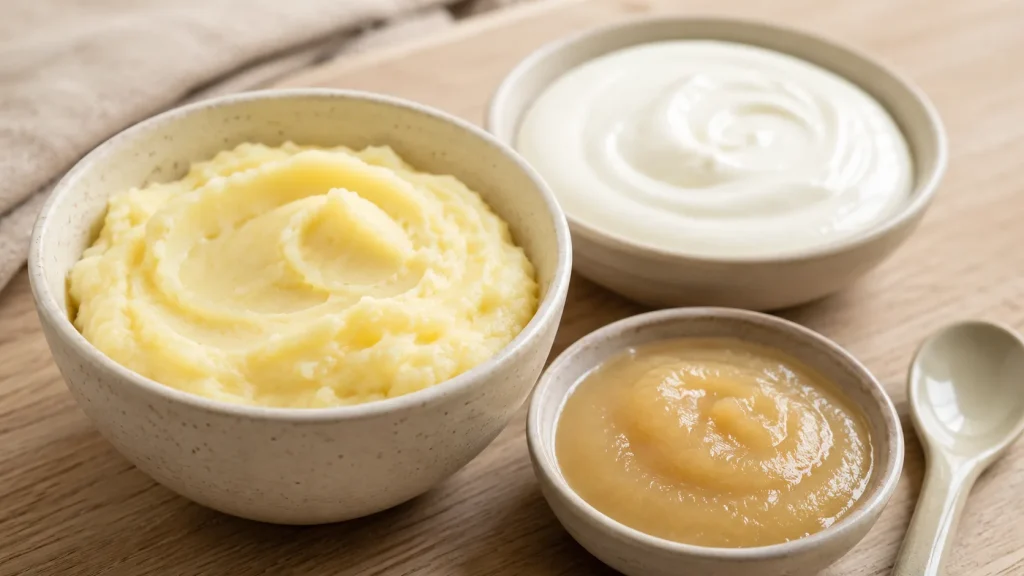
After dental surgery, choose foods that are smooth, moist and easy to swallow with little or no chewing. Yogurt, applesauce, mashed potatoes, scrambled eggs, pureed soup, oatmeal, avocado and seed-free smoothies are usually practical options. Avoid hard, crunchy, sticky, spicy or very hot foods while the surgical area is healing.
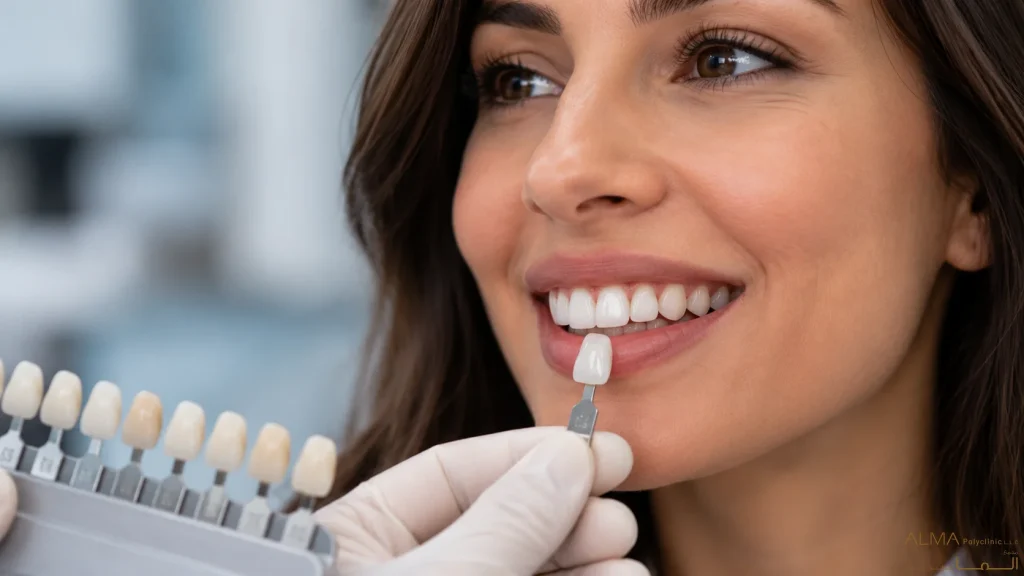
If you are wondering how do teeth look under veneers, the answer depends on the stage of treatment. Before treatment, they are simply your natural teeth. After veneer preparation, they may look slightly smaller, flatter or less glossy because a small amount of tooth structure may be reshaped. Once the final veneers are bonded, the prepared tooth is mostly hidden beneath the restoration.
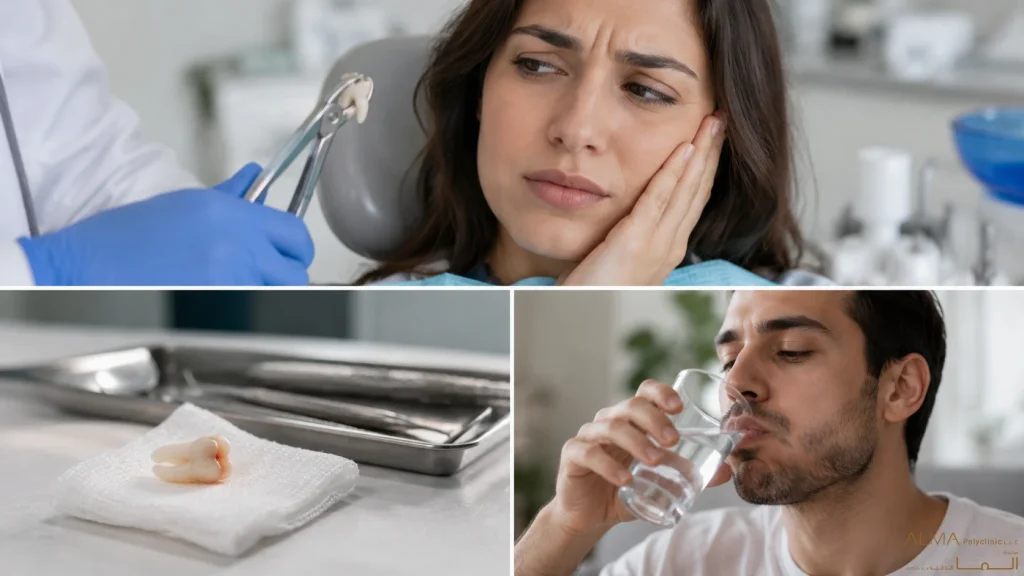
A bad taste in mouth after tooth extraction can happen during recovery and does not always mean something is wrong. Blood, healing fluids, food debris, medications and changes in oral hygiene can all temporarily affect the way your mouth tastes.

Yes. A root canal treatment can be performed during pregnancy when it is necessary to treat an inflamed, infected or damaged dental pulp.
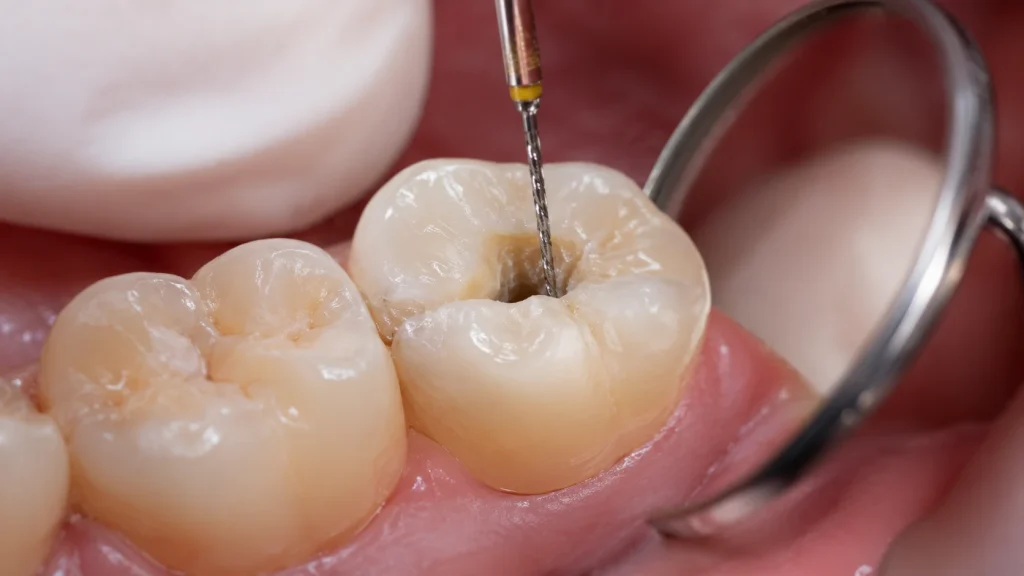
Each tooth has its own pulp chamber and root canal system. If one tooth has irreversible pulp inflammation or infection, only that tooth should receive root canal treatment unless testing shows that the neighbouring tooth has a separate problem requiring treatment as well.
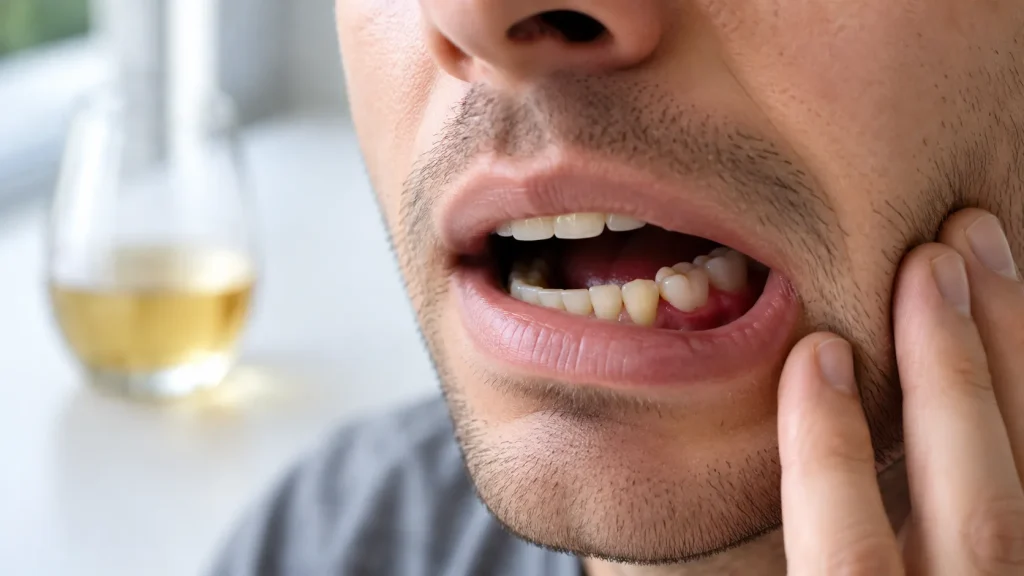
For a straightforward root canal performed using only local anaesthetic, the American Association of Endodontists states that patients can generally return to normal eating and drinking, including alcohol, once the numbness has worn off.
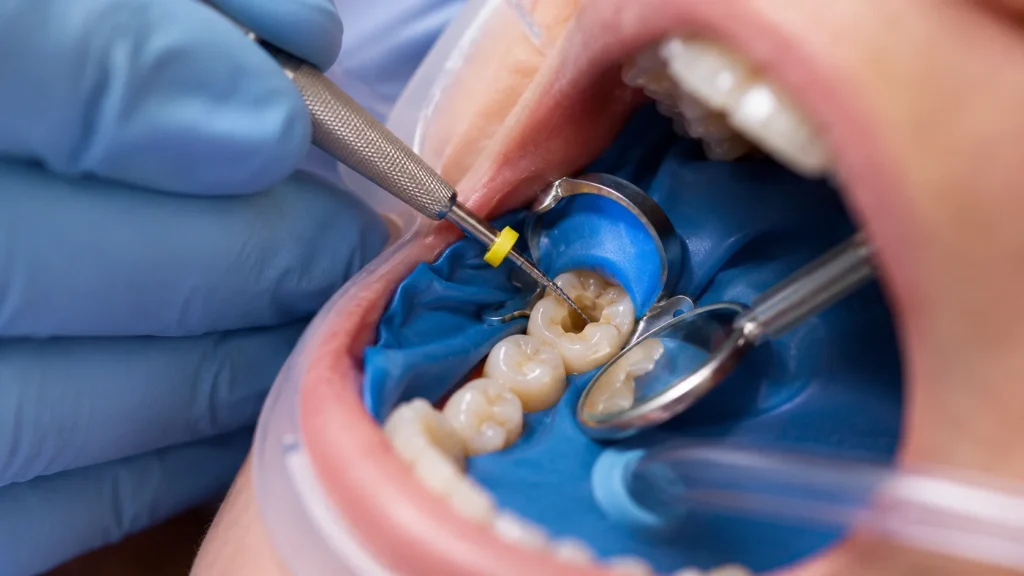
Most root canal appointments take about 60 to 90 minutes, although some procedures may last one to two hours or longer. Treatment may be completed in one visit or require two or more appointments, depending on the tooth, the number and shape of the canals, the presence of infection, previous dental work, and the final restoration plan.
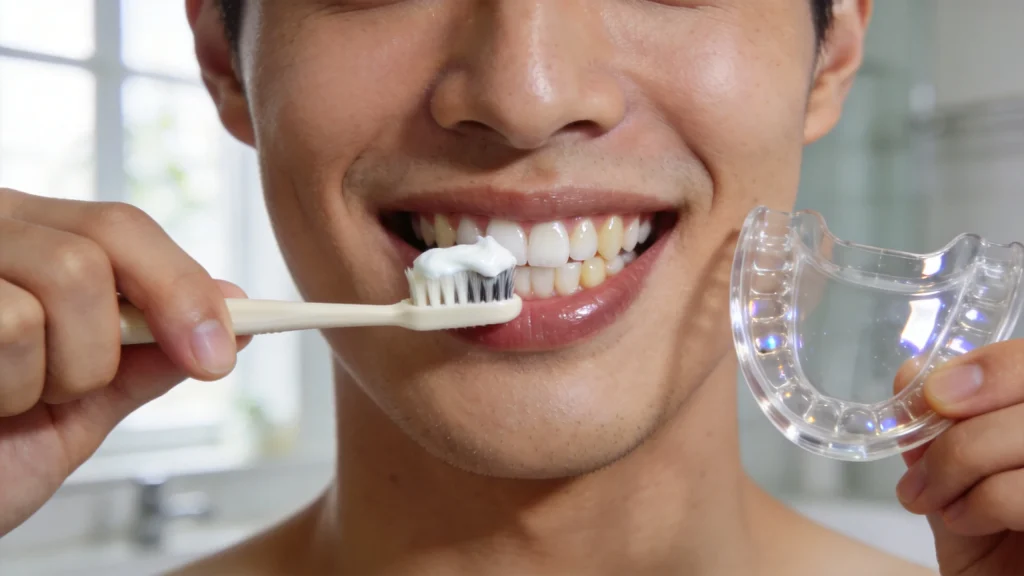
Whitening products are not all used the same way. Some are meant to be applied to clean teeth. Some may include specific directions about brushing, rinsing, or drying your teeth first. Others may tell you what to do after the product is removed.
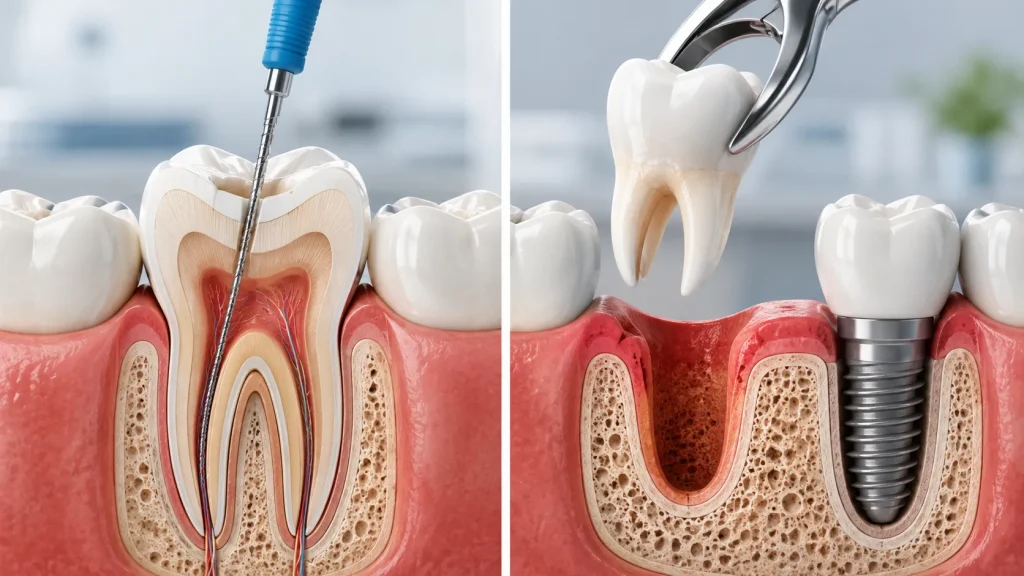
In most cases, a root canal is the better option when the tooth can be restored and has a good long-term prognosis. Tooth extraction may be recommended when the tooth is severely cracked, too decayed to restore, loose from gum disease, or unlikely to survive after treatment. The right decision depends on the remaining tooth structure, root condition, bone support, infection level, and whether the tooth can support a crown.