
About the Author and Medical Reviewer
Learn more about the professionals responsible for writing and medically reviewing this article.

Alma Polyclinic Editorial Team
Medical Content Team at Alma Polyclinic
The Alma Polyclinic Editorial Team creates clear, patient-focused health content based on trusted medical sources and clinical guidance from our doctors.
View author profile
Dr. Tamara AK
General Dentist | Cosmetic & Aesthetic Dentistry at Alma Polyclinic
This article was reviewed for clinical accuracy, relevance and patient safety by Dr. Tamara AK.
View doctor profileDifference Between 3D and 6D Veneers
What 3D Veneers Are
Definition of 3D veneers
In cosmetic dentistry, “3D veneers” typically refers to veneers designed with a pronounced three-dimensional contour—meaning they’re shaped to create a more lifelike curve, emergence profile, and tooth anatomy than a flatter, more uniform veneer style. The label is often used in marketing to describe a veneer look that emphasizes form, contour, and visible shaping rather than a purely “flat-white” appearance.
Because naming conventions vary by provider and lab, 3D veneers are best understood as an approach to design and finishing rather than a single standardized product category.
Key characteristics of 3D veneers
- Noticeable contouring: Enhanced facial curvature and shaping to avoid a “pane of glass” look.
- Defined tooth anatomy: More evident line angles, incisal edge character, and basic surface anatomy.
- Balanced thickness: Often designed to deliver visible shape changes while keeping edges comfortable and natural-looking.
- Cosmetic-focused outcome: Commonly selected to improve symmetry, color, and overall smile harmony with clear contour improvements.
Common terminology used for 3D veneers
- 3D smile design veneers
- 3D layered veneers
- 3D contour veneers
- 3D aesthetic veneers
What 6D Veneers Are
Definition of 6D veneers
“6D veneers” is a term often used to describe veneers that aim for a higher level of realism through more advanced detailing—combining contour, texture, optical effects, and refined edge design to create a natural-looking depth under different lighting conditions. In practice, 6D veneers are positioned as a more detail-intensive design and finishing approach than “3D,” emphasizing micro-anatomy, surface characterization, and nuanced light handling.
As with 3D, the term “6D” is not universally standardized. The most reliable way to understand it is to ask what specific design steps, finishing methods, and customization options are included.
Key characteristics of 6D veneers
- Higher-detail anatomy: More precise line angles, embrasures, and incisal edge transitions.
- Enhanced micro-texture: Subtle surface features designed to mimic natural enamel behavior.
- Optical realism: Greater attention to translucency, value (brightness), and how light reflects across the surface.
- Refined finishing: More controlled polish/texture balance to avoid an overly glossy or overly matte look.
Common terminology used for 6D veneers
- 6D ultra-realistic veneers
- 6D high-definition veneers
- 6D micro-textured veneers
- 6D premium aesthetic veneers
Difference Between 3D and 6D Veneers (At-a-Glance Comparison)
| Comparison Point | 3D Veneers | 6D Veneers |
|---|---|---|
| Dimensional design and contouring | Enhanced shaping and curvature for a more lifelike contour | Refined contour plus more advanced anatomical transitions and edge control |
| Surface texture and finish | Smooth-to-light texture, often more uniform | More deliberate micro-texture and finish tuning for realism |
| Visual depth and realism | Natural-looking improvement with visible contour | Greater perceived depth due to optical detailing and texture |
| Thickness profile and edge design | Generally balanced; edges may be simpler | More nuanced thickness transitions and edge characterization |
| Fit, adaptation, and coverage approach | Strong fit focus with standard customization | Often more time spent refining margins, emergence profile, and symmetry across units |
| Customization level and design complexity | Moderate-to-high customization depending on case | Higher customization emphasis and more complex finishing steps |
| Intended aesthetic outcome | Clean, contoured, cosmetic enhancement | Natural enamel-like “high definition” realism under varied lighting |
Dimensional design and contouring
The difference between 3d and 6d veneers often starts with how contour is built. 3D veneers generally focus on visibly improving tooth shape—adding curvature, improving symmetry, and creating a more natural emergence from the gumline. 6D veneers typically go further by refining how each plane transitions (for example, from facial surface to incisal edge) so the tooth looks believable from multiple angles, not just straight-on.
Surface texture and finish
3D veneers may be finished more uniformly—often smooth and glossy to create a bright, clean cosmetic look. 6D veneers are more likely to incorporate controlled micro-texture (fine surface features) and a carefully calibrated polish. This helps prevent the veneer from looking “too shiny” or “too flat” under strong lighting or in high-resolution photos.
Visual depth and realism
With 3D veneers, the realism usually comes from improved contour and proportion. With 6D veneers, realism is often enhanced by additional optical planning—how the veneer handles light, where translucency is placed, and how texture breaks up reflections. In real life, this can influence whether the smile reads as “cosmetic” or “natural enamel-like,” especially in daylight.
Thickness profile and edge design
Thickness and edge design can affect comfort, speech, and the ability to achieve a natural look at the incisal edge. 3D veneers often use a straightforward thickness strategy that supports shape changes. 6D veneers tend to emphasize refined edge transitions and more precise thickness profiling so the incisal edge and line angles look crisp without appearing bulky.
Fit, adaptation, and coverage approach
Both options can be made to fit well, but 6D cases are often marketed as involving more detailed adaptation goals—especially around margins, embrasures, and how multiple veneers align together. The practical takeaway: ask what “fit refinement” steps are included, such as additional try-ins, adjustments, or detailed lab customization.
Customization level and design complexity
Customization exists on a spectrum. Many 3D veneer cases are highly customized, but the 6D label is commonly used to signal a higher design complexity—more time on anatomy, texture, and optical effects. The best indicator is not the label but the workflow: what records are taken, how the smile is designed, and how much finishing is done.
Intended aesthetic outcome
3D veneers are frequently chosen for a polished, attractive smile upgrade with clear contour improvement. 6D veneers are generally aimed at a more “high-definition” natural look—subtle surface character, realistic light reflection, and refined edges that mimic natural enamel.
Side-by-Side Comparison Criteria (3D vs 6D Veneers)
Design approach and layering concept
Many patients hear “3D” and “6D” and assume it refers to a material difference, but the label more often describes the design philosophy and finishing detail. 3D veneers usually emphasize macro-shape (overall tooth form). 6D veneers typically emphasize macro-shape plus micro-detail and optical layering effects that influence how depth is perceived.
Light reflection and translucency effect
Light behavior is a major part of the difference between 3d and 6d veneers. A smoother, more uniform surface can reflect light as a broad highlight, which may look bright but less natural in certain lighting. With 6D veneers, controlled texture and translucency planning can break up reflections and create a more enamel-like appearance, especially in photos and direct sunlight.
Detail level in anatomy and micro-texture
3D veneers often include visible anatomy such as line angles and basic incisal shaping. 6D veneers typically push further into subtle anatomy—micro-ridges, gentle surface undulations, and nuanced edge character that makes the tooth look less “manufactured.” The goal is usually realism without looking over-textured.
Consistency across multiple units/pieces
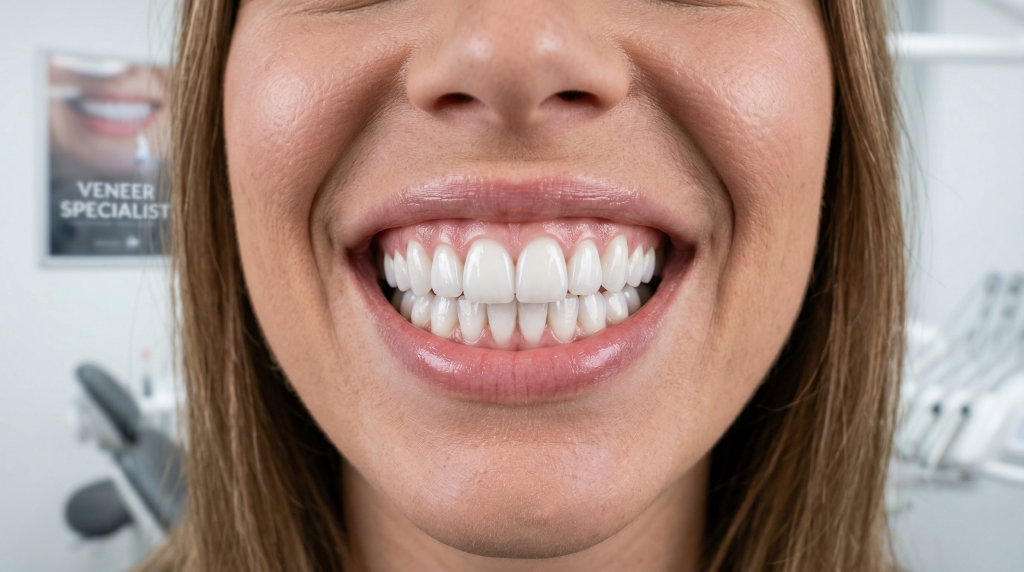
When multiple veneers are placed, consistency matters: symmetry, incisal plane, midline, and proportional balance. 3D veneers can be consistent across units, but 6D veneer workflows often emphasize consistency plus individualized character—keeping the smile harmonious while avoiding a perfectly identical “clone” look unless that’s the desired style.
Required planning and preparation steps
Planning can vary widely by provider. In general, 6D veneers may involve more detailed pre-planning inputs (more photos, more measurements, more design iterations) to map out texture, edge effects, and final polish targets. 3D veneers may rely on solid planning as well but often with fewer finishing variables to manage.
Timeline expectations (relative steps and stages)
Both veneer types typically follow similar stages (evaluation, design, production, placement), but 6D cases may take longer due to additional design refinement and finishing. The actual timeline depends on case complexity, number of units, the lab process, and whether revisions are part of the plan.
Revision or adjustment flexibility
Adjustments are common with cosmetic restorations. 3D veneer designs that are simpler in surface characterization may be easier to adjust chairside without disrupting the overall look. With 6D veneers, micro-texture and optical effects can make adjustments more delicate—small changes can alter how light reflects, which may require re-polishing or re-texturing to maintain realism.
Cost Differences Between 3D and 6D Veneers
Typical cost drivers for 3D veneers
- Number of veneers: More units generally increases total cost.
- Baseline customization: Contouring and aesthetic design beyond a basic shape.
- Case complexity: Alignment issues, spacing, and bite considerations can add steps.
- Provider and lab fees: Experience level, location, and lab quality affect pricing.
Typical cost drivers for 6D veneers
- Higher-detail finishing: Added time for micro-texture, edge refinement, and controlled polish.
- More design iterations: Additional adjustments, previews, or refinement stages may be included.
- Premium lab involvement: A high-end aesthetic lab and advanced craftsmanship can raise costs.
- Greater customization per unit: Especially when multiple veneers must look natural yet consistent.
What can change the final price for either option
- Material selection and fabrication method used by the provider and lab
- Extent of tooth preparation and any additional dental work required beforehand
- Temporary restorations and how long they’re needed
- Revision policy (what’s included vs what’s extra)
- Case goals (ultra-bright uniform smile vs natural textured realism)
Cost vs value checkpoints to compare
- Included steps: Confirm what planning, try-ins, and refinements are included.
- Expected finish standard: Ask what defines the “3D” or “6D” result in that clinic.
- Revision terms: Understand what adjustments are allowed and for how long.
- Long-term service: Compare follow-up support, repairs, and replacement policies.
Maintenance Differences: 3D vs 6D Veneers
Daily care requirements for 3D veneers
Daily care is typically straightforward and consistent with strong oral hygiene habits. Brush as directed by your dental professional, clean between teeth, and keep up with routine professional cleanings. Because 3D veneers may be finished more uniformly, patients often find the surface easy to keep clean with consistent daily care.
Daily care requirements for 6D veneers
Fundamentals are similar—effective brushing, interdental cleaning, and routine professional visits. However, 6D veneers may have more intentional surface character or refined edge details. That can mean you’ll want to be extra consistent with cleaning around margins and between teeth to keep the finish looking its best over time.
Cleaning considerations related to surface finish
Surface finish influences how plaque and stains can show. A very glossy finish can reflect light strongly and may highlight smudges, while a more textured or natural enamel-like finish can diffuse reflection but may require more mindful cleaning around grooves and embrasures. Ask your provider what products are recommended for your veneer finish and what to avoid.
Maintenance schedule considerations
- Professional cleanings: Keep a regular schedule recommended by your dental office.
- Periodic checkups: Monitor margins, bite, and any changes in comfort.
- Finish maintenance: If the veneer surface is adjusted, ask whether re-polishing is needed to preserve the intended look.
Habits that can affect longevity
- Teeth grinding or clenching: Can increase wear and risk of chipping.
- Biting hard items: Ice, hard candies, and similar habits can stress edges.
- Using teeth as tools: Opening packaging can cause chips or cracks.
- Inconsistent oral hygiene: Can affect gum health and the appearance of margins.
Risks and Limitations to Compare
Common limitations associated with 3D veneers
- Realism ceiling depends on finishing: If texture and optical nuances are minimal, the result may look more “cosmetic” than “natural.”
- Uniform brightness risk: If the finish is very glossy and bright, it may not blend as naturally in all lighting.
- Design variability: “3D” can mean different things across providers, making comparisons harder without examples.
Common limitations associated with 6D veneers
- Higher sensitivity to small changes: Texture and light behavior can shift with minor adjustments.
- Not always necessary: For some goals (very uniform, high-brightness smiles), the extra realism detail may not be a priority.
- Provider/lab dependency: Results can be more dependent on high-level aesthetic craftsmanship and consistent execution.
Durability considerations and wear patterns
Durability depends on multiple variables, including bite forces, habits, and how the veneers are designed and bonded. In general, more delicate edge characterization or thinner transitions can be more susceptible to chipping if the bite or habits aren’t controlled. Discuss how your bite is managed and what protective steps are recommended if you clench or grind.
Sensitivity, comfort, and fit considerations
Comfort is influenced by fit, edge transitions, and how the bite closes. A veneer that is slightly bulky or has an imperfect edge transition can feel noticeable to the tongue and may affect speech temporarily. 6D veneers often emphasize refined transitions, but the higher-detail finish doesn’t automatically guarantee comfort—fit and bite management are the key factors for both options.
Aesthetic mismatch risks and expectations management
The difference between 3d and 6d veneers can create expectation gaps if the terms are treated like strict categories. A “6D” label does not guarantee a specific shade, texture, or naturalness level unless those details are defined upfront. Bring reference photos of what you like (natural texture vs ultra-smooth glamour) and ask what the provider can realistically deliver for your tooth shape, bite, and facial features.
Repairability and replacement considerations
Veneers may be repairable in limited situations, but replacement is sometimes the better option depending on the type and location of damage. With more advanced texture/optical detailing, matching a repair perfectly can be more challenging. Ask in advance how chips, margin changes, or aesthetic updates are handled and what the replacement process typically involves.
How to Choose Between 3D and 6D Veneers (Decision Guide)
Choose based on desired realism and detail level
If your priority is a clean, contoured, cosmetic smile upgrade, 3D veneers may align well with your goals. If you want enamel-like realism—especially under varied lighting or close-up photography—6D veneers may be the better fit due to the added emphasis on texture, translucency, and refined transitions.
Choose based on budget constraints and priorities
If budget is a major factor, compare what’s included rather than comparing labels alone. A well-executed 3D approach with solid planning and quality finishing can deliver excellent results. A 6D approach may justify a higher investment when the additional design steps and premium finishing are truly included and important to you.
Choose based on time commitment and process preference
Some patients prefer fewer steps and a more straightforward process. Others are comfortable with additional planning and refinement stages to pursue a specific aesthetic. If you value a more iterative design path and detailed finishing, 6D may match your preference. If you want efficient, high-impact improvement, 3D may be more appealing.
Choose based on tolerance for adjustments/refinements
All cosmetic cases can involve adjustments. If you prefer a simpler surface that’s easier to modify without changing the overall aesthetic effect, a 3D finish may be more forgiving. If you’re comfortable with careful refinements to preserve micro-texture and realism, 6D can be an excellent choice.
Choose based on maintenance preferences
Both require consistent hygiene, but if you want the simplest day-to-day experience, ask whether the finish is highly glossy and uniform or more textured and natural. Neither is “hard” to maintain, but your preference for how the surface looks and feels should guide the choice.
Red flags when selecting either option
- Vague definitions: If the provider can’t clearly explain what 3D or 6D means in their workflow.
- No example cases: You should be able to see before/after examples similar to your starting point.
- Unclear revision policy: Not knowing what adjustments are included can lead to frustration.
- Overpromising: Guarantees of “perfect” results without discussing limitations, bite, and maintenance.
Questions to Ask Before Selecting 3D or 6D Veneers (Buying/Choosing Checklist)
Questions about materials and construction method
- What material will be used for my veneers, and why is it recommended for my case?
- How are the veneers fabricated, and what quality checks are used before placement?
- How will shade, brightness, and translucency be selected for my smile goals?
Questions about design workflow and customization options
- What does “3D” or “6D” mean in your specific design process?
- What customization options are available for texture, edge shape, and overall tooth anatomy?
- How do you ensure consistency across multiple veneers while keeping them natural-looking?
Questions about expected outcome and limitations
- What results are realistic for my tooth shape, bite, and current color?
- What are the main limitations or trade-offs of the look I’m asking for?
- How will the veneers look in different lighting (daylight, indoor, flash photos)?
Questions about cost, inclusions, and revisions
- What is included in the quoted cost (planning, temporaries, placement, follow-ups)?
- How many revisions or adjustments are included, and what costs extra?
- Are there additional fees for design upgrades, shade changes, or remakes?
Questions about maintenance requirements and longevity
- What daily care routine do you recommend for this veneer finish?
- What products should I avoid to protect the surface and margins?
- What habits pose the biggest risk to longevity in my specific case?
Questions about warranties, repairs, and follow-up support
- Is there a warranty, and what exactly does it cover?
- What happens if a veneer chips, stains, or needs replacement later?
- How do you handle bite changes, comfort issues, or aesthetic updates after placement?
Summary: Key Difference Between 3D and 6D Veneers
Biggest differentiators to remember
The difference between 3d and 6d veneers is primarily about design and finishing detail. 3D veneers generally emphasize noticeable contour and improved tooth form. 6D veneers are positioned as the more refinement-focused option, with additional attention to micro-texture, optical effects, and realistic edge transitions that influence how the smile looks in real-world lighting.
Quick decision points recap
- Choose 3D veneers if you want a contoured, cosmetic enhancement with a more straightforward finishing approach.
- Choose 6D veneers if you want higher-definition realism, refined surface character, and more nuanced light behavior.
- Compare workflows, not labels: Ask what steps are included, what outcomes are realistic, and how revisions are handled.
FAQ: Difference Between 3D and 6D Veneers
What is the main difference between 3D and 6D veneers?
The main difference is the design/detail approach, with 6D veneers positioned as having more dimensional detailing and refinement compared with 3D veneers.
Are 6D veneers better than 3D veneers?
“Better” depends on priorities such as desired detail level, budget, maintenance preferences, and acceptable trade-offs.
Do 3D and 6D veneers look different in real life?
They can differ in perceived depth, texture, and overall realism depending on how each is designed and finished.
Is there a cost difference between 3D and 6D veneers?
Costs can differ due to customization complexity, finishing requirements, and the number of steps involved.
Do 6D veneers require different maintenance than 3D veneers?
Maintenance is often similar in fundamentals, but surface finish and detailing may influence cleaning attention and care habits.
Are the risks different for 3D vs 6D veneers?
Risks can differ based on thickness profile, fit, finish, and how each option is implemented and maintained.
How do I decide between 3D and 6D veneers if I’m on a budget?
Compare total cost drivers, included steps, expected outcome, and long-term maintenance/repair considerations to match priorities.
Can I switch from 3D veneers to 6D veneers later?
It may be possible depending on the original design, fit, and replacement considerations; confirm feasibility, cost, and process before committing.